
Sides
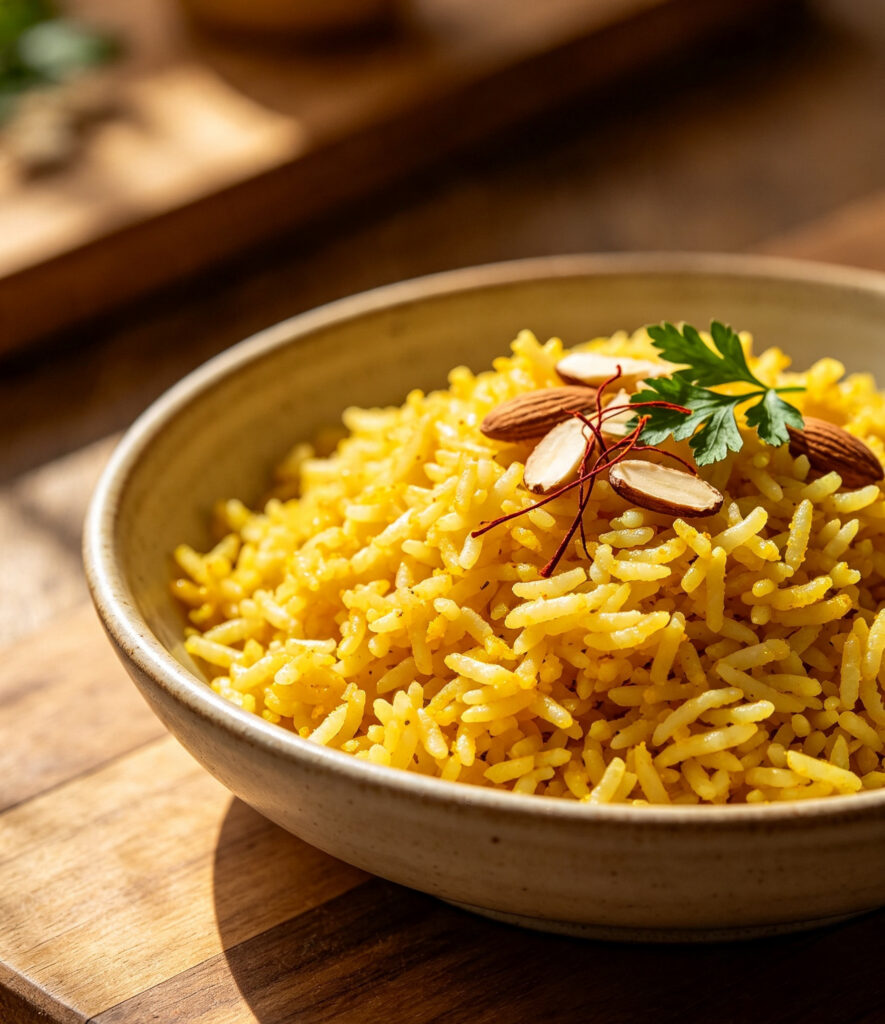
Saffron Rice (Ruzz bi Za’faran)
sjfegan
Ingredients
- 370g (2 cups) Rice
- 1/2 tsp saffron threads
- 720ml (3 cups) Water
- 2 tbsp ghee or butter
- Salt to taste
Method
- Steep the saffron threads in 2 tablespoons of warm water for 10 minutes.
- Rinse the rice under cold water until it runs mostly clear.
- Melt the ghee in a saucepan and sauté the rinsed rice briefly for 2 minutes.
- Add the water, saffron with its soaking liquid, and salt, and bring to a boil.
- Cover and reduce to low heat, cooking for 15–18 minutes until the rice is tender and the liquid absorbed.
- Let rest, covered, for 5 minutes, then fluff with a fork before serving.
Introduction: Fragrant rice gently perfumed and coloured with saffron, an elegant side dish reflecting the caliphate’s access to this treasured spice.
Cultural Background: Saffron rice appears throughout Abbasid culinary literature as an elegant accompaniment for the era’s most celebrated dishes, its golden colour and delicate fragrance symbolising the sophistication of court and wealthy household dining.
Tips: Steeping the saffron in warm water first helps distribute its colour and aroma evenly through the rice. Avoid lifting the lid too often while the rice cooks, as this lets steam escape.
Variations: Add a handful of raisins or toasted almonds for a more festive presentation. Stir in a little rosewater for extra fragrance.
Storage: Refrigerate in an airtight container for up to 3 days.
Reheating: Reheat with a splash of water in a covered pan over low heat, or in a microwave.
Nutrition: Per serving (approx.): 260 kcal, 5 g protein, 6 g fat, 46 g carbohydrate.
FAQs:
Q: Why was saffron rice considered elegant in Abbasid cuisine?
A: Saffron’s high cost and striking golden colour made dishes featuring it a visible marker of wealth and refined taste, appearing frequently alongside the caliphate’s most celebrated dishes.
Q: What dishes does saffron rice pair well with?
A: Roasted or braised meats, particularly the richly spiced dishes characteristic of Abbasid haute cuisine.
Please log in to leave a comment.