
Sides
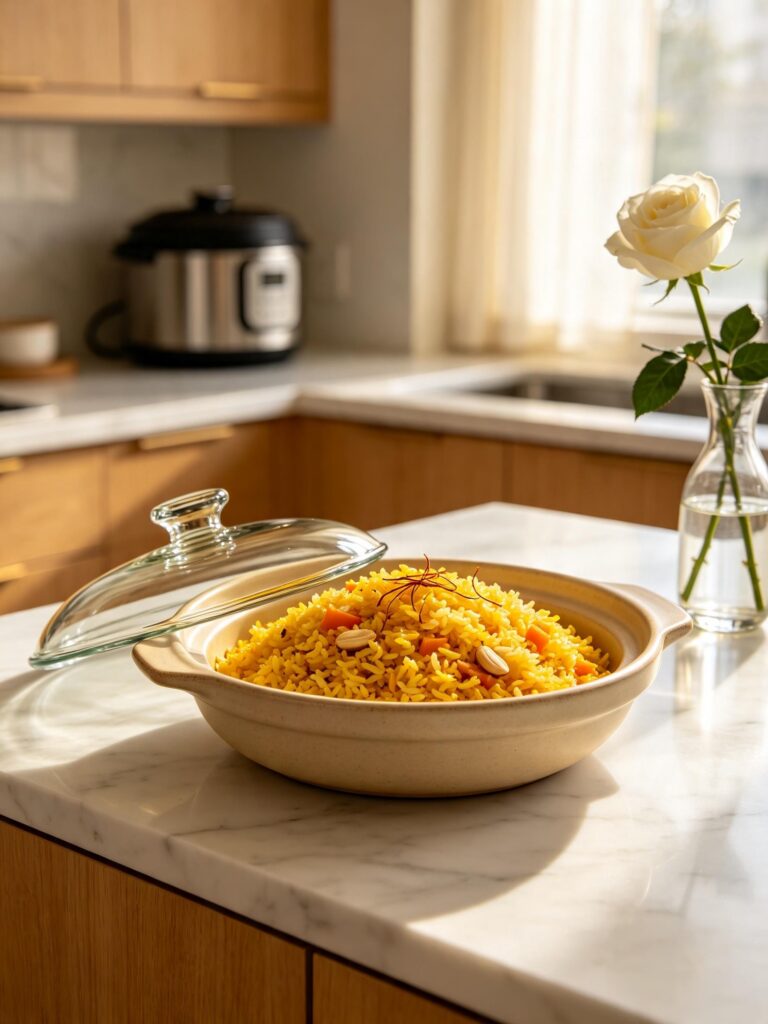
Saffron Rice Pilaf
The Quirky Foodster Team
Ingredients
- 400 g (2 cups) basmati rice
- 1/2 tsp saffron strands
- 3 tbsp warm water
- 3 tbsp ghee or vegetable oil
- 1 small onion, finely diced
- 750 ml (3 cups) water or halal chicken stock
- Salt, to taste
- 2 tbsp barberries or dried cranberries (optional)
- 2 tbsp slivered almonds, toasted (optional)
Method
- Rinse the rice under cold water until the water runs clear, then soak in cold water for 30 minutes. Drain well.
- Soak the saffron strands in the warm water for 10 minutes to release their colour and aroma.
- Heat the ghee in a large saucepan over medium heat. Sauté the onion for 5 minutes until soft and translucent.
- Add the drained rice and stir gently to coat in the ghee for 1-2 minutes.
- Pour in the water or stock and season with salt. Bring to a boil, then reduce heat to very low, cover tightly, and cook for 15-18 minutes until the liquid is absorbed and the rice is tender.
- Remove from heat and let stand, covered, for 5 minutes. Drizzle the saffron water over half the rice and gently fluff together for a marbled golden effect.
- Scatter with barberries and toasted almonds, if using, before serving.
Introduction: Saffron rice pilaf is a golden, fragrant side dish found throughout Persian and wider Middle Eastern
cuisine, where saffron — one of the world's most prized spices — is used to perfume and colour the rice a
deep gold. Traditionally accompanying halal meat mains at celebrations, it is prepared with care to achieve
fluffy, separate grains, often finished with a crisp golden crust known as tahdig in Persian cooking.
Cultural Background: Saffron rice pilaf is a golden, fragrant side dish found throughout Persian and wider Middle Eastern
cuisine, where saffron — one of the world's most prized spices — is used to perfume and colour the rice a
deep gold. Traditionally accompanying halal meat mains at celebrations, it is prepared with care to achieve
fluffy, separate grains, often finished with a crisp golden crust known as tahdig in Persian cooking.
Tips: Soaking the rice before cooking helps achieve long, separate, fluffy grains. Keep the heat very low during the final cooking stage to prevent scorching and ensure even steaming. Blooming saffron in warm water before use maximises its colour and fragrance.
Variations: Add sautéed halal minced lamb and dried fruit for a festive jeweled rice. Stir in fried onions and raisins for a Middle Eastern-style variation. Layer thinly sliced potato at the base before adding rice for a crisp tahdig crust.
Storage: Store in an airtight container in the refrigerator for up to 3 days.
Reheating: Reheat in a covered pan over low heat with a splash of water, or microwave covered until heated through.
Please log in to leave a comment.