
Rwandan Chapati
The Quirky Foodster Team
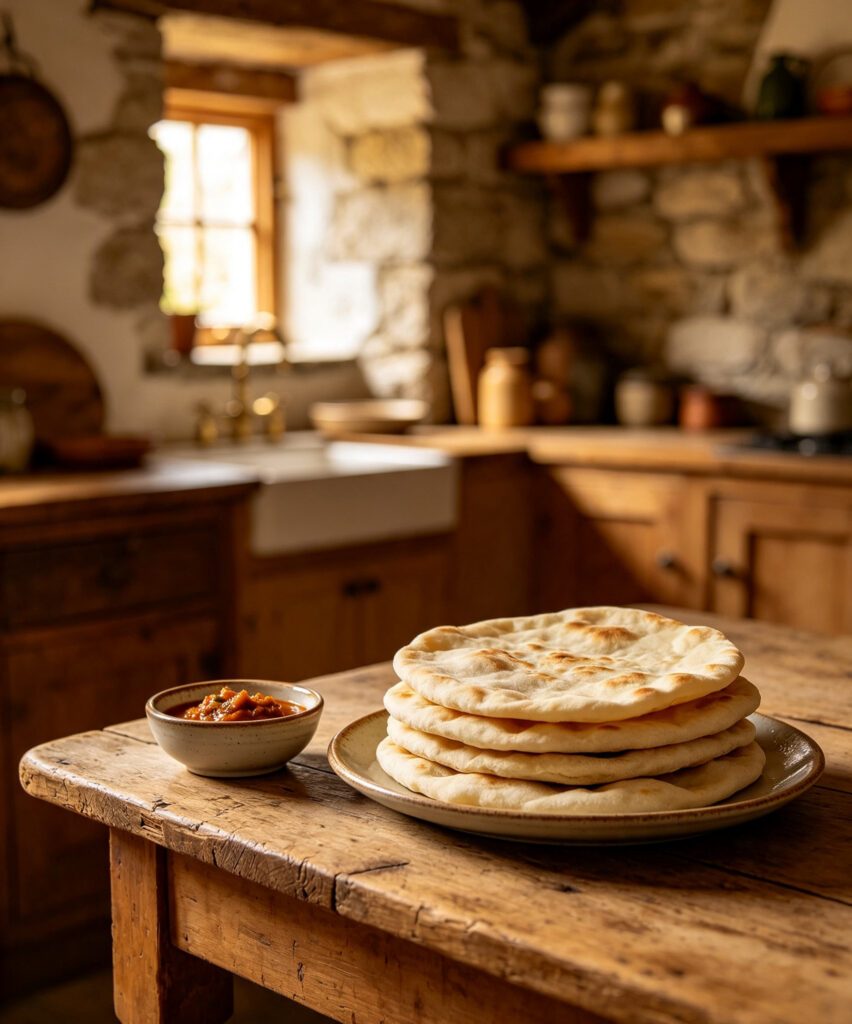
Ingredients
- Plain flour — 375 g (13 oz)
- Warm water — 240 ml (8 fl oz)
- Salt — 1 tsp
- Oil, plus extra for cooking and layering — 3 tbsp
Method
- Combine the flour, salt and water into a smooth, soft dough; knead for 8–10 minutes, then rest for 20 minutes.
- Divide into portions and roll each thinly, brush with oil, and fold or roll into a coil to create layers, then roll out again into a flat round.
- Heat a little oil in a frying pan over medium heat.
- Cook each chapati for 2–3 minutes per side until golden and cooked through, with visible flaky layers.
- Serve warm.
Introduction: A soft, layered flatbread, popular across East Africa and widely enjoyed in Rwanda as an accompaniment to stews and beans.
Cultural Background: Chapati reflects East Africa's Indian Ocean trade influences, its soft, layered texture becoming a beloved staple bread across the region, including Rwanda, often served alongside beans or stews.
Tips: The folding and re-rolling technique is essential for creating the characteristic soft, flaky layers. Cook over moderate heat so the chapati cooks through without burning before it's done.
Variations: Add a little grated onion or coriander to the dough for extra flavour. Serve alongside beans, a classic and beloved pairing.
Storage: Store cooled chapati in an airtight container at room temperature for up to 1 day.
Reheating: Reheat briefly in a dry pan over low heat for a minute per side.
FAQs:
Q: Is chapati originally Rwandan?
A: It reflects broader East African and Indian Ocean trade influences, now widely adopted and enjoyed as a popular bread across the region including Rwanda.
Q: What is chapati typically served with?
A: Beans, stews, or tea, as a versatile everyday accompaniment.
- Plain flour — 375 g (13 oz)
- Warm water — 240 ml (8 fl oz)
- Salt — 1 tsp
- Oil, plus extra for cooking and layering — 3 tbsp
Please log in to leave a comment.