
Breads
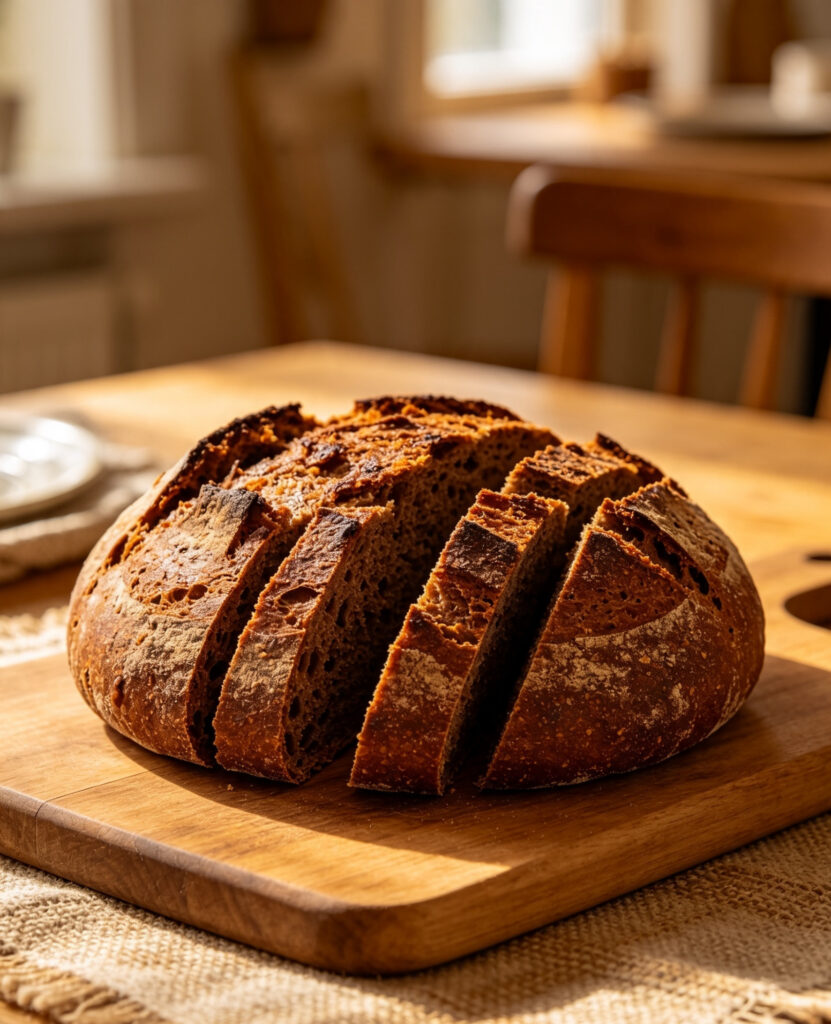
Ruisleipä (Finnish Rye Bread)
The Quirky Foodster Team
Ingredients
- 500 g (4 cups) Rye flour
- 400 ml (1 2/3 cups) Warm water
- 7 g (1 packet) (1 packet) Active dry yeast
- 2 tsp Salt
- 1 tbsp Dark syrup or molasses
- 1 tsp Caraway seeds (optional)
Method
- Dissolve the yeast and syrup in the warm water and let stand for 10 minutes until foamy.
- Stir in the rye flour, salt and caraway seeds (if using) to form a sticky, dense dough; rye dough will not become smooth and elastic like wheat dough.
- Cover and let rise in a warm place for about 1.5 hours until slightly puffed.
- Shape into a round loaf, place in a greased tin or on a baking sheet, and let rise a further 30-40 minutes.
- Preheat the oven to 220°C (425°F). Prick the top of the loaf a few times with a fork and bake for 40-45 minutes until deeply browned and it sounds hollow when tapped.
- Cool completely on a wire rack before slicing, as rye bread needs time to firm up.
Introduction: Ruisleipä, dense dark rye bread, is considered close to a national symbol in Finland, where rye has been the dominant grain for centuries due to its hardiness in cold, short-summer conditions.
Cultural Background: Ruisleipä, dense dark rye bread, is considered close to a national symbol in Finland, where rye has been the dominant grain for centuries due to its hardiness in cold, short-summer conditions. Its deep, slightly sour flavour and dense chew are so central to Finnish identity that many expatriates list it among the foods they miss most.
Tips: Rye dough is naturally sticky and dense; resist the urge to add lots of extra flour to make it behave like wheat dough. Letting the finished loaf rest overnight before slicing improves both texture and flavour.
Variations: Add a spoonful of leftover sourdough starter for a more traditional, tangy flavour. Shape into a flat, ring-shaped loaf with a hole in the centre in the old-fashioned style, once used for hanging loaves to store.
Storage: Store wrapped at room temperature for up to 5 days; freezes well for up to 3 months.
Reheating: Toast slices lightly, or warm the whole loaf wrapped in foil in a low oven for about 10 minutes.
FAQs:
Q: Why is the dough so sticky?
A: Rye flour contains far less gluten than wheat flour, producing a naturally dense, sticky dough rather than a stretchy one.
Q: How is it traditionally eaten?
A: Sliced and topped with butter, cheese, or cold cuts as an open sandwich (voileipä).
Please log in to leave a comment.