
Royal Kitchen Venison Stew (Commemorating Ashoka’s Edict I Kitchen Reform)
The Quirky Foodster Team
Ingredients
- Venison, cut into stewing pieces — 800 g (1.75 lb)
- Ghee — 3 tbsp
- Whole black peppercorns, coarsely crushed — 1 tsp
- Ground coriander — 1/2 tsp
- Ground ginger — 1/4 tsp
- Ground long pepper or extra black pepper — 1/4 tsp
- Small onion, finely chopped (regional addition, optional) — 1
- Rock salt — 1 tsp
- Water — 300 ml (1.25 cups)
- Fresh cilantro, chopped — 2 tbsp
Method
- Heat the ghee in a large heavy pot over medium-high heat and brown the venison pieces on all sides, working in batches if necessary, about 8-10 minutes total.
- Add the onion if using, and cook for a further 4-5 minutes until softened.
- Stir in the crushed peppercorns, ground coriander, ginger and long pepper if using, cooking for 1 minute until fragrant.
- Add the water and salt, and bring to a simmer.
- Reduce the heat to low, cover, and cook for 1.5 to 2 hours, stirring occasionally and adding a little more water if needed, until the venison is very tender and the sauce has thickened.
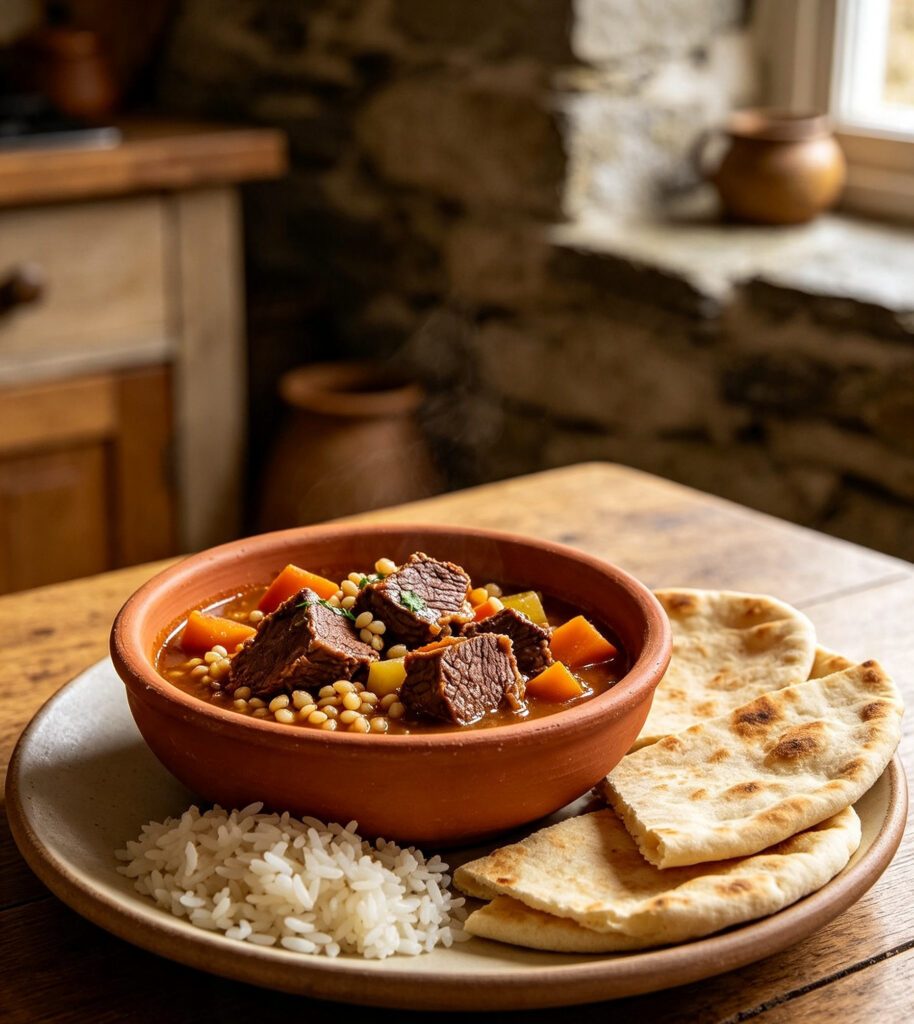
- Scatter with fresh cilantro and serve hot, ideally alongside rice or wheat flatbread as would have graced a royal table.
Introduction: A richly spiced venison stew inspired by the royal kitchen reforms recorded in Emperor Ashoka’s first major edict, this dish commemorates a documented turning point in Mauryan history when daily animal slaughter for the court was dramatically reduced.
Cultural Background: Ashoka’s Edict I, inscribed on rock pillars across the empire, records that the royal kitchen had formerly killed hundreds of thousands of animals daily for curries, and that following Ashoka’s embrace of Buddhist principles, this was reduced to just two peacocks and a deer, with even that intended to eventually cease. Since the peacock is India’s protected national bird today, this recipe uses venison, the other animal explicitly named in the edict, allowing the dish to remain both historically grounded and responsibly sourceable for a modern kitchen.
Tips: (cid:127) Venison is a lean meat and benefits from the low, slow cooking method described here to become properly tender. (cid:127) This dish is deliberately built around venison rather than peacock, both to respect the protected status of India’s national bird today and to keep the recipe genuinely usable in a home kitchen.
Variations: (cid:127) Goat or mutton can be substituted for venison if preferred, using the same spicing and method. (cid:127) A few strands of saffron can be added for an especially opulent presentation befitting the dish’s royal historical association.
Storage: Store in an airtight container in the refrigerator for up to 3 days, or freeze for up to 3 months.
Reheating: Reheat in a covered saucepan over medium-low heat, stirring occasionally, until piping hot throughout.
Nutrition: Per serving (approx.): 340 kcal, 34 g protein, 5 g carbohydrate, 20 g fat, 1 g fibre, 520 mg sodium.
FAQs:
Q: What exactly does Ashoka’s Edict I say about the royal kitchen?
A: The edict records that the kitchen of the reigning king formerly killed very large numbers of animals daily for curry, and that after Ashoka’s edict this was reduced to only two peacocks and a deer, with the stated aim that even these would eventually not be killed. (cid:127) Q: Why isn’t peacock included in this recipe? A: The peacock is India’s protected national bird today and cannot be responsibly sourced or cooked; venison, the other animal specifically named in the same edict, allows the dish to remain historically accurate while being genuinely usable and appropriate for a modern kitchen.
- Venison, cut into stewing pieces — 800 g (1.75 lb)
- Ghee — 3 tbsp
- Whole black peppercorns, coarsely crushed — 1 tsp
- Ground coriander — 1/2 tsp
- Ground ginger — 1/4 tsp
- Ground long pepper or extra black pepper — 1/4 tsp
- Small onion, finely chopped (regional addition, optional) — 1
- Rock salt — 1 tsp
- Water — 300 ml (1.25 cups)
- Fresh cilantro, chopped — 2 tbsp
Please log in to leave a comment.