
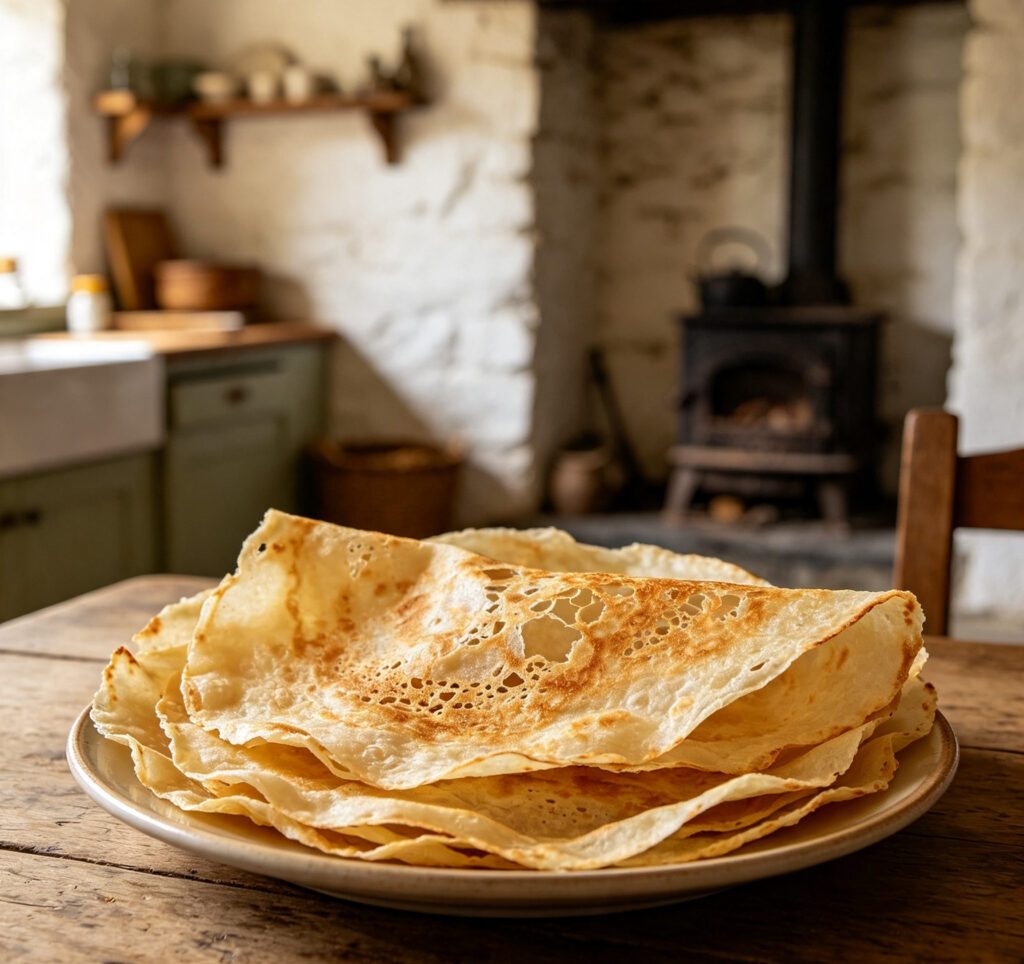
Roti Tissue (Crispy Paper-Thin Griddle Bread)
The Quirky Foodster Team
Ingredients
- Dough balls Roti canai dough (see Roti Canai recipe), rested — 6
- Ghee or margarine, melted — for stretching and cooking
- Sugar, for dusting — 30 g (2 tbsp)
- Sweetened condensed milk, for drizzling, optional — 30 ml (2 tbsp)
Method
- Generously oil your hands and a clean work surface.
- Take a rested dough ball and stretch it outward very thinly and evenly, working from the centre outward, until it is as thin and translucent as possible — thinner than for regular roti canai — taking great care not to tear it.
- Heat a lightly oiled griddle over medium-high heat.
- Carefully transfer the stretched dough to the griddle, cooking for about 1 minute per side, until crisp and lightly golden with a delicate, brittle texture.
- While still warm and pliable at the edges, fold or roll the roti into a cone or fan shape, if desired, for the traditional presentation.
- Dust generously with sugar and drizzle with condensed milk, if using, then serve immediately while crisp.
Introduction: An impossibly thin, delicately crisp version of roti canai, stretched until almost transparent and cooked to a light, shattering crunch — often served with a dusting of sugar or condensed milk drizzle.
Cultural Background: Roti tissue is a showpiece of mamak stall craftsmanship, with skilled roti makers stretching the dough thinner than for standard roti canai and often folding the finished bread into a tall, cone-like shape for dramatic presentation. It has become a favourite treat, especially among younger diners, for its delicate crunch and playful sweet toppings.
Tips: The dough must be stretched extremely thin for the correct crisp, tissue-like texture — thicker patches will not crisp properly. Cook quickly over medium-high heat, watching closely, as the thin dough browns and crisps very fast. Serve immediately after cooking, as roti tissue loses its crispness within minutes of standing.
Variations: Serve plain with a savoury curry for dipping instead of sugar, similar to standard roti canai. Drizzle with chocolate sauce as a modern, popular variation at some mamak stalls. Sprinkle with a little cinnamon sugar for extra flavour.
Storage: Best eaten immediately; roti tissue does not store well, as it quickly loses its signature crispness.
Reheating: Reheating is not recommended, as the delicate, crisp texture cannot be fully restored; it is best made fresh and eaten right away.
Nutrition: Approx. per serving (1 roti tissue): 240 kcal, 4 g protein, 32 g carbohydrate, 11 g fat, 1 g fibre.
FAQs:
Q: Why does my roti tissue turn out chewy instead of crisp?
A: This usually means the dough wasn’t stretched thin enough; take extra care and time to stretch it as thinly and evenly as possible before cooking.
Q: Can I make the cone shape at home?
A: Yes, while the cooked roti is still warm and pliable at the edges, gently roll or fold it into a cone shape by hand before it fully cools and crisps.
Q: Is roti tissue the same dough as roti canai?
A: Yes, it uses the same basic dough, simply stretched much thinner for a crisper, lighter result.
- Dough balls Roti canai dough (see Roti Canai recipe), rested — 6
- Ghee or margarine, melted — for stretching and cooking
- Sugar, for dusting — 30 g (2 tbsp)
- Sweetened condensed milk, for drizzling, optional — 30 ml (2 tbsp)
Please log in to leave a comment.