
Rihaakuru Lunch Plate (Rihaakuru)
The Quirky Foodster Team
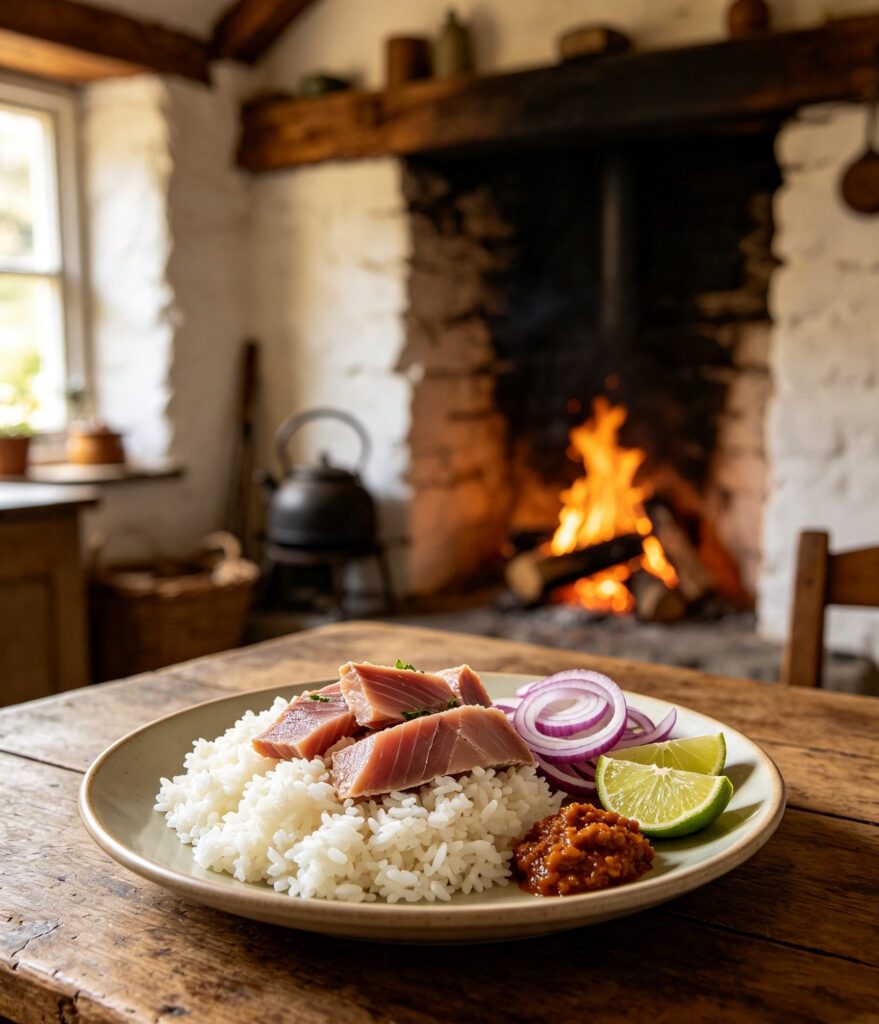
Ingredients
- Rihaakuru paste — 4 tbsp (60 g / 2 oz)
- Cooked rice — 2 cups (370 g / 13 oz)
- Small onion, thinly sliced — 1
- Green chillies, sliced — 2
- Lime, cut into wedges — 1
- Coconut oil — 1 tsp
Method
- Warm the rihaakuru gently in a small saucepan with the coconut oil, stirring, for 2 minutes.
- Spoon the warmed paste into a small serving dish.
- Plate the cooked rice alongside.
- Scatter the sliced onion and chillies over the rice.
- Serve with lime wedges for squeezing over just before eating.
Introduction: A hearty midday plate built around rihaakuru, the deeply savoury fish paste that forms the backbone of Maldivian cooking, served with rice and fresh chillies.
Cultural Background: Rihaakuru is made by slow-boiling tuna cooking liquid down for hours until it becomes a thick, treacle-like paste. It was traditionally a way to use every part of the catch and is considered one of the most distinctly Maldivian flavours, often called the country’s answer to fish sauce.
Tips: A little rihaakuru goes a long way — start with less and add to taste, as it is intensely salty and savoury. Warming the paste briefly loosens it and makes it easier to mix through rice.
Variations: Stir a spoonful of rihaakuru into coconut sambal for a milder way to enjoy the flavour. Add cooked reef fish flakes for a more substantial plate.
Storage: Rihaakuru paste itself keeps in a sealed jar in the refrigerator for several weeks; assembled plates are best eaten fresh.
Reheating: Reheat only the rihaakuru gently in a small pan over low heat; rice can be refreshed with a splash of water and microwaving for 1 minute.
Nutrition: Per serving (approx.): 320 kcal, 14 g protein, 6 g fat, 52 g carbohydrate.
FAQs:
Q: Where can I find rihaakuru outside the Maldives?
A: Maldivian and some South Asian specialty
Q: Is rihaakuru the same as fish sauce?
A: It’s thicker and more concentrated than Southeast Asian
- Rihaakuru paste — 4 tbsp (60 g / 2 oz)
- Cooked rice — 2 cups (370 g / 13 oz)
- Small onion, thinly sliced — 1
- Green chillies, sliced — 2
- Lime, cut into wedges — 1
- Coconut oil — 1 tsp
Please log in to leave a comment.