
Holidays & Special Occasions
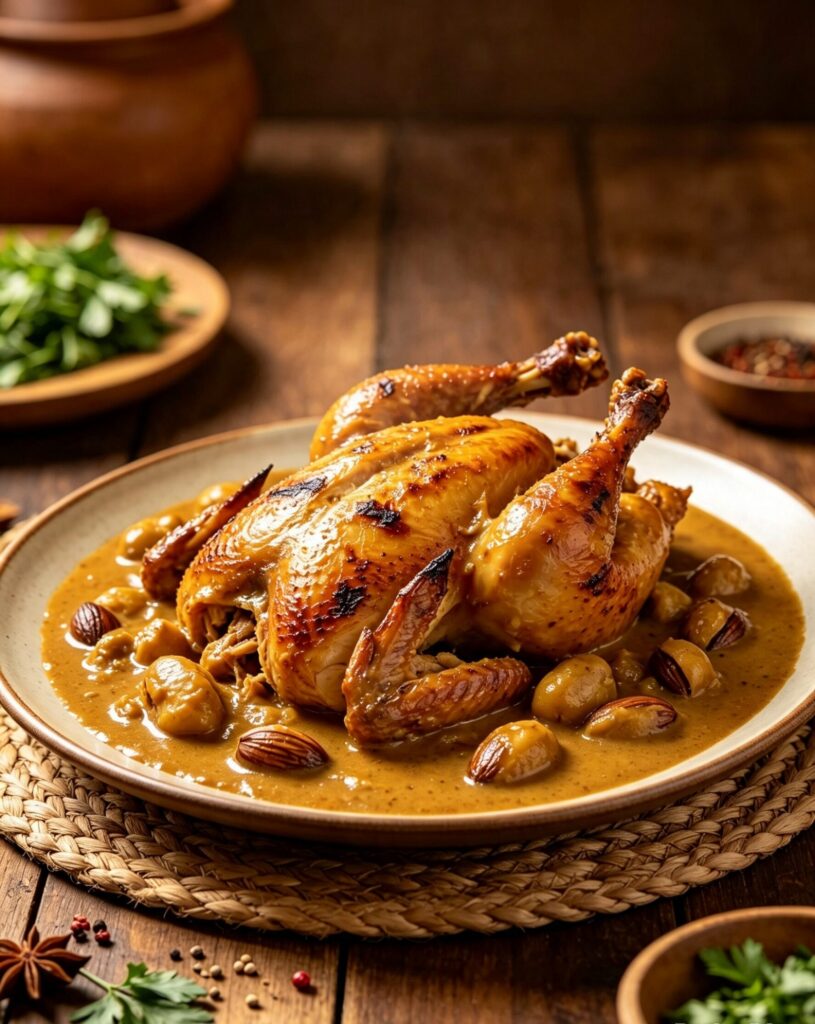
Poulet Nyembwe de Fête
The Quirky Foodster Team
Ingredients
- 1 whole chicken (about 1.8 kg / 4 lb), smoked over hardwood if possible
- 500 g (18 oz) palm nut cream
- 2 onions, chopped
- 4 garlic cloves, minced
- 3 tomatoes, chopped
- 2 bird's eye chiles, whole
- 2 tbsp ground pumpkin seeds (optional, for extra richness)
- 1 tbsp (15 ml) vegetable oil
- 400 ml (1 2/3 cups) water
- 2 chicken bouillon cubes
- Salt, to taste
Method
- If starting from raw chicken, smoke it whole over hardwood embers for 45-60 minutes until deeply coloured and infused with smoky aroma, then set aside.
- Heat the oil in a large pot and sauté the onions and garlic until golden, about 6 minutes.
- Add the tomatoes and cook until broken down, about 6 minutes.
- Stir in the palm nut cream, ground pumpkin seeds if using, crumbled bouillon cubes, and water until smooth.
- Carefully place the whole smoked chicken into the pot, spooning sauce generously over the top.
- Add the whole chiles, cover, and simmer gently over low heat for 1-1.5 hours, turning and basting the chicken occasionally, until very tender and the sauce is thick and deeply coloured.
- Remove the chiles, season with salt, and carefully transfer the whole chicken to a serving platter.
- Spoon extra sauce generously over the chicken just before presenting it at the table.
Introduction: For weddings, baptisms, and major holidays, Gabonese families elevate everyday Poulet Nyembwe into a grand centrepiece: a whole chicken, smoked over hardwood and simmered slowly in an extra-rich palm nut sauce, presented whole at the table to honour guests.
Cultural Background: For weddings, baptisms, and major holidays, Gabonese families elevate everyday Poulet Nyembwe into a grand centrepiece: a whole chicken, smoked over hardwood and simmered slowly in an extra-rich palm nut sauce, presented whole at the table to honour guests. Preparation is a shared family effort, with women coordinating the sauce and men often handling the smoking and grilling.
Tips: Basting the chicken periodically as it simmers whole ensures even flavour throughout, since it cannot be turned as easily as cut pieces.
Variations: In some regions, wild boar (sanglier) prepared in a similar odika or nyembwe sauce is served alongside or instead of chicken for New Year and wedding feasts; farmed pork can be used as a widely available, sustainable substitute for the traditional game meat. Not traditionally made vegetarian, given its role as a festive whole-chicken centrepiece; a hearty vegetable and mushroom Nyembwe (see Poulet Nyembwe recipe notes) can be prepared separately for vegetarian guests.
Storage: Refrigerate leftovers, carved from the bone, in an airtight container for up to 3 days.
Reheating: Reheat gently on the stovetop with a splash of water, covered, until warmed through.
Nutrition: Approx. 520 kcal, 40 g protein, 36 g fat, 10 g carbohydrates per serving.
FAQs:
Q: How is this different from the everyday Poulet Nyembwe?
A: This festive version uses a whole smoked chicken rather than cut pieces, a richer sauce often thickened with ground pumpkin seeds, and a longer simmer, and it is presented whole at the table as a celebratory centrepiece rather than served pre-portioned.
Q: What occasions is it served at?
A: Weddings, baptisms, New Year, and Independence Day (17 August) are among the key occasions when this grand version appears.
Please log in to leave a comment.