
Holidays & Special Occasions
Porcus Troianus (Trojan Pig Feast Centrepiece)
The Quirky Foodster Team
Ingredients
- 1 whole boned pork shoulder or loin roast, butterflied for stuffing (about 2 kg/4.5 lb)
- 6 cooked Lucanicae sausages (see Street Food section), or good-quality pork sausages
- 200g Cooked chicken or small game meat, shredded
- 100g Pine nuts
- 2 tsp ground cumin
- 1 tsp ground black pepper
- 60ml Fish sauce
- 60ml Honey
- 45ml Olive oil
- Kitchen string, for tying
Method
- Preheat the oven to 160C (325F). Lay the butterflied pork out flat, skin-side down.
- Layer the cooked sausages and shredded poultry down the centre of the meat, then scatter over the pine nuts, cumin and pepper.
- Roll the pork tightly around the filling and tie securely at intervals with kitchen string.
- Rub the outside with olive oil and fish sauce, place in a roasting tray, and roast for 2 1/2-3 hours, basting occasionally, until a meat thermometer reads at least 75C (165F) in the centre.
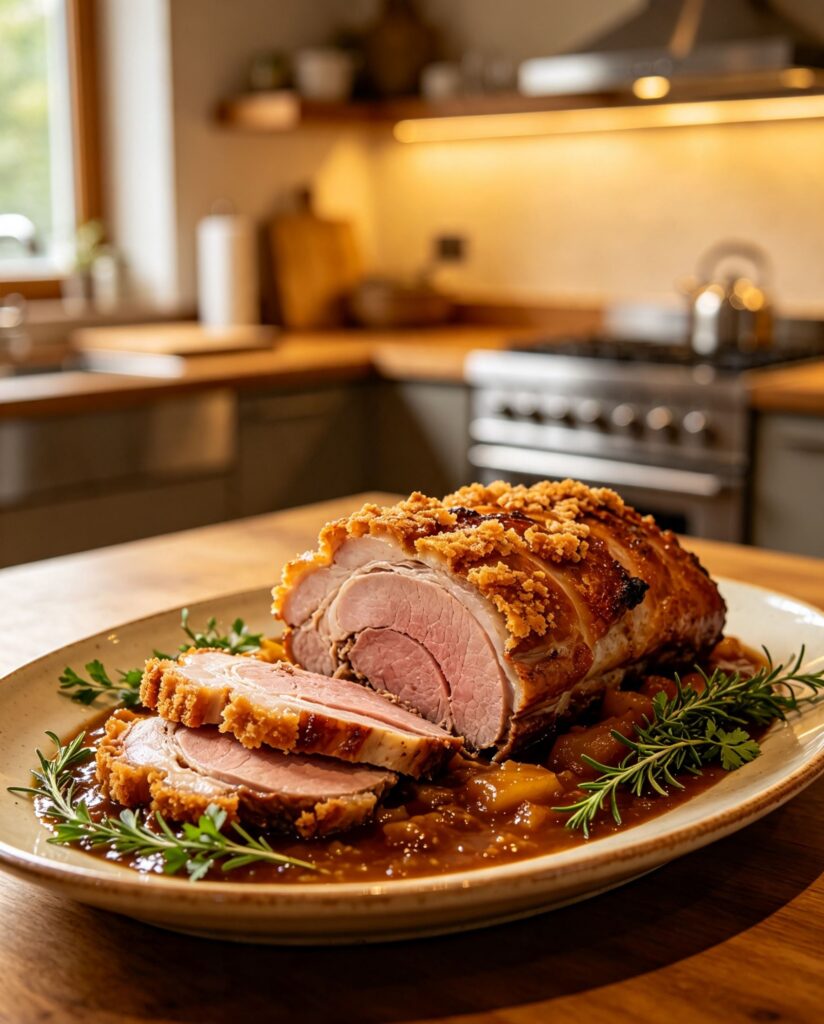
- In the last 15 minutes, brush with the honey to glaze. Rest for 15-20 minutes before slicing into thick rounds to reveal the layered filling, and bring to the table whole as the feast's centrepiece.
Native Name: Porcus Troianus
Cultural Background: The most theatrical dish in the Roman culinary record: a whole roast pig stuffed with sausages and small game, named for the Trojan Horse because of the surprise concealed inside it. Described by the writer Macrobius as a showpiece of excess, it was reserved for the grandest banquets and remains the centrepiece dish of the historical Roman table today.
Tips: Tie the roll firmly and evenly – a loosely tied roast will unravel during cooking and lose the dramatic layered slice the dish is known for.
Variations: For a grander version closer to Macrobius's account, add a few whole small birds such as quail into the stuffing layer alongside the sausages.
Vegetarian / Vegan Note: Not suitable as written; this is a whole-meat celebration centrepiece by definition.
Storage: Store covered in the refrigerator for up to 3 days, sliced or whole.
Reheating: Reheat slices in a covered dish in a 160C (325F) oven for 10-15 minutes, until warmed through.
Nutrition: Approx. 480 kcal, 38 g protein, 10 g carbohydrate, 31 g fat per serving.
FAQs:
Q: Why is it called the Trojan Pig?
A: Because, like the Trojan Horse, a whole exterior conceals something unexpected within – here, sausages and other meats hidden inside the roast.
Q: Do I need a whole pig to make this?
A: No – this home-cook adaptation uses a large boned pork joint, which gives the same stuffed, layered effect on a manageable scale.
Please log in to leave a comment.