
Breads
Pogacsa (Savoury Scones)
The Quirky Foodster Team
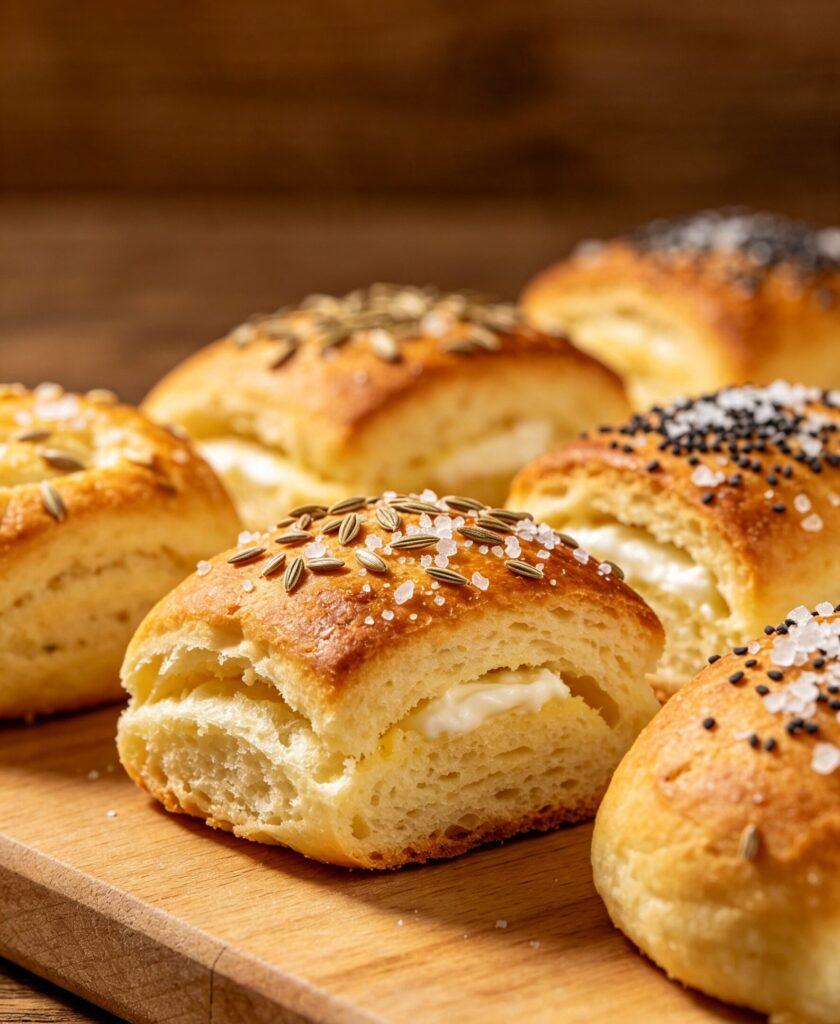
Ingredients
- 500 g (4 cups) flour
- 250 g (1 cup) cold butter, cubed
- 200 g (1 3/4 cups) grated cheese
- 10 g (2 1/4 tsp) instant yeast
- 150 ml (2/3 cup) warm milk
- 1 egg
- 1 tsp salt
- 1 egg yolk, for egg wash
Method
- Dissolve yeast in warm milk; let stand 10 minutes.
- Rub cold butter into the flour and salt until it resembles coarse crumbs.
- Stir in the grated cheese, egg and yeast mixture; bring together into a dough without overworking.
- Roll dough to about 2 cm (3/4 in) thickness, fold in thirds, and repeat 2-3 times for flaky layers.
- Cut into small rounds and score the tops in a crosshatch pattern.
- Brush with egg yolk and let rest 20 minutes.
- Bake at 200C (400F) for 18-20 minutes until golden and risen.
Introduction: Small, richly buttered savoury scones often flavoured with cheese or cracklings, pogacsa has roots stretching back to Ottoman-era flatbreads and remains a staple party and holiday snack across Hungary, especially at Easter and weddings.
Cultural Background: Small, richly buttered savoury scones often flavoured with cheese or cracklings, pogacsa has roots stretching back to Ottoman-era flatbreads and remains a staple party and holiday snack across Hungary, especially at Easter and weddings.
Tips: Keep the butter cold throughout and handle the dough minimally for the flakiest layers.
Variations: A version made with pork cracklings (tepertos pogacsa) is a popular savoury alternative to the cheese version.
Storage: Store in an airtight container at room temperature up to 3 days.
Reheating: Warm briefly in the oven to restore crispness.
Nutrition: Approx. 160 kcal, 4 g protein, 10 g fat, 14 g carbohydrate per scone.
FAQs:
Q: What cheese works best?
A: A sharp Hungarian sheep's cheese or a mature cheddar both work well.
Q: Is pogacsa served at a specific occasion?
A: It's especially popular at Easter, weddings and other festive gatherings, though eaten year-round.
Please log in to leave a comment.