
Holidays & Special Occasions
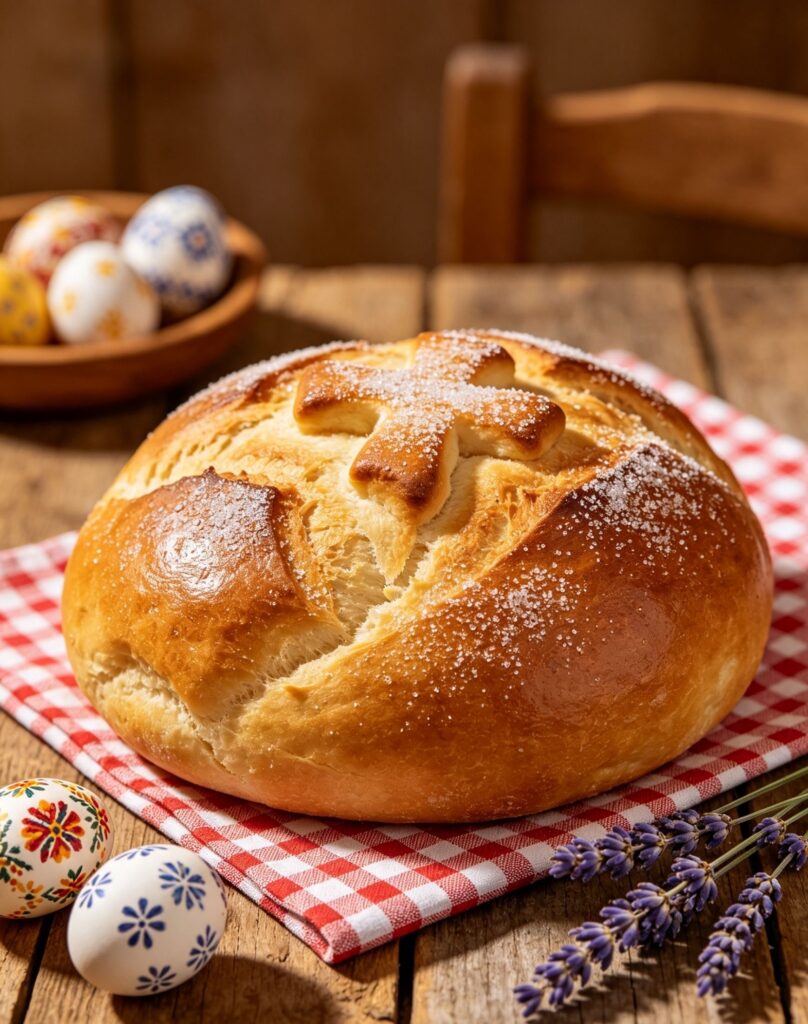
Pinca
The Quirky Foodster Team
Ingredients
- 500 g (1.1 lb) plain flour
- 80 g (2.8 oz) sugar
- 10 g (2 tsp) instant dry yeast
- 3 large eggs
- 80 g (2.8 oz) unsalted butter, softened
- 100 ml (3.4 fl oz / scant 1/2 cup) warm milk
- Zest of 1 lemon and 1 orange
- 2 tbsp rum
- 1/2 tsp salt
- 1 egg yolk, beaten, for glazing
Method
- Dissolve yeast in warm milk with a pinch of the sugar; let stand 10 minutes until foamy.
- In a large bowl, combine flour, remaining sugar and salt.
- Add the yeast mixture, eggs, softened butter, citrus zest and rum, mixing to a soft dough.
- Knead for 8-10 minutes until smooth and elastic.
- Cover and let rise in a warm place for about 2 hours, until doubled.
- Shape into round or oval loaves, place on a baking tray, and let rise again for 45 minutes.
- Brush with beaten egg yolk and score a cross or three lines on top.
- Bake at 180°C (350°F) for 30-35 minutes until deep golden and a skewer comes out clean.
Introduction: Pinca is a soft, slightly sweet Easter bread flavoured with citrus zest and rum, traditionally blessed at church
alongside cured ham and eggs on Holy Saturday.
Cultural Background: Pinca is a soft, slightly sweet Easter bread flavoured with citrus zest and rum, traditionally blessed at church
alongside cured ham and eggs on Holy Saturday. Its domed, cracked top is a distinctive feature of Dalmatian
Easter tables.
Tips: The dough is quite soft — resist adding too much extra flour, or the pinca will be dense. Scoring the top allows
the traditional crack to form as it bakes.
Variations: Some families add raisins or candied peel to the dough for extra festivity.
Storage: Store wrapped at room temperature for up to 3 days.
Reheating: Best enjoyed at room temperature; toast slices lightly if desired.
Nutrition: Per serving (approx.): 290 kcal, 7 g protein, 9 g fat, 44 g carbohydrate.
FAQs
Q: When is pinca eaten?
A: Traditionally blessed at Easter Saturday church service and eaten on Easter Sunday morning with ham and eggs.
Q: Why does the top crack?
A: The scored top splits naturally as the bread rises in the oven, a traditional and expected feature of pinca.
Please log in to leave a comment.