
Patir (Rich Layered Uzbek Bread)
The Quirky Foodster Team
Ingredients
- Plain flour, plus extra for dusting — 500 g (4 cups)
- Instant yeast — 1.5 tsp
- Sugar — 1 tbsp
- Salt — 1.5 tsp
- Warm milk — 150 ml (2/3 cup)
- Warm water — 150 ml (2/3 cup)
- Butter, melted, plus extra for brushing — 80 g (1/3 cup)
- Sesame seeds, for topping — 1 tbsp
Method
- In a large bowl, combine the flour, yeast, sugar, and salt. Make a well in the center and pour in the warm milk, warm water, and melted butter.
- Mix until a soft dough forms, then knead on a floured surface for 10 minutes until smooth, soft, and slightly tacky.
- Place in a lightly oiled bowl, cover, and let rise in a warm place for 1–1.5 hours until doubled in size.
- Punch down the dough and divide into 4 equal balls. Cover and rest for 10 minutes.
- Preheat the oven to 220°C (430°F) with a baking tray inside.
- Shape each ball into a flat disc about 18 cm (7 inches) wide, keeping the edges slightly thicker than the center. Dock the center with a fork in a decorative pattern.
- Brush the tops generously with melted butter and sprinkle with sesame seeds.
- Transfer to the hot baking tray and bake for 15–18 minutes until deep golden brown.
- Remove from the oven and brush with a little extra melted butter while still warm. Let cool slightly before serving.
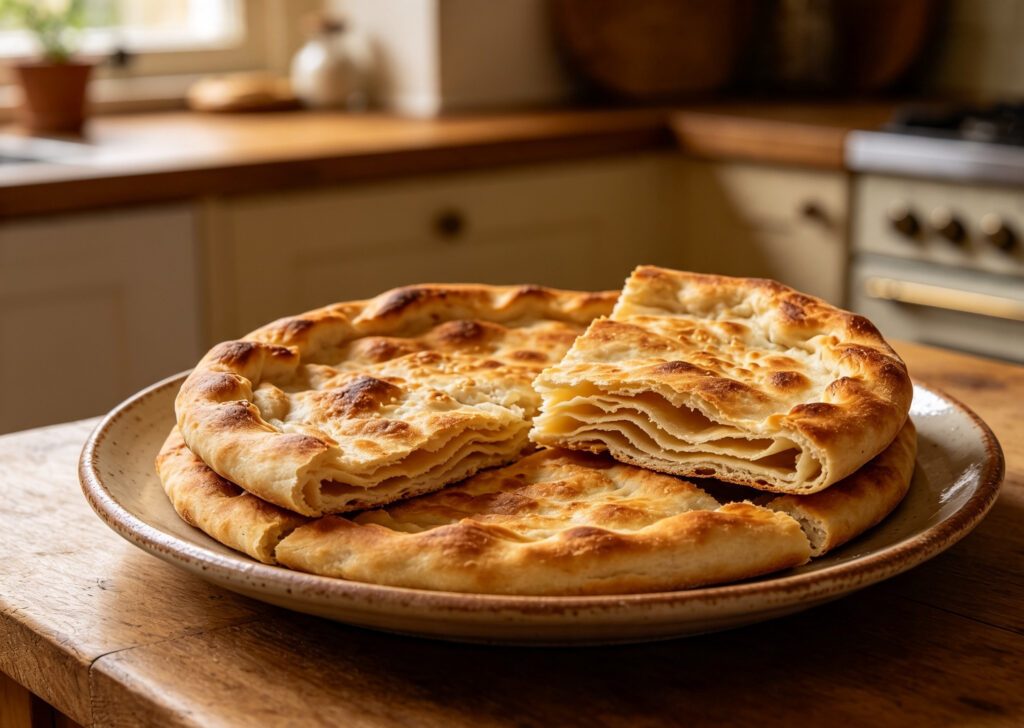
Introduction: Patir is a richer, more indulgent cousin of everyday non bread, enriched with butter or oil and sometimes milk, resulting in a softer, slightly flaky crumb.
Cultural Background: Patir is a richer, more indulgent cousin of everyday non bread, enriched with butter or oil and sometimes milk, resulting in a softer, slightly flaky crumb. Often reserved for special occasions and celebrations, patir reflects the value placed on generosity and abundance at Uzbek gatherings, where a richer bread signals a more festive meal.
Tips: The enriched dough is softer than standard non dough, so handle it gently to avoid deflating the air bubbles. Brushing with butter both before and after baking gives patir its signature rich flavor and glossy finish. Serve warm for the best texture, as patir firms up as it cools.
Variations: Add a pinch of ground cardamom to the dough for a subtly spiced, festive version. Use cream instead of milk for an even richer crumb. Vegan version: substitute the butter with a plant-based butter alternative and use plant-based milk.
Storage: Store in an airtight container at room temperature for up to 2 days, or freeze for up to 1 month.
Reheating: Reheat in an oven at 170°C (340°F) for 5–7 minutes to restore softness and warmth.
FAQs:
Q: What makes patir different from non?
A: Patir is enriched with butter and milk, giving it a softer, richer crumb compared to the plainer, chewier everyday non.
Q: Can I prepare the dough in advance?
A: Yes, the dough can be made a day ahead, refrigerated after the first rise, and brought to room temperature before shaping.
Q: Is patir served with anything specific?
A: It is often served on its own or with tea at celebrations, though it also pairs well with jams or soft cheeses.
- Plain flour, plus extra for dusting — 500 g (4 cups)
- Instant yeast — 1.5 tsp
- Sugar — 1 tbsp
- Salt — 1.5 tsp
- Warm milk — 150 ml (2/3 cup)
- Warm water — 150 ml (2/3 cup)
- Butter, melted, plus extra for brushing — 80 g (1/3 cup)
- Sesame seeds, for topping — 1 tbsp
Please log in to leave a comment.