
Pastei
The Quirky Foodster Team
Ingredients
- Chicken thighs, boneless, cut into chunks — 600 g (1.3 lb)
- Butter, divided — 120 g (1/2 cup plus 2 tbsp)
- All-purpose flour, plus extra for dusting — 350 g (2 3/4 cups)
- Cold water — 3 tbsp
- Egg, beaten (for egg wash) — 1
- Medium Onion, chopped — 1
- Medium Carrot, diced — 1
- Frozen peas — 100 g (3/4 cup)
- Green olives, sliced — 60 g (1/3 cup)
- Raisins — 50 g (1/3 cup)
- Chicken stock — 300 ml (1 1/4 cups)
- All-purpose flour, for the filling (thickener) — 2 tbsp
- Salt and pepper — to taste
Method
- Make the pastry: rub 100g of the cold butter into the flour until it resembles breadcrumbs, then mix in the cold water to form a firm dough. Wrap and chill for 20 minutes.
- For the filling, melt the remaining butter in a large frying pan and cook the chicken until lightly browned, about 6 minutes. Add the onion and carrot and cook 5 minutes more.
- Sprinkle the 2 tablespoons of flour over the chicken and vegetables and stir to coat, then gradually add the stock, stirring, until it thickens into a gravy.
- Stir in the peas, olives and raisins, season with salt and pepper, and simmer 5 minutes. Let cool slightly.
- Preheat the oven to 190C (375F). Roll out two-thirds of the pastry and line a baking dish, then spoon in the cooled filling.
- Roll out the remaining pastry as a lid, place over the filling, seal and crimp the edges, brush with egg wash, and cut a small steam vent. Bake 30-35 minutes until deep golden brown.
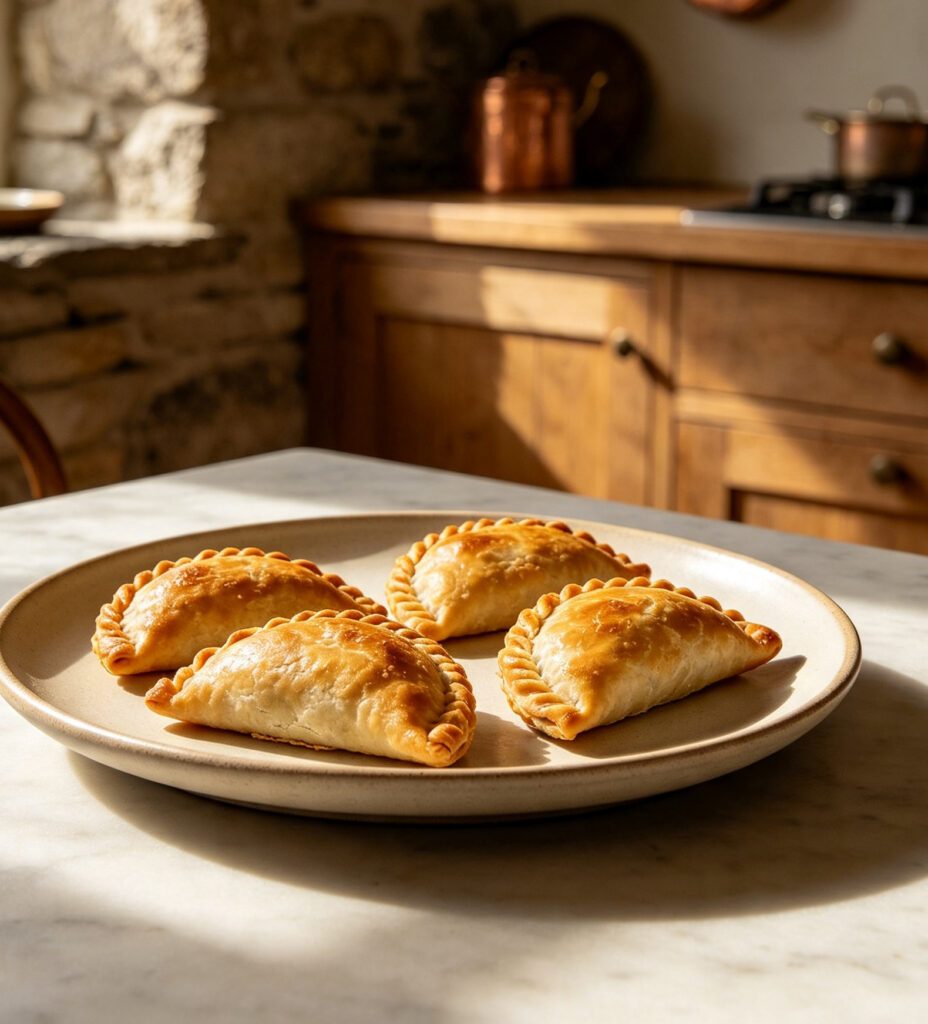
Introduction: Pastei is a Surinamese chicken pot pie, its buttery pastry crust and savoury-sweet filling of olives, raisins and vegetables showing clear Dutch colonial influence reshaped by Creole home cooking.
Cultural Background: Pastei is a Surinamese chicken pot pie, its buttery pastry crust and savoury-sweet filling of olives, raisins and vegetables showing clear Dutch colonial influence reshaped by Creole home cooking. It is a fixture of Surinamese birthday and holiday tables, usually baked in individual dishes or a single large dish and served as a celebratory centrepiece alongside other festive foods like Pom.
Tips: Let the filling cool before adding it to the pastry case, or the base will turn soggy. Chilling the pastry well before rolling makes it much easier to handle. Individual small pastei in ramekins are a popular way to serve this at parties.
Variations: Some households add a few chopped hard-boiled eggs to the filling for a richer, more festive version. A puff pastry lid can be used instead of shortcrust for a lighter, flakier finish. A vegetarian version can be made using a mix of mushrooms, extra carrot and chickpeas in place of chicken, using vegetable stock, keeping the same olive and raisin filling character.
Storage: Store covered in the refrigerator for up to 3 days; unbaked, assembled pastei can be frozen for up to 2 months.
Reheating: Reheat in a 160C (325F) oven for 20-25 minutes until warmed through and the pastry is re-crisped.
FAQs:
Q: Why does Pastei include raisins and olives together?
A: This sweet-savoury combination is a hallmark of the dish’s Dutch-influenced heritage, similar to other Dutch-Caribbean pies, and Surinamese cooks have kept it as a defining, much-loved feature.
Q: Can I make individual pastei instead of one large pie?
A: Yes, dividing the pastry and filling among small ramekins or foil tins is very traditional for parties, giving each guest their own portion.
Q: Can Pastei be frozen before baking?
A: Yes, assemble fully, wrap well, and freeze unbaked; bake from frozen at 180C (350F), adding about 15-20 extra minutes.
- Chicken thighs, boneless, cut into chunks — 600 g (1.3 lb)
- Butter, divided — 120 g (1/2 cup plus 2 tbsp)
- All-purpose flour, plus extra for dusting — 350 g (2 3/4 cups)
- Cold water — 3 tbsp
- Egg, beaten (for egg wash) — 1
- Medium Onion, chopped — 1
- Medium Carrot, diced — 1
- Frozen peas — 100 g (3/4 cup)
- Green olives, sliced — 60 g (1/3 cup)
- Raisins — 50 g (1/3 cup)
- Chicken stock — 300 ml (1 1/4 cups)
- All-purpose flour, for the filling (thickener) — 2 tbsp
- Salt and pepper — to taste
Please log in to leave a comment.