
Parippu (Red Lentil Curry)
The Quirky Foodster Team
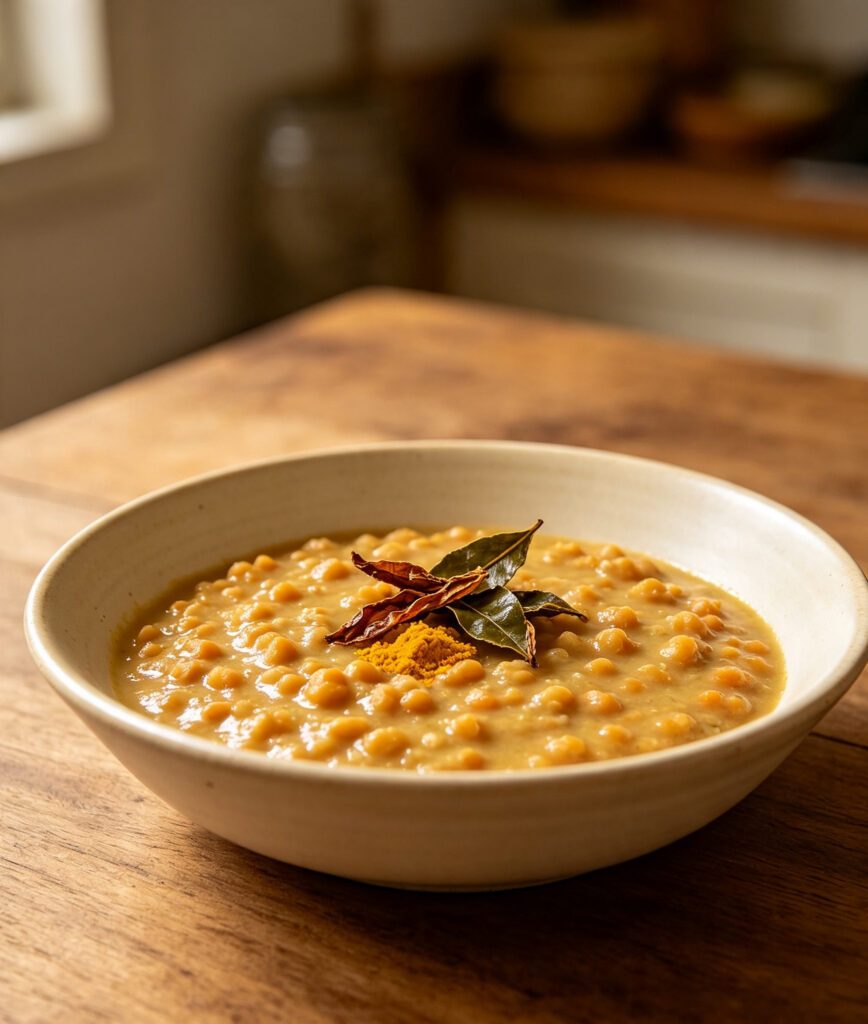
Ingredients
- Red lentils (1 cup) — 200 g (7.1 oz)
- Water (2 cups) — 480 ml (2 cups)
- Turmeric (1/4 teaspoon) — 1 g
- Small onion, finely sliced, divided (75 g) — 1
- Garlic cloves, crushed — 2
- Green chilli, slit — 1
- Curry leaves, divided — 1 sprig
- Thin coconut milk (1 cup) — 240 ml (1 cup)
- Thick coconut milk (1/2 cup) — 120 ml (1/2 cup)
- Coconut oil (1 tablespoon) — 15 ml (1 tbsp)
- Mustard seeds (1/2 teaspoon) — 2 g
- Dried red chilli — 1
- Salt — to taste
Method
- Rinse the lentils until the water runs clear. Combine with water, turmeric, half the onion, garlic, green chilli and half the curry leaves in a saucepan.
- Bring to a boil, then reduce heat and simmer for 15-18 minutes, skimming any foam, until the lentils are completely soft and starting to break down.
- Stir in the thin coconut milk and simmer for 5 minutes.
- Stir in the thick coconut milk and salt, and warm through gently without letting it boil hard.
- For the tempering, heat coconut oil in a small pan. Add mustard seeds and let them pop, then add the remaining onion, curry leaves and dried red chilli, and fry until the onion is golden.
- Pour the hot tempering over the finished parippu just before serving.
Introduction: Parippu is the quiet backbone of the Sri Lankan rice and curry table – a mild, coconut-milk-enriched red lentil curry that appears at nearly every meal, valued for the way its softness and mellow flavour balance out spicier, sharper dishes.
Cultural Background: Parippu is the quiet backbone of the Sri Lankan rice and curry table – a mild, coconut-milk-enriched red lentil curry that appears at nearly every meal, valued for the way its softness and mellow flavour balance out spicier, sharper dishes. Finished with a tempering (thelapu) of mustard seeds, dried chilli and curry leaves fried in oil and poured over the top just before serving, it is one of the first dishes Sri Lankan children learn to cook.
Tips: Skim the foam that rises while boiling the lentils for a cleaner-tasting, smoother curry. Add the thick coconut milk at the end and keep the heat low to prevent it splitting. The tempering step is not optional if you want authentic flavour – it adds a final layer of aroma that plain simmered lentils lack.
Variations: Some households add a small piece of pandan leaf while simmering for extra fragrance. A pinch of ground Maldive fish can be added to the tempering for a non-vegetarian version with extra umami. Naturally vegan as written with no substitution needed.
Storage: Refrigerate for up to 3 days; it thickens as it cools.
Reheating: Reheat gently on the stovetop with a splash of water or coconut milk to loosen, stirring frequently.
Nutrition: Approx. 220 kcal, 9 g protein, 12 g fat, 21 g carbohydrates, 5 g fibre per serving
FAQs:
Q: Why do you add coconut milk in two stages?
A: Thin coconut milk cooks into the lentils to build flavour, while the richer thick coconut milk is added at the very end so its flavour and creaminess remain distinct rather than being cooked away.
Q: What is a tempering and why is it important?
A: A tempering (thelapu) is a quick fry of spices in hot oil poured over a finished dish; it adds a final burst of aroma and texture that cannot be achieved by cooking the spices in with everything else.
Q: Can I use a different lentil?
A: Red lentils (masoor dal) are traditional for their quick cooking time and creamy texture when broken down; yellow split peas can substitute but will need longer cooking.
- Red lentils (1 cup) — 200 g (7.1 oz)
- Water (2 cups) — 480 ml (2 cups)
- Turmeric (1/4 teaspoon) — 1 g
- Small onion, finely sliced, divided (75 g) — 1
- Garlic cloves, crushed — 2
- Green chilli, slit — 1
- Curry leaves, divided — 1 sprig
- Thin coconut milk (1 cup) — 240 ml (1 cup)
- Thick coconut milk (1/2 cup) — 120 ml (1/2 cup)
- Coconut oil (1 tablespoon) — 15 ml (1 tbsp)
- Mustard seeds (1/2 teaspoon) — 2 g
- Dried red chilli — 1
- Salt — to taste
Please log in to leave a comment.