
Breads
Panis Quadratus (Pompeii Round Bread)
The Quirky Foodster Team
Ingredients
- 500g Strong white bread flour
- 10g Fine salt
- 7g Dried yeast
- 320ml Warm water
- 30ml Olive oil
Method
- Combine the flour, salt and yeast in a large mixing bowl. Make a well in the centre and add the warm water and olive oil.
- Mix to a rough dough, then turn out and knead for 10 minutes, until smooth and elastic.
- Place in an oiled bowl, cover, and leave to rise for about 1 hour, until doubled in size.
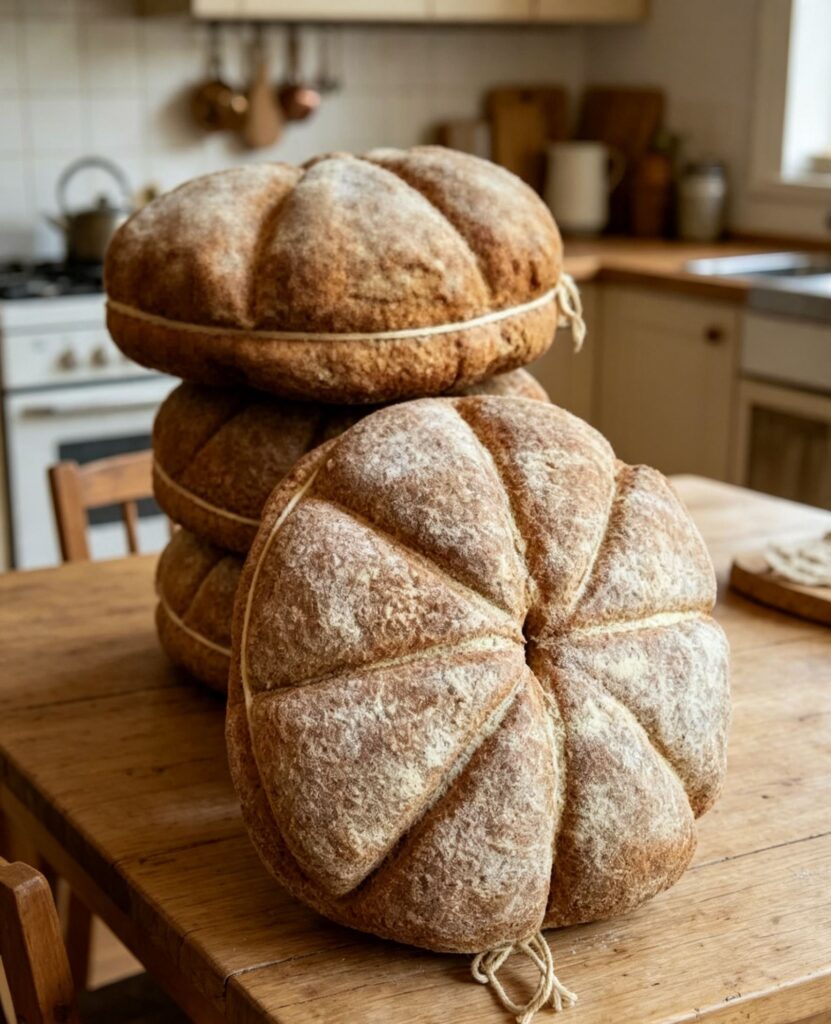
- Knock back the dough, shape into a round, and tie a piece of kitchen string around the middle (as in the Pompeii originals) to create a defined equator. Score 8 wedge lines from the centre outward using a sharp knife.
- Prove for a further 30 minutes, then bake at 220C (425F) for 30-35 minutes, until deeply golden and hollow-sounding when tapped. Cool before slicing along the scored wedges.
Native Name: Panis Quadratus
Cultural Background: Carbonised loaves of this exact shape were preserved by the eruption of Vesuvius and found in the ruins of Pompeii – a round loaf scored into eight wedges with a cord tied around its middle, likely so it could be carried or divided easily without a knife.
Tips: Score the wedge lines fairly deep before the final prove – this is what allows the loaf to be broken cleanly into portions after baking, as the Pompeii loaves were.
Variations: A small amount of coarse spelt flour can replace some of the white flour for a heartier, more rustic crumb closer to Roman-era grain.
Vegetarian / Vegan Note: Naturally vegan.
Storage: Store wrapped at room temperature for up to 3 days, or freeze for up to 1 month.
Reheating: Refresh in a 180C (350F) oven for 5-8 minutes to re-crisp the crust before serving.
Nutrition: Approx. 240 kcal, 7 g protein, 45 g carbohydrate, 4 g fat per serving.
FAQs:
Q: Is this the actual bread found at Pompeii?
A: Yes, this recipe recreates the shape and scoring pattern of carbonised loaves excavated at Pompeii, one of the most direct physical links we have to Roman daily bread.
Q: Why tie string around the dough?
A: It's believed to have helped the loaf hold its shape during baking and made it easier to carry or hang for storage.
Please log in to leave a comment.