
Pan Dulce (Uruguayan Christmas Sweet Bread)
The Quirky Foodster Team
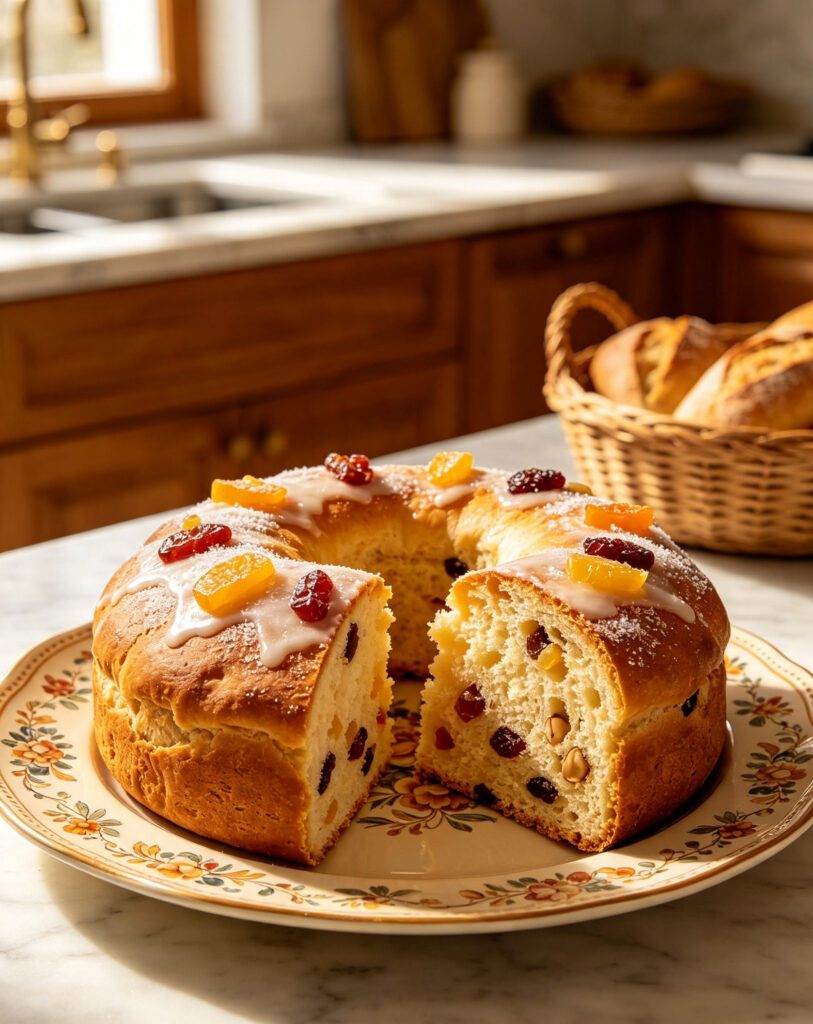
Ingredients
- Plain flour — 500 g (4 cups)
- Instant yeast — 10 g (2.5 tsp)
- Sugar — 100 g (1/2 cup)
- Salt — 1 tsp
- Warm milk — 150 ml (2/3 cup)
- Large eggs — 3
- Butter, softened — 120 g (1/2 cup)
- Vanilla extract — 1 tsp
- Zest of 1 orange
- Raisins, soaked in warm water for 15 minutes and drained — 150 g (1 cup)
- Candied fruit, chopped — 100 g (2/3 cup)
- Walnuts or almonds, chopped — 100 g (2/3 cup)
- Powdered sugar, for dusting (optional)
Method
- In a large bowl, combine the flour, yeast, sugar, and salt. Add the warm milk, eggs, softened butter, vanilla, and orange zest.
- Mix until a soft dough forms, then knead for 10 minutes until smooth and elastic.
- Cover and let rise in a warm place for 1.5–2 hours until doubled in size.
- Gently knead in the soaked raisins, candied fruit, and chopped nuts until evenly distributed throughout the dough.
- Shape the dough into a round loaf and place in a paper panettone mold or on a lined baking tray.
- Cover loosely and let rise for a further 45–60 minutes until puffy.
- Preheat the oven to 180°C (355°F). Bake for 40–45 minutes, tenting with foil if the top browns too quickly, until a skewer inserted into the center comes out clean.
- Let cool completely on a wire rack before dusting with powdered sugar, if desired, and slicing.
Introduction: Pan dulce is a sweet, fruit- and nut-studded bread traditionally baked and shared during Christmas and New Year celebrations across Uruguay, reflecting the country's strong Italian immigrant influence (related to Italian panettone).
Cultural Background: Pan dulce is a sweet, fruit- and nut-studded bread traditionally baked and shared during Christmas and New Year celebrations across Uruguay, reflecting the country's strong Italian immigrant influence (related to Italian panettone). Families often gather in the evening on Nochebuena (Christmas Eve) to share slices of pan dulce alongside cider or sparkling wine, making it an essential symbol of the festive season.
Tips: Soaking the raisins beforehand plumps them up and prevents them from drawing moisture out of the dough during baking. Watch the loaf closely toward the end of baking, as the sugar and fruit can cause the crust to brown quickly; tent with foil if needed. Pan dulce keeps well and often tastes even better a day or two after baking, once the flavors have settled.
Variations: Add a splash of rum to the soaking liquid for the raisins for extra flavor. Some bakers add chocolate chips alongside or instead of candied fruit. Vegan version: substitute butter with a plant-based alternative, use a flax or commercial egg replacer, and use a plant-based milk.
Storage: Store wrapped in plastic or in an airtight container at room temperature for up to 5 days, or freeze for up to 2 months.
Reheating: Pan dulce is typically served at room temperature. If desired, warm individual slices briefly in a toaster oven for 2–3 minutes.
FAQs:
Q: Is pan dulce the same as Italian panettone?
A: They are closely related, with pan dulce reflecting the strong Italian immigrant influence in Uruguay, though there are regional variations in texture and ingredients.
Q: When is pan dulce traditionally eaten?
A: It is a centerpiece of Christmas Eve (Nochebuena) and New Year celebrations across Uruguay.
Q: Can I make pan dulce without nuts, for allergies?
A: Yes, the nuts can be omitted or replaced with additional dried or candied fruit.
- Plain flour — 500 g (4 cups)
- Instant yeast — 10 g (2.5 tsp)
- Sugar — 100 g (1/2 cup)
- Salt — 1 tsp
- Warm milk — 150 ml (2/3 cup)
- Large eggs — 3
- Butter, softened — 120 g (1/2 cup)
- Vanilla extract — 1 tsp
- Zest of 1 orange
- Raisins, soaked in warm water for 15 minutes and drained — 150 g (1 cup)
- Candied fruit, chopped — 100 g (2/3 cup)
- Walnuts or almonds, chopped — 100 g (2/3 cup)
- Powdered sugar, for dusting (optional)
Please log in to leave a comment.