
Pan de Muerto
The Quirky Foodster Team
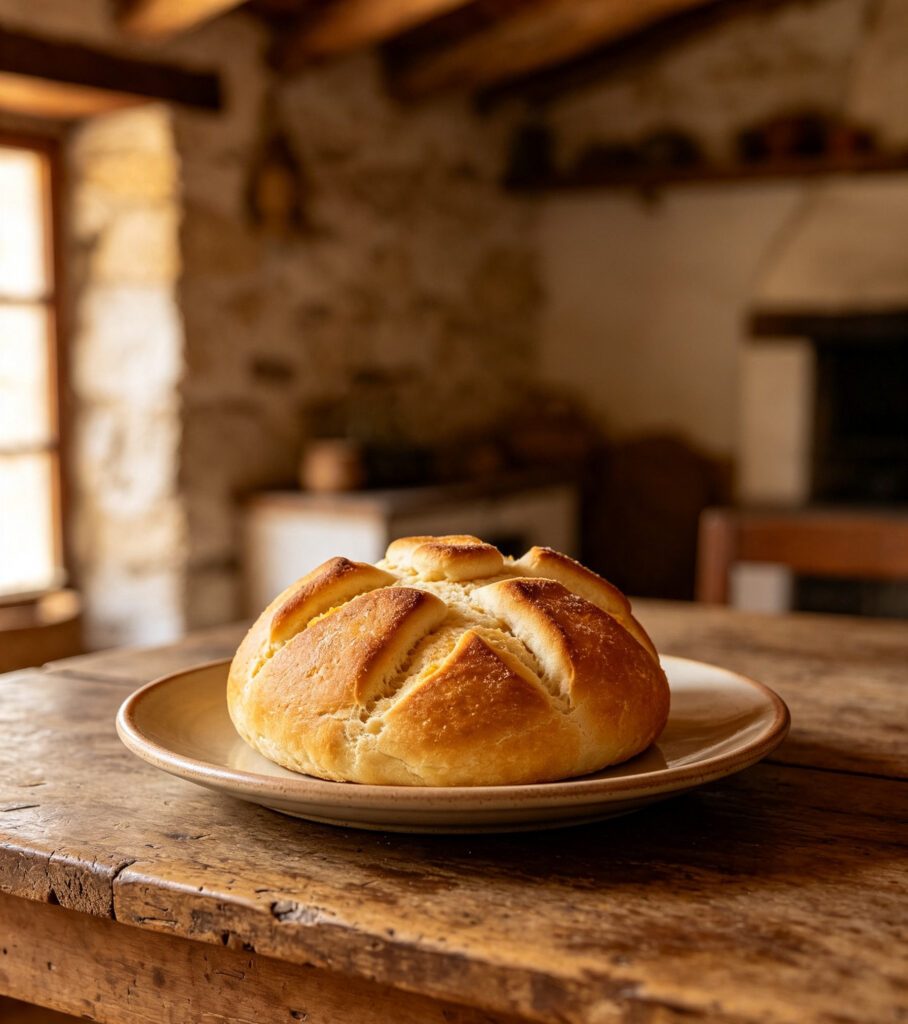
Ingredients
- Plain flour — 4 cups (500 g / 1 lb 2 oz)
- Sugar — 1/2 cup (100 g / 3.5 oz)
- Active dry yeast — 2 tsp
- Warm milk — 1/2 cup (120 ml / 4 fl oz)
- Eggs — 4
- Butter, softened — 1/2 cup (115 g / 4 oz)
- Zest of 1 orange
- Orange blossom water — 1 tbsp
- Salt — 1/2 tsp
- Extra melted butter and sugar, for coating
Method
- Dissolve the yeast in the warm milk and let sit for 10 minutes until foamy.
- Combine the flour, sugar and salt in a large bowl, then add the eggs, softened butter, orange zest, orange blossom water and yeast mixture.
- Knead for 10–12 minutes until smooth and elastic.
- Cover and let rise in a warm place for 1.5–2 hours, or until doubled in size.
- Set aside a small portion of dough for decoration, then shape the remaining dough into a round loaf and place on a baking tray.
- Shape the reserved dough into thin strips to resemble bones, and a small ball for the top, arranging them decoratively on the loaf.
- Let rise for a further 30–45 minutes.
- Preheat the oven to 180°C (350°F) and bake for 25–30 minutes until golden.
- While still warm, brush with melted butter and generously coat with sugar.
Introduction: A soft, orange-blossom-scented sweet bread shaped with bone-like decorations, baked specifically for Día de los Muertos altars and celebrations.
Cultural Background: Pan de muerto (‘bread of the dead’) is prepared each autumn for Día de los Muertos, placed on ofrendas (altars) to honour deceased loved ones, its round shape and bone-shaped decorations carrying deep symbolic meaning tied to the cycle of life and death.
Tips: Shape the bone decorations while the dough is still workable, then attach gently with a little water so they adhere during baking. Brush with butter and roll in sugar while the bread is still warm, so the sugar sticks evenly.
Variations: Flavour with a little ground anise seed in addition to orange blossom water for a more traditional regional variation. Some bakeries tint the dough pink for a festive colour, especially in central Mexico.
Storage: Store in an airtight container at room temperature for up to 3 days.
Reheating: Not typically reheated; enjoyed at room temperature, often with hot chocolate or coffee.
Nutrition: Per serving (approx.): 320 kcal, 7 g protein, 10 g fat, 50 g carbohydrate.
FAQs:
Q: What do the bone shapes represent?
A: They symbolise the bones of the departed, a central
Q: When is pan de muerto traditionally eaten?
A: In the weeks leading up to and during Día de los
- Plain flour — 4 cups (500 g / 1 lb 2 oz)
- Sugar — 1/2 cup (100 g / 3.5 oz)
- Active dry yeast — 2 tsp
- Warm milk — 1/2 cup (120 ml / 4 fl oz)
- Eggs — 4
- Butter, softened — 1/2 cup (115 g / 4 oz)
- Zest of 1 orange
- Orange blossom water — 1 tbsp
- Salt — 1/2 tsp
- Extra melted butter and sugar, for coating
Please log in to leave a comment.