
Breads
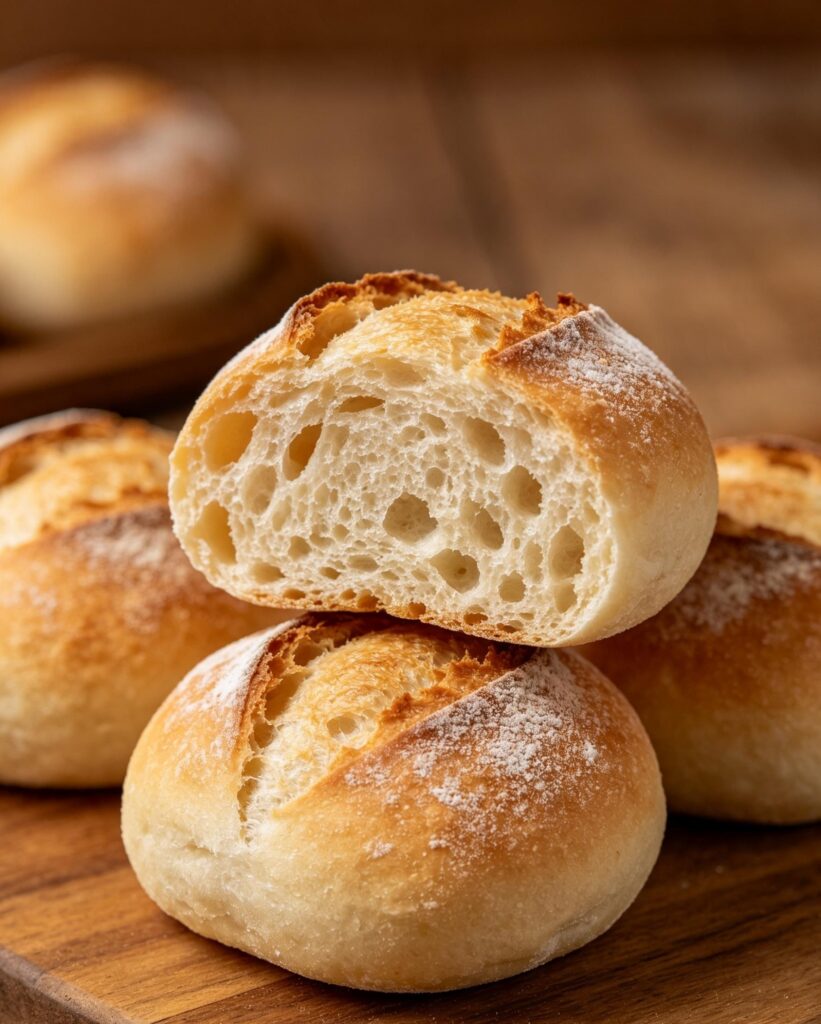
Equatorial Guinean Pan de Agua
The Quirky Foodster Team
Ingredients
- 500g (4 cups) bread flour
- 300ml (1 1/4 cups) warm water
- 7g (2 1/4 tsp) instant yeast
- 10g (2 tsp) salt
- 1 tsp sugar
Method
- Dissolve the yeast and sugar in the warm water and leave for 10 minutes until foamy.
- Combine the flour and salt in a large bowl, then add the yeast mixture. Mix and knead for 10 minutes until smooth and elastic.
- Cover and prove for 1 hour, or until doubled in size.
- Knock back the dough and shape into 8 small rolls or 2 long loaves. Place on a lined tray.
- Cover and prove for a further 30 minutes, then score the tops with a sharp blade.
- Bake at 220°C (425°F) for 20–25 minutes until golden and hollow-sounding when tapped underneath.
Introduction: A crusty, simple water-based bread roll, a direct descendant of Spanish panadería traditions, baked fresh each morning in bakeries across Malabo and Bata and eaten with nearly every meal.
Cultural Background: A crusty, simple water-based bread roll, a direct descendant of Spanish panadería traditions, baked fresh each morning in bakeries across Malabo and Bata and eaten with nearly every meal.
Storage: Best eaten the day it’s baked; store in a paper bag at room temperature for up to 2 days.
Reheating: Warm in a 180°C (350°F) oven for 5 minutes to refresh the crust.
Tips: A shallow pan of water in the oven helps create a crisper crust. Score the dough just before baking, not before its final prove, to avoid deflating it.
Variations: Add a tablespoon of olive oil to the dough for a softer crumb. Shape into small baguette-style loaves for sandwiches. Fully vegan as written.
Nutrition: Per roll: 190 kcal, 6g protein, 39g carbohydrate, 1g fat, 2g fibre
FAQs:
Q: Why is my bread dense?
A: This usually means under-proving — make sure the dough has properly doubled at each stage.
Q: Can I make this ahead?
A: Yes — the shaped dough can be refrigerated overnight for its second prove and baked fresh in the morning.
Please log in to leave a comment.