
Palusami
The Quirky Foodster Team
Ingredients
- Young taro leaves, stems removed — 20
- Coconut cream — 500 ml (2 cups)
- Onion, finely chopped — 1
- Salt — 1 tsp
- Small onion, whole (optional, for centre) — 1
Method
- Preheat the oven to 180°C (350°F).
- Layer several taro leaves together to form a sturdy parcel base.
- Spoon coconut cream, chopped onion and salt into the centre.
- Fold the leaves over to fully enclose the filling, forming a parcel.
- Place the parcels in a baking dish, seam-side down.
- Bake for 60-75 minutes until the leaves are tender and the coconut cream has thickened.
- Serve warm, straight from the parcel.
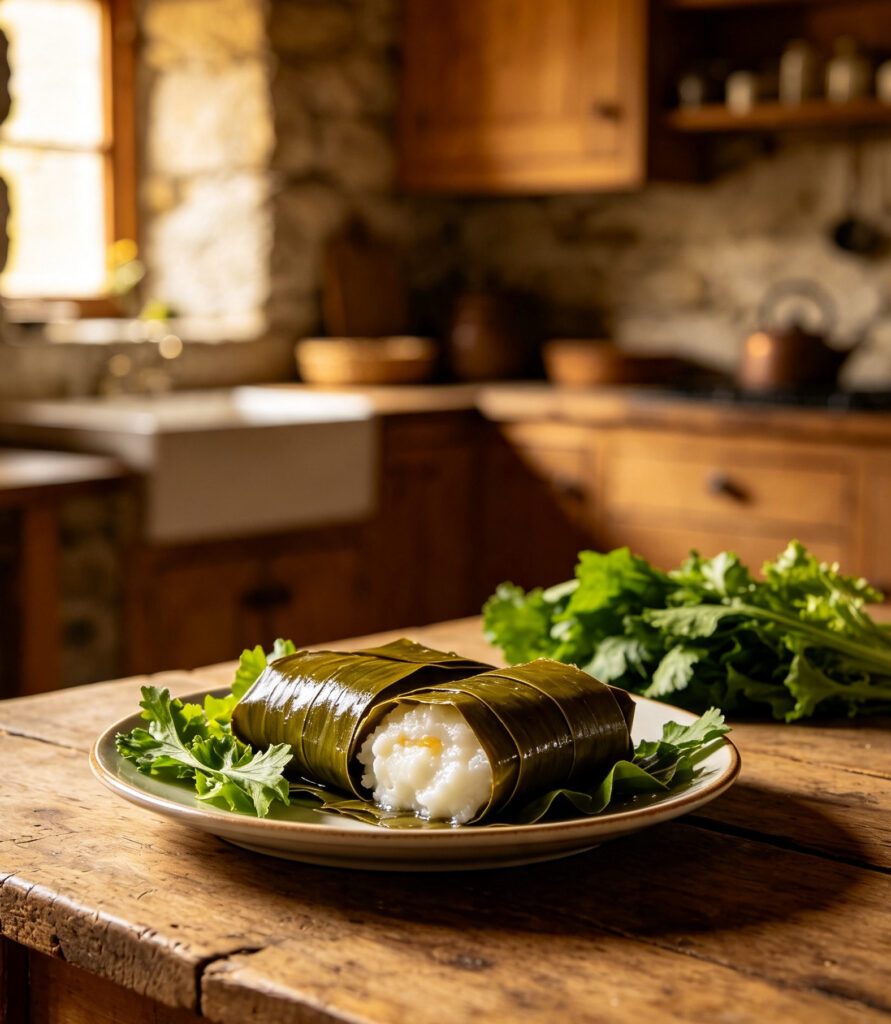
Introduction: Young taro leaves parcelled around coconut cream and onion, then baked or steamed until tender.
Cultural Background: Palusami is one of Samoa’s most iconic dishes, traditionally cooked in an umu (earth oven) wrapped in banana leaves, and remains a centrepiece of Sunday to’ona’i feasts and family gatherings.
Tips: Use only young, tender taro leaves, as older leaves can be tough and take longer to soften. Double-wrap the parcels if the leaves are thin to prevent leaking.
Variations: Add small pieces of corned beef or salted meat inside the parcel for a heartier version; some households add a whole small onion in the centre for a more intense flavour.
Storage: Store in an airtight container in the refrigerator for up to 2 days.
Reheating: Reheat gently in a covered dish in a low oven or steamer until warmed through.
Nutrition: Approx. 280 kcal, 5 g protein, 8 g carbohydrate, 26 g fat per serving.
FAQs:
Q: Can spinach substitute for taro leaves?
A: Spinach can be used in a pinch, though the flavour and texture differ noticeably from true taro leaves.
Q: Why must taro leaves be cooked thoroughly?
A: Raw or undercooked taro leaves contain compounds that cause an unpleasant itching sensation; thorough cooking neutralises this.
- Young taro leaves, stems removed — 20
- Coconut cream — 500 ml (2 cups)
- Onion, finely chopped — 1
- Salt — 1 tsp
- Small onion, whole (optional, for centre) — 1
Please log in to leave a comment.