
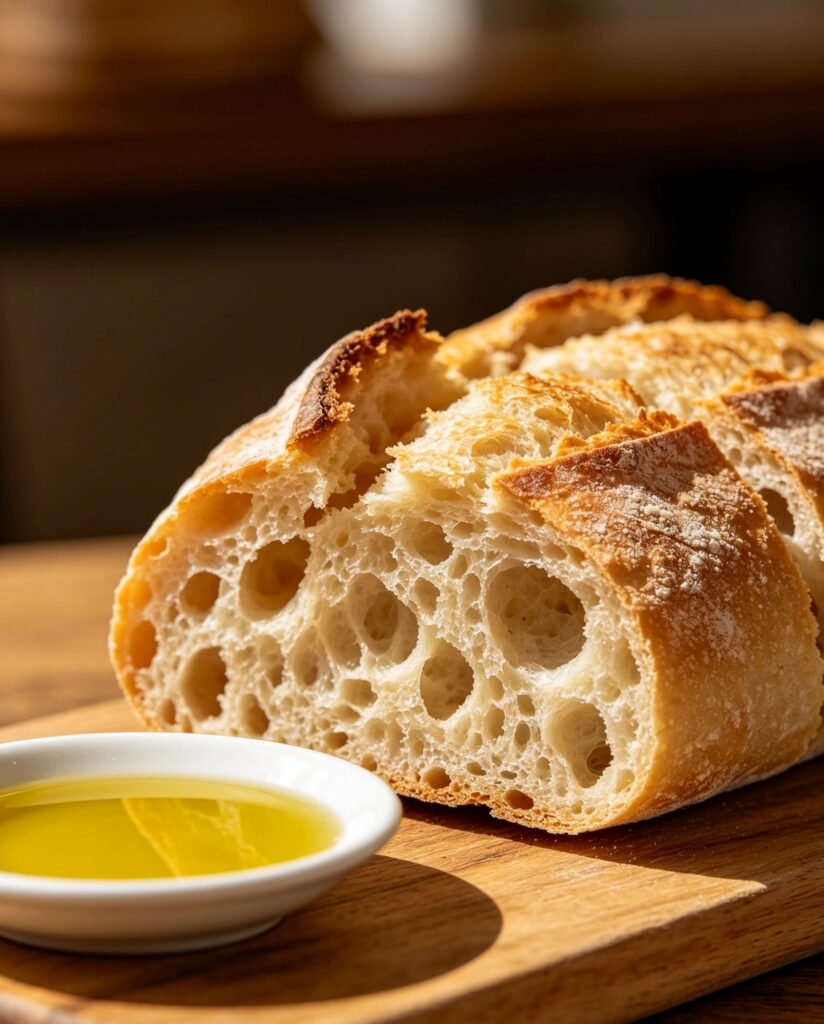
Pa de Poble (Rustic Village Bread) (Pa de Poble)
The Quirky Foodster Team
Ingredients
- Bread flour — 500 g (4 cups)
- Warm water — 350 ml (1 1/2 cups)
- Instant yeast — 5 g (1 1/2 tsp)
- Salt — 10 g (2 tsp)
- Olive oil — 15 ml (1 tbsp)
Method
- Dissolve yeast in warm water; let stand 5 minutes.
- Combine flour and salt in a large bowl, then add the yeast mixture and olive oil, mixing into a shaggy dough.
- Knead for 10-12 minutes until smooth and elastic.
- Cover and let rise for 1 hour 30 minutes to 2 hours until doubled.
- Shape into a round loaf, place on a floured tray, cover, and let rise again for 30 minutes.
- Preheat oven to 230°C (450°F).
- Score the top and bake for 35-40 minutes until deep golden and hollow- sounding when tapped.
Introduction: A rustic, crusty round country loaf with a chewy, open crumb, the everyday bread found on village tables across Andorra.
Cultural Background: Pa de Poble reflects the simple, unhurried baking traditions of Andorra’s mountain villages, historically baked in communal wood-fired ovens and shared among neighbours.
Tips: A long, slow rise develops the best flavour and open crumb structure. Baking with steam (such as a pan of water in the oven) helps develop a crisper crust.
Variations: Add a portion of whole wheat flour for a heartier, nuttier loaf. Shape into smaller rolls for individual servings.
Vegetarian/Vegan: Naturally vegetarian and vegan as written.
Serving Suggestions: Serve with any main dish, or simply with olive oil for dipping.
Storage: Store at room temperature wrapped in a cloth for up to 3 days.
Reheating: Warm briefly in the oven to refresh the crust; avoid microwaving.
Nutrition: 230 kcal | Protein 7g | Carbs 46g | Fat 2g
FAQs:
Q: Can this be baked in a Dutch oven for a crustier result?
A: Yes — baking covered in a preheated Dutch oven for the first 20 minutes, then uncovered, gives an excellent crust.
Q: Why is my bread dense?
A: This usually indicates under-proofing — ensure the dough has properly doubled at each rising stage.
- Bread flour — 500 g (4 cups)
- Warm water — 350 ml (1 1/2 cups)
- Instant yeast — 5 g (1 1/2 tsp)
- Salt — 10 g (2 tsp)
- Olive oil — 15 ml (1 tbsp)
Please log in to leave a comment.