
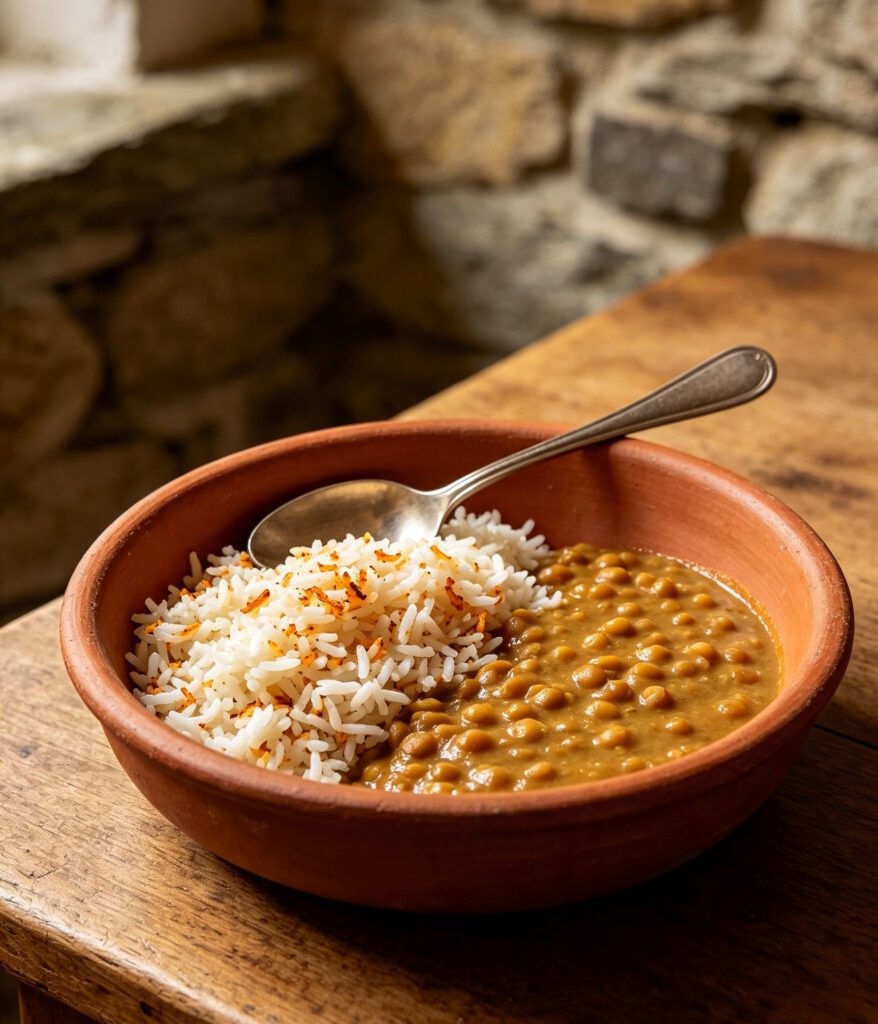
Odana with Dal (Spiced Rice with Lentils)
The Quirky Foodster Team
Ingredients
- Rice, rinsed — 200 g (1 cup)
- Water, for the rice — 400 ml (1.75 cups)
- Split mung beans or split pigeon peas, rinsed — 150 g (0.75 cup)
- Water, for the dal — 600 ml (2.5 cups)
- Ground turmeric — 1/2 tsp
- Ghee — 1 tbsp
- Cumin seeds — 1/2 tsp
- Fresh green chili, slit lengthwise (optional) — 1
- Rock salt — 1/2 tsp
- Fresh cilantro, chopped — 2 tbsp
Method
- Rinse the rice thoroughly and place in a saucepan with the water for the rice. Bring to the boil, then reduce to a low simmer, cover, and cook for 15-18 minutes until tender and the water is absorbed. Set aside, covered, to steam.
- Meanwhile, place the rinsed lentils in a separate saucepan with the water for the dal and the turmeric.
- Bring to the boil, skim any foam, then reduce to a simmer and cook uncovered for 20-25 minutes, until the lentils are soft and beginning to break down.
- Heat the ghee in a small pan over medium heat and add the cumin seeds, letting them sizzle for
- 20-30 seconds until fragrant.
- Add the chili if using, then pour this tempering over the cooked lentils.
- Stir in the salt and simmer the dal for a further 5 minutes.
- Scatter the dal with fresh cilantro and serve hot alongside the steamed rice.
Introduction: Plain boiled rice served alongside a simply spiced lentil stew, this combination of odana and dal formed the everyday midday meal for a great many households across the Mauryan Empire’s fertile river plains.
Cultural Background: Odana, the Sanskrit term for cooked rice, appears frequently across ancient Indian textual sources as the staple grain of the Gangetic Plain, the agricultural and political heartland of the Mauryan state. Pairing rice with a simple lentil preparation, valued for its protein content and ease of digestion, created a nutritionally complementary meal that has remained a foundation of the region’s diet for well over two thousand years.
Tips: (cid:127) Skimming the foam from the lentils as they come to the boil gives a cleaner-tasting, less bitter dal. (cid:127) Tempering the spices in hot ghee before adding them to the dal, a technique still central to the region’s cooking today, releases much more of their flavour than adding them raw.
Variations: (cid:127) A little tamarind pulp can be stirred into the dal for a tangier, more complex flavour. (cid:127) Diced squash or gourd can be added to the lentils partway through cooking for a heartier, more substantial dish.
Storage: Store rice and dal separately in airtight containers in the refrigerator for up to 3 days.
Reheating: Reheat the dal in a saucepan over low heat with a splash of water, and the rice in a covered pan with a sprinkle of water, until both are warmed through.
Nutrition: Per serving (approx.): 380 kcal, 15 g protein, 68 g carbohydrate, 6 g fat, 9 g fibre, 340 mg sodium.
FAQs:
Q: What type of lentil is most authentic for this dish?
A: Split mung beans (moong dal) and split pigeon peas (toor dal) are both ancient staples of the Indian subcontinent and either works well; use whichever is more readily available. (cid:127) Q: Can I cook the rice and dal together in one pot? A: Yes, though cooking them separately as described gives better control over the texture of each component; combining them afterwards on the plate remains the traditional presentation.
- Rice, rinsed — 200 g (1 cup)
- Water, for the rice — 400 ml (1.75 cups)
- Split mung beans or split pigeon peas, rinsed — 150 g (0.75 cup)
- Water, for the dal — 600 ml (2.5 cups)
- Ground turmeric — 1/2 tsp
- Ghee — 1 tbsp
- Cumin seeds — 1/2 tsp
- Fresh green chili, slit lengthwise (optional) — 1
- Rock salt — 1/2 tsp
- Fresh cilantro, chopped — 2 tbsp
Please log in to leave a comment.