
Norin (Cold Noodle And Meat Dish)
The Quirky Foodster Team
Ingredients
- Plain flour — 400 g (3 cups)
- Large eggs — 2
- Salt — 1/2 tsp
- Water, as needed — 100 ml (1/3 cup plus 1 tbsp)
- Beef brisket or shin, whole piece — 600 g (1.3 lb)
- Bay leaves — 2
- Black peppercorns — 1 tsp
- Large onions, thinly sliced — 2
- Salt (for onions) — 1 tsp
- Black pepper — 1/2 tsp
- Vegetable oil — 2 tbsp
Method
- Make the noodle dough by combining flour, eggs, salt, and water. Knead for 10 minutes until firm and smooth. Cover and rest for 30 minutes.
- Meanwhile, place the beef in a large pot, cover with water, and add bay leaves and peppercorns. Bring to a boil, then simmer for 1.5–2 hours until tender.
- Remove the beef and set aside to cool, reserving 250 ml (1 cup) of the broth. Once cool, shred or thinly slice the beef.
- Roll the rested dough out very thinly, dust with flour, and cut into extremely fine, thread-like noodles.
- Bring a large pot of salted water to a boil and cook the noodles for 2–3 minutes until just tender. Drain and rinse briefly under cold water to stop cooking, then toss with a little oil to prevent sticking.
- Heat 2 tbsp oil in a pan and sauté the sliced onions with salt and pepper until soft and lightly golden, about 8 minutes.
- In a large bowl, combine the noodles, shredded beef, sautéed onions, and a splash of the reserved broth. Toss well to coat evenly.
- Chill for at least 1 hour before serving, or serve at room temperature.
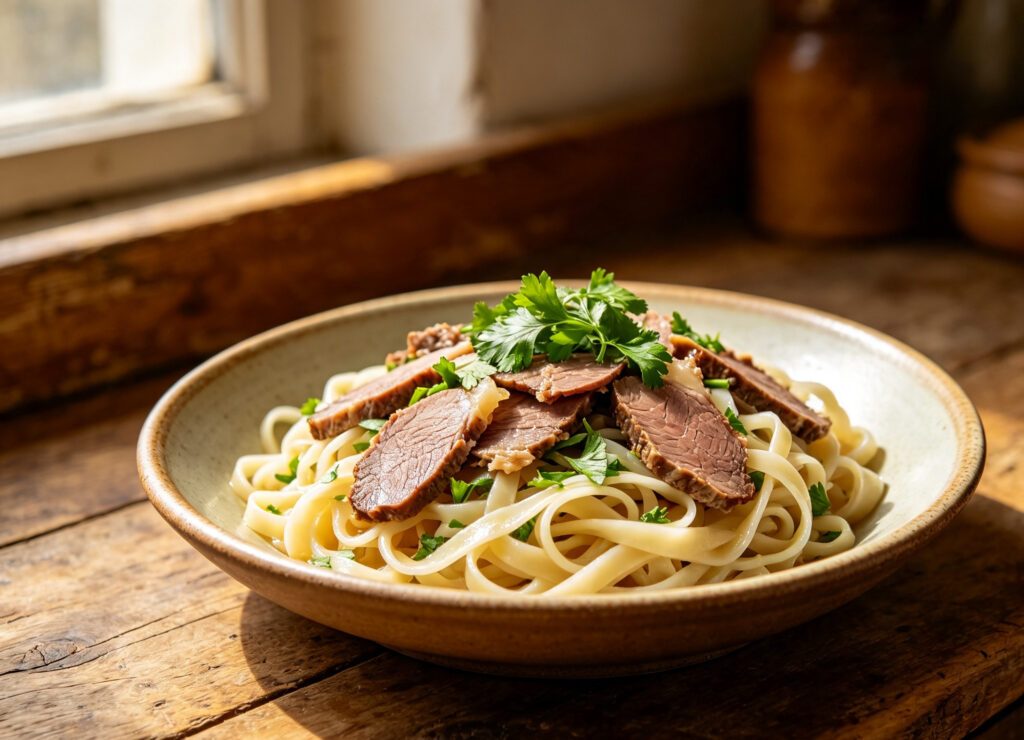
Introduction: Norin is a distinctive Uzbek dish of hand-cut, thinly sliced noodles tossed with shredded boiled horse meat or beef, onions, and a light broth, served cold or at room temperature.
Cultural Background: Norin is a distinctive Uzbek dish of hand-cut, thinly sliced noodles tossed with shredded boiled horse meat or beef, onions, and a light broth, served cold or at room temperature. Traditionally associated with celebratory gatherings and often prepared a day in advance to let the flavors settle, norin reflects the nomadic culinary heritage of Uzbekistan's Central Asian steppe traditions, where preserved and dried meats were common.
Tips: Cutting the noodles as thinly as possible is essential to achieving the dish's signature texture. Letting the dish rest for a few hours (or overnight) allows the flavors to meld fully. Reserve extra broth in case the noodles seem dry after tossing.
Variations: Traditional versions use horse meat; beef or lamb are common and accepted substitutes. Add a splash of vinegar or a squeeze of lemon for brightness. Vegetarian adaptation: substitute the meat with sautéed mushrooms and use vegetable broth, though this departs from tradition.
Storage: Store in an airtight container in the refrigerator for up to 3 days. Norin is traditionally enjoyed cold, so it stores and travels well.
Reheating: This dish is meant to be served cold or at room temperature and is not typically reheated. If a warm version is preferred, gently warm the meat and noodles separately before combining.
FAQs:
Q: Can I use store-bought noodles instead of making my own?
A: Fresh, thin egg noodles or angel hair pasta can work in a pinch, but hand-cut noodles give the authentic texture.
Q: Is norin always served cold?
A: Yes, it is traditionally a cold or room-temperature dish, distinguishing it from most other Uzbek noodle dishes.
Q: What meat is traditionally used?
A: Horse meat is traditional, though beef and lamb are widely accepted modern substitutes.
- Plain flour — 400 g (3 cups)
- Large eggs — 2
- Salt — 1/2 tsp
- Water, as needed — 100 ml (1/3 cup plus 1 tbsp)
- Beef brisket or shin, whole piece — 600 g (1.3 lb)
- Bay leaves — 2
- Black peppercorns — 1 tsp
- Large onions, thinly sliced — 2
- Salt (for onions) — 1 tsp
- Black pepper — 1/2 tsp
- Vegetable oil — 2 tbsp
Please log in to leave a comment.