
Non (Uzbek Tandoor Bread)
The Quirky Foodster Team
Ingredients
- Plain flour, plus extra for dusting — 500 g (4 cups)
- Instant yeast — 1.5 tsp
- Sugar — 1.5 tsp
- Salt — 1.5 tsp
- Warm water — 300 ml (1.25 cups)
- Vegetable oil — 2 tbsp
- Nigella seeds or sesame seeds, for topping — 1 tbsp
Method
- In a large bowl, combine the flour, yeast, sugar, and salt. Make a well in the center and pour in the warm water and oil.
- Mix until a shaggy dough forms, then knead on a floured surface for 10 minutes until smooth and elastic.
- Place the dough in a lightly oiled bowl, cover with a damp towel, and let rise in a warm place for 1–1.5 hours until doubled in size.
- Punch down the dough and divide into 4 equal balls. Cover and rest for 10 minutes.
- Preheat the oven to 240°C (465°F) with a baking tray inside to heat up.
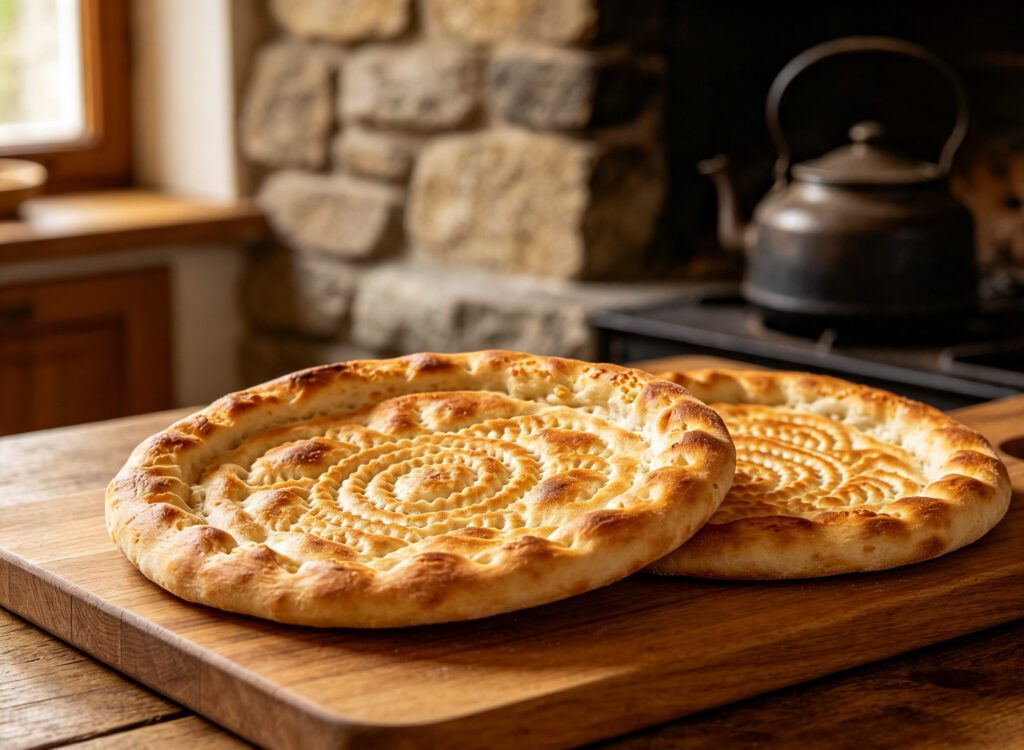
- Shape each ball into a flat disc about 20 cm (8 inches) wide, leaving the center thinner than the edges. Use a fork or dough stamp to prick a decorative pattern into the center of each disc, which prevents excessive puffing there.
- Brush the centers lightly with water and sprinkle with nigella or sesame seeds.
- Carefully transfer the breads onto the hot baking tray and bake for 12–15 minutes until golden brown with a puffed, blistered edge.
- Remove from the oven and let cool slightly on a wire rack before serving.
Introduction: Non is Uzbekistan's iconic round, patterned flatbread, baked in a traditional clay tandoor oven and central to daily life and hospitality across the country.
Cultural Background: Non is Uzbekistan's iconic round, patterned flatbread, baked in a traditional clay tandoor oven and central to daily life and hospitality across the country. Each region has its own decorative stamping pattern, made with a special tool called a chekich, and non holds deep symbolic value: it is never placed upside down or wasted, and is often the first thing offered to guests.
Tips: Docking (pricking) the center firmly is essential; this prevents the middle from ballooning up unevenly while the edges puff properly. A very hot oven mimics the intense heat of a traditional tandoor, giving the characteristic charred, blistered crust. Non is best eaten fresh on the day it's baked, when the crust is crisp and the interior soft.
Variations: Add a swirl of caramelized onion or a sprinkle of cumin seeds to the topping for a savory variation. A richer version, patir, adds butter or oil to the dough for a softer, more layered bread (see separate recipe). This recipe is naturally vegan as written.
Storage: Store in an airtight bag at room temperature for up to 2 days, or freeze for up to 1 month.
Reheating: Reheat in an oven at 180°C (355°F) for 5 minutes, or wrap in a damp cloth and microwave for 15–20 seconds to soften.
FAQs:
Q: What is the chekich and do I need one?
A: A chekich is a traditional stamping tool used to create non's distinctive pattern; a fork works well as a substitute for home baking.
Q: Why is the center of my non too puffy?
A: The center wasn't docked (pricked) enough before baking; prick it thoroughly to allow steam to escape evenly.
Q: Can I bake non without a tandoor?
A: Yes, a very hot conventional oven, ideally with a baking stone, gives good results, though the flavor will be slightly less smoky.
- Plain flour, plus extra for dusting — 500 g (4 cups)
- Instant yeast — 1.5 tsp
- Sugar — 1.5 tsp
- Salt — 1.5 tsp
- Warm water — 300 ml (1.25 cups)
- Vegetable oil — 2 tbsp
- Nigella seeds or sesame seeds, for topping — 1 tbsp
Please log in to leave a comment.