
Nihari
The Quirky Foodster Team
Ingredients
- Beef shank, cut into pieces — 1 kg (2.2 lb)
- Onions, sliced — 2
- Garlic, minced — 4 cloves
- Ginger, minced — 2 tbsp
- Nihari masala — 3 tbsp (or a mix of ground cumin, coriander, fennel and chilli)
- Flour, for thickening — 30 g (1 oz)
- Oil — 120 ml (4 fl oz)
- Water — 1.4 L (48 fl oz)
- Salt — to taste
- Chopped ginger, coriander, lime wedges and green chilli, to garnish
Method
- Heat the oil in a large pot and fry the onions until deeply golden.
- Add the garlic and ginger, frying until fragrant.
- Stir in the nihari masala, cooking briefly to release the aroma.
- Add the beef shank and brown lightly on all sides.
- Add the water and salt, bring to a boil, then reduce to a very low simmer and cook, covered, for 4–5 hours until the meat is meltingly tender.
- Whisk the flour with a little cold water to make a slurry, then stir into the pot to thicken the stew.
- Simmer for a further 15–20 minutes until rich and glossy.
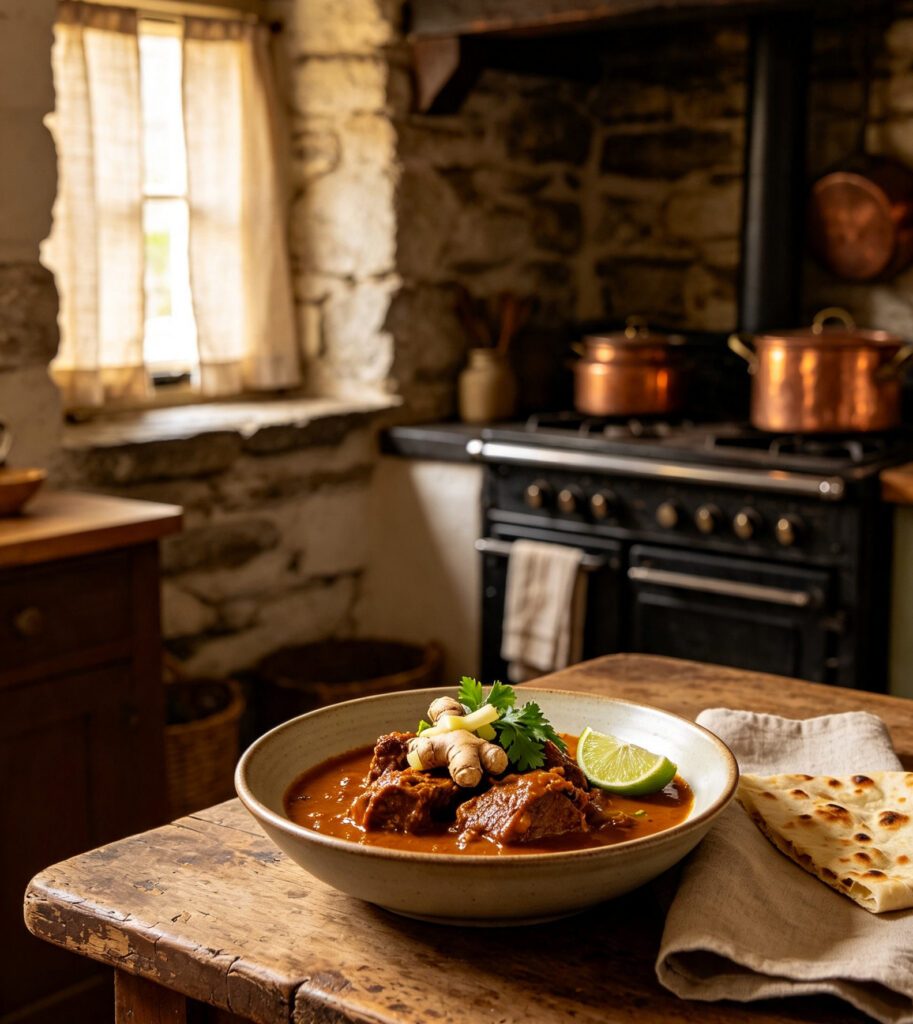
- Garnish with chopped ginger, coriander, lime wedges and chilli before serving with naan.
Introduction: A rich, slow-simmered beef stew, deeply spiced and thickened over hours, traditionally eaten for a hearty weekend lunch.
Cultural Background: Nihari originated as a dish for a full day's sustenance, historically eaten early in the morning after overnight simmering, and it remains a treasured, indulgent lunch dish, especially popular on weekends across Pakistan.
Tips: A long, slow simmer is essential — nihari rewards patience, with the meat becoming exceptionally tender over hours. Thicken the stew gradually with the flour slurry, stirring well to avoid lumps.
Variations: Use bone marrow or beef shank with bone-in pieces for a more traditional, richer stew. Adjust the spice quantity to taste.
Storage: Refrigerate in an airtight container for up to 4 days.
Reheating: Reheat gently on the stovetop over low heat, stirring occasionally, until hot throughout.
FAQs:
Q: Why does nihari take so long to cook?
A: The extended simmer breaks down the tougher beef shank into exceptionally tender meat, developing the dish's characteristic rich, deep flavour.
Q: What is nihari traditionally served with?
A: Naan bread, along with the traditional garnishes of ginger, coriander, lime and chilli.
- Beef shank, cut into pieces — 1 kg (2.2 lb)
- Onions, sliced — 2
- Garlic, minced — 4 cloves
- Ginger, minced — 2 tbsp
- Nihari masala — 3 tbsp (or a mix of ground cumin, coriander, fennel and chilli)
- Flour, for thickening — 30 g (1 oz)
- Oil — 120 ml (4 fl oz)
- Water — 1.4 L (48 fl oz)
- Salt — to taste
- Chopped ginger, coriander, lime wedges and green chilli, to garnish
Please log in to leave a comment.