
Holidays & Special Occasions
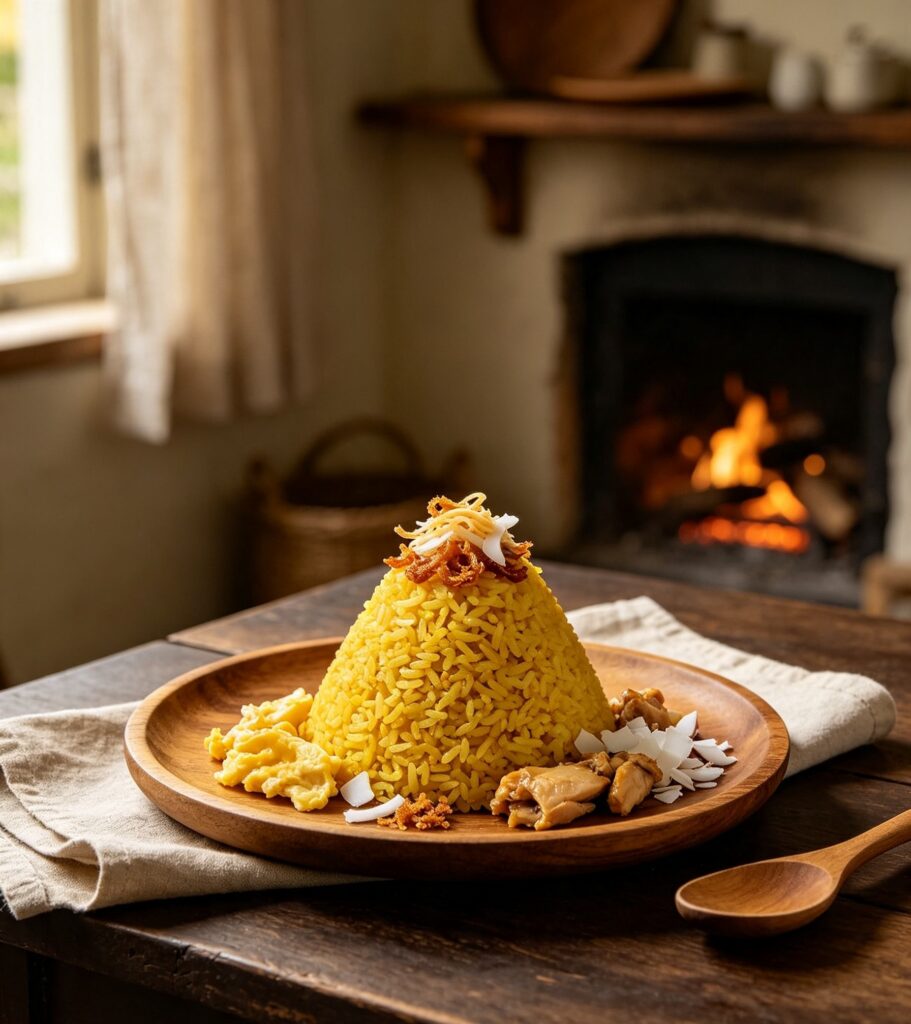
Nasi Kuning (Festive Turmeric Yellow Rice)
Ingredients
- 500 g jasmine rice, rinsed
- 500 ml coconut milk
- 3 cm turmeric, peeled and bruised
- 2 kaffir lime leaves
- 1 stalk lemongrass, bruised
- 1 bay leaf
- Salt to taste
Method
- Combine rice, coconut milk, turmeric, lime leaves, lemongrass, bay leaf, and salt in a rice cooker or pot.
- Cook as you would regular rice, either steaming or using the rice cooker's normal setting, until the rice is tender and evenly golden.
- Fluff the rice gently and remove the aromatics.
- While still warm, pack the rice into a cone-shaped mold lined with banana leaf, pressing firmly, if making a tumpeng centerpiece.
- Unmold onto a large tray and surround with an assortment of side dishes such as fried chicken, tempeh, and vegetables.
Introduction: Nasi kuning, turmeric-scented yellow rice shaped into a decorative cone (tumpeng), is served at Indonesian birthdays, promotions, and important ceremonies as a symbol of gratitude and celebration.
Cultural Background: Nasi kuning, turmeric-scented yellow rice shaped into a decorative cone (tumpeng), is served at Indonesian birthdays, promotions, and important ceremonies as a symbol of gratitude and celebration. Surrounded by an array of side dishes, it turns any table into a festive centerpiece.
Tips: Toast the turmeric briefly before adding it to intensify its color and aroma. Pack the rice firmly into the mold so the cone shape holds when turned out.
Variations: For a simpler everyday version, skip the cone shaping and simply serve the rice in a bowl. Add a few pandan leaves for extra fragrance alongside the turmeric.
Storage: Refrigerate rice in an airtight container for up to 2 days.
Reheating: Reheat by steaming or microwaving with a splash of water to restore moisture.
FAQs:
Q: What is a tumpeng?
A: A tumpeng is the cone-shaped mound of nasi kuning surrounded by side dishes, traditionally served at Indonesian celebrations to symbolize a mountain of blessings.
Q: What occasions is nasi kuning served at?
A: It commonly appears at birthdays, work promotions, housewarmings, and Indonesian Independence Day celebrations.
Please log in to leave a comment.