
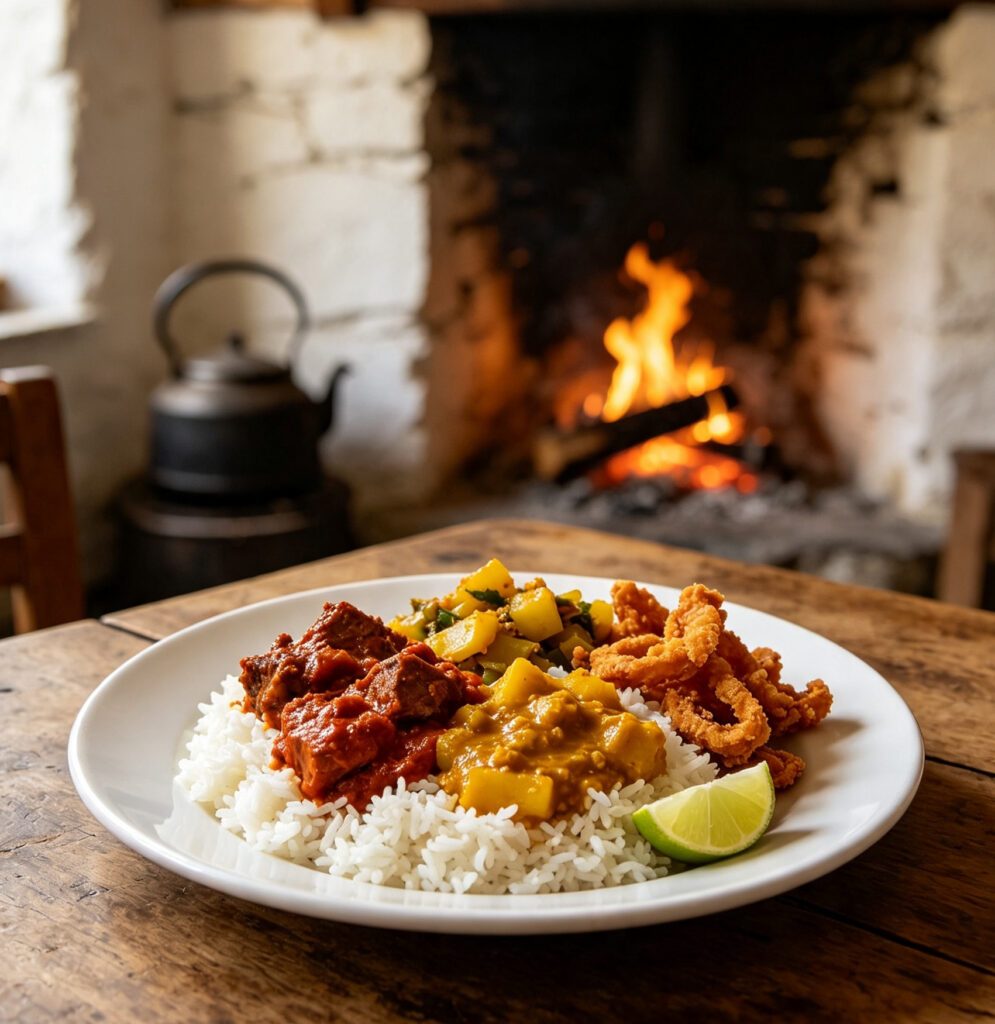
Nasi Kandar (Mixed Rice with Curries, Penang-Style)
The Quirky Foodster Team
Ingredients
- Cooked (from about 300 g/1 1/2 cups raw rice) Jasmine rice, cooked — 600 g (1.3 lb)
- Chicken pieces (bone-in) — 500 g (1 lb)
- Medium Onion, sliced — 2
- Garlic, minced — 4 cloves
- Ginger, grated — 10 g (2 tsp)
- Curry powder (meat curry blend) — 20 g (4 tsp)
- Coconut milk — 250 ml (1 cup)
- Cooking oil — 45 ml (3 tbsp)
- Medium Tomato, chopped — 1
- Water — 300 ml (1 1/4 cups)
- Salt — to taste
- Hard-boiled eggs, for serving — 4
- Fried okra or eggplant, optional — for serving
Method
- Heat the oil in the pot and fry the onion, garlic and ginger over medium heat until fragrant and golden, about 5 minutes.
- Add the curry powder and cook, stirring constantly, for 1–2 minutes until fragrant, taking care not to let it burn.
- Add the chicken pieces and turn to coat well in the spice paste, cooking for 3–4 minutes.
- Stir in the chopped tomato and water, bring to a boil, then reduce heat, cover and simmer for 20 minutes.
- Pour in the coconut milk, season with salt, and simmer uncovered for a further 10–15 minutes until the chicken is tender and the gravy has thickened.
- Spoon the hot cooked rice onto plates, ladle the chicken curry and its gravy generously over the top, and serve with hard-boiled egg halves and fried okra or eggplant alongside.
Introduction: Steamed white rice generously ladled with a selection of curries and sauces mixed together — a filling, flavour-packed lunch that originated in Penang.
Cultural Background: Nasi kandar takes its name from the wooden pole (kandar) that itinerant Indian Muslim vendors once used to carry rice and curry pots balanced on their shoulders as they sold food door to door in old Penang. Today it is served at dedicated nasi kandar shops, famous for the practice of pouring several curry gravies together over one plate of rice, a style beloved for its layered flavour.
Tips: Frying the curry powder briefly in oil before adding liquid (‘blooming’ the spices) deepens the flavour significantly. Nasi kandar is traditionally served with two or three different curries mixed on one plate — feel free to pair this chicken curry with a simple vegetable or egg curry for the full effect. Simmer the coconut milk gently, not at a hard boil, to keep the gravy from splitting.
Variations: Add whole hard-boiled eggs directly into the simmering curry for the last 10 minutes to absorb the flavour. Use beef or mutton in place of chicken, extending the simmering time accordingly. Add a squid or prawn curry as an additional topping for a fuller nasi kandar spread.
Storage: Store rice and curry separately in airtight containers in the refrigerator for up to 3 days.
Reheating: Reheat curry in a saucepan over medium heat, stirring, until piping hot; reheat rice in a microwave or steamer with a few drops of water.
Nutrition: Approx. per serving: 620 kcal, 32 g protein, 68 g carbohydrate, 24 g fat, 3 g fibre.
FAQs:
Q: What makes nasi kandar different from ordinary curry rice?
A: The defining feature is the practice of pouring several different curry gravies over one plate of rice so their flavours mix together, a style that originated with Penang’s nasi kandar vendors.
Q: Can I use boneless chicken?
A: Yes, though bone-in pieces give a richer gravy; reduce the simmering time slightly for boneless cuts.
Q: Is there a vegetarian version of nasi kandar?
A: Yes, many nasi kandar shops offer vegetable or egg curries as toppings instead of meat; a mixed vegetable curry makes a fitting vegetarian substitute.
- Cooked (from about 300 g/1 1/2 cups raw rice) Jasmine rice, cooked — 600 g (1.3 lb)
- Chicken pieces (bone-in) — 500 g (1 lb)
- Medium Onion, sliced — 2
- Garlic, minced — 4 cloves
- Ginger, grated — 10 g (2 tsp)
- Curry powder (meat curry blend) — 20 g (4 tsp)
- Coconut milk — 250 ml (1 cup)
- Cooking oil — 45 ml (3 tbsp)
- Medium Tomato, chopped — 1
- Water — 300 ml (1 1/4 cups)
- Salt — to taste
- Hard-boiled eggs, for serving — 4
- Fried okra or eggplant, optional — for serving
Please log in to leave a comment.