
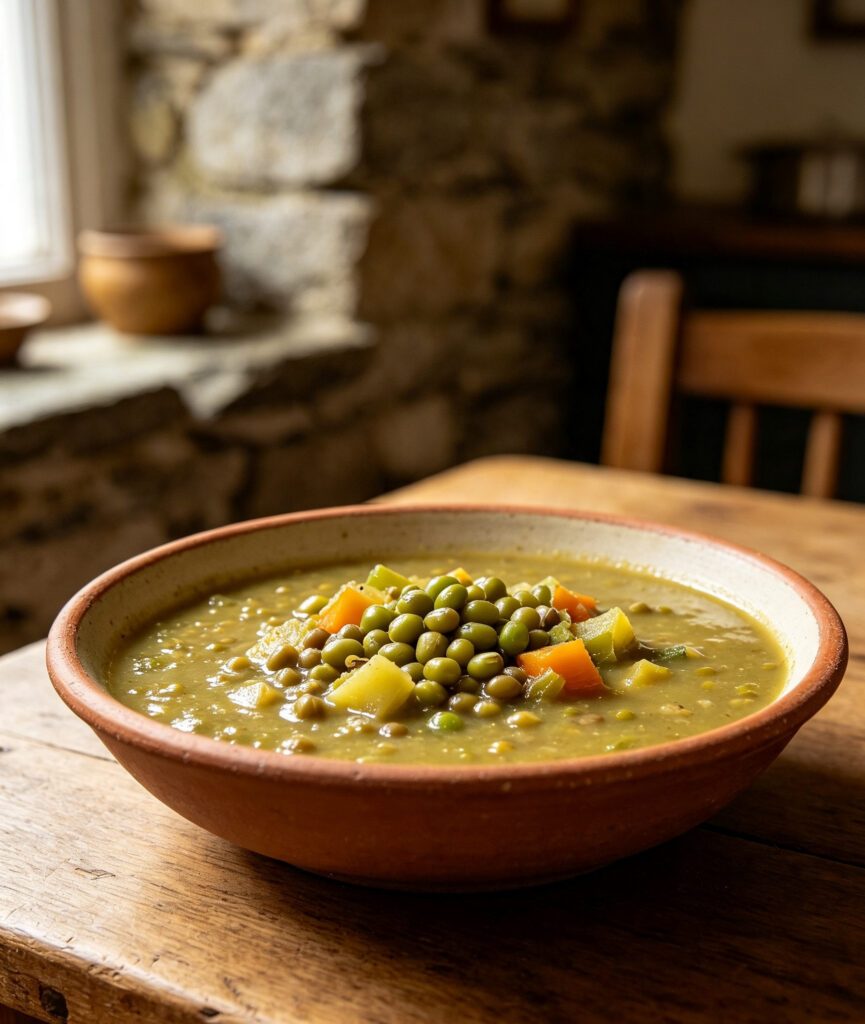
Mudga Suup (Mung Bean and Vegetable Stew)
The Quirky Foodster Team
Ingredients
- Whole mung beans, soaked for 4 hours and drained — 200 g (1 cup)
- Water — 900 ml (3.75 cups)
- Medium gourd or squash, peeled and diced — 1
- Medium carrot, diced — 1
- Ground turmeric — 1/2 tsp
- Ghee — 1 tbsp
- Cumin seeds — 1 tsp
- Ground coriander — 1/2 tsp
- Asafoetida (optional) — 1/4 tsp
- Rock salt — 1 tsp
- Fresh cilantro, chopped — 2 tbsp
Method
- Place the soaked, drained mung beans in a large saucepan with the water and turmeric.
- Bring to the boil, skim any foam, then reduce to a simmer, cover partially, and cook for 30 minutes.
- Add the diced gourd and carrot, and continue simmering for a further 20-25 minutes, until the beans and vegetables are fully tender and the stew has thickened.
- Heat the ghee in a small frying pan over medium heat, add the cumin seeds and asafoetida if using, and let sizzle for 20-30 seconds.
- Stir in the ground coriander, then pour this tempering over the stew.
- Stir in the salt and simmer for a further 5 minutes.
- Scatter with fresh cilantro and serve hot.
Introduction: A thick stew of whole mung beans simmered with seasonal vegetables, mudga suup was a substantial, filling dish that made good use of the diverse produce grown across the Mauryan Empire’s irrigated farmland.
Cultural Background: The Mauryan state, as described in Kautilya’s Arthashastra, took an active administrative interest in irrigation and agriculture, and the resulting diversity of pulses and vegetables available fed into hearty, mixed stews of this kind. Suupa, referring to a thick soup or stew, is a term found across early Sanskrit sources describing exactly this style of combined pulse and vegetable cookery.
Tips: (cid:127) Soaking the mung beans beforehand significantly shortens their cooking time and helps them break down into a thick, cohesive stew. (cid:127) Asafoetida is a pungent spice traditionally used in very small quantities in pulse dishes; a small pinch goes a long way.
Variations: (cid:127) Any combination of seasonal root vegetables or gourds can be used in place of the carrot and squash suggested here. (cid:127) A handful of chopped spinach or other leafy greens can be stirred in during the last 5 minutes of cooking for extra nutrition.
Storage: Store in an airtight container in the refrigerator for up to 4 days, or freeze for up to 2 months.
Reheating: Reheat in a saucepan over low heat, stirring occasionally and adding a little water if the stew has thickened, until piping hot throughout.
Nutrition: Per serving (approx.): 240 kcal, 14 g protein, 36 g carbohydrate, 5 g fat, 10 g fibre, 380 mg sodium.
FAQs:
Q: Can I use split mung beans instead of whole?
A: Yes, though whole mung beans hold their shape better and give the stew a heartier texture; split beans will cook faster and break down more completely. (cid:127) Q: What is asafoetida and can I leave it out? A: Asafoetida is a strongly aromatic resin-derived spice traditionally used in lentil and vegetable dishes across the Indian subcontinent; it can simply be omitted if unavailable, though it adds a characteristic savoury depth.
- Whole mung beans, soaked for 4 hours and drained — 200 g (1 cup)
- Water — 900 ml (3.75 cups)
- Medium gourd or squash, peeled and diced — 1
- Medium carrot, diced — 1
- Ground turmeric — 1/2 tsp
- Ghee — 1 tbsp
- Cumin seeds — 1 tsp
- Ground coriander — 1/2 tsp
- Asafoetida (optional) — 1/4 tsp
- Rock salt — 1 tsp
- Fresh cilantro, chopped — 2 tbsp
Please log in to leave a comment.