
Breads
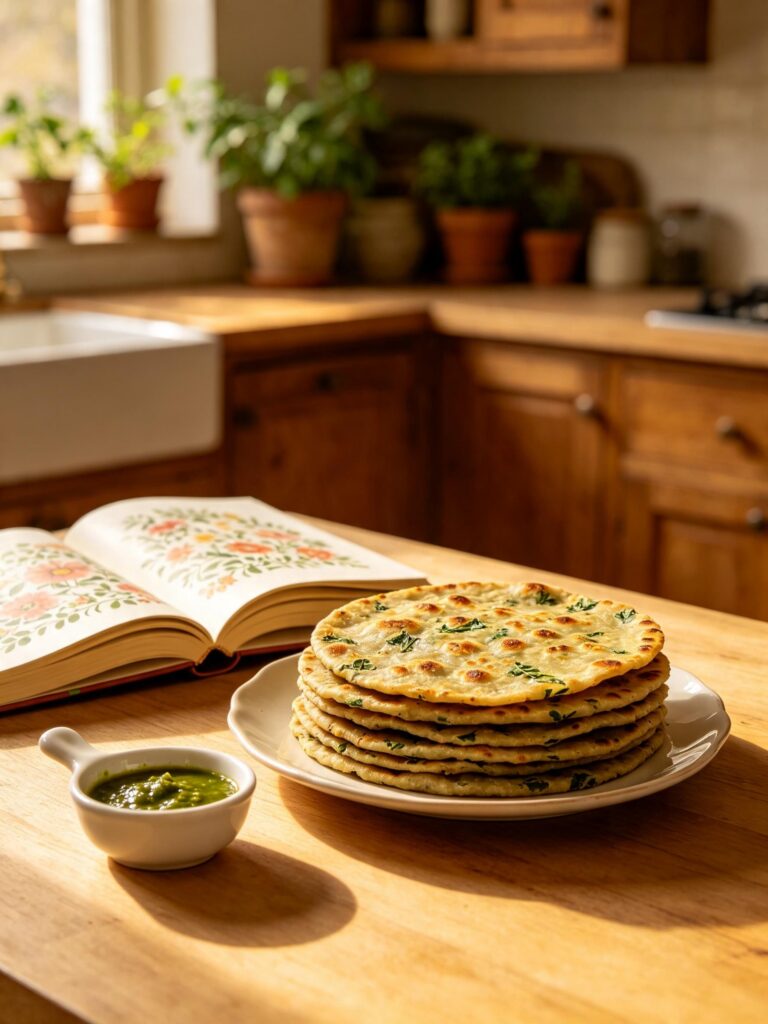
Methi Thepla
The Quirky Foodster Team
Ingredients
- 200 g (1 2/3 cups) whole wheat flour
- 50 g (1/2 cup) gram flour (besan)
- 100 g (2 cups) fresh fenugreek leaves, finely chopped
- 1 tsp turmeric powder
- 1 tsp red chilli powder
- 1/2 tsp carom seeds (ajwain)
- 1 tsp sesame seeds
- 1 tbsp sugar
- 3 tbsp plain yogurt
- 3 tbsp oil, plus extra for cooking
- Salt, to taste
- Water, to knead
Method
- Combine the wheat flour, gram flour, fenugreek leaves, turmeric, chilli powder, carom seeds, sesame seeds, sugar, yogurt, oil and salt in a large bowl.
- Knead with a little water at a time to form a soft, pliable dough, similar in texture to chapati dough. Cover and rest for 15 minutes.
- Divide the dough into 8 equal balls. Roll each out on a lightly floured surface into a thin, roughly 18cm round.
- Heat a griddle over medium heat. Cook each thepla for 1-2 minutes on the first side, until small bubbles appear, then flip.
- Drizzle a little oil around the edges and on top, and cook for a further 1-2 minutes per side, pressing gently with a spatula, until golden-brown spots appear on both sides.
- Stack the cooked theplas and keep covered with a clean cloth to stay soft. Serve warm or at room temperature.
Introduction: Thepla are soft, spiced flatbreads studded with fresh fenugreek leaves, famous across Gujarati households
as ideal travel food since they keep well for days without refrigeration. Naturally free of onion and garlic, they
are a Jain travel and lunchbox staple, often rolled up with a spoonful of mango pickle or a side of yogurt.
Cultural Background: Thepla are soft, spiced flatbreads studded with fresh fenugreek leaves, famous across Gujarati households
as ideal travel food since they keep well for days without refrigeration. Naturally free of onion and garlic, they
are a Jain travel and lunchbox staple, often rolled up with a spoonful of mango pickle or a side of yogurt.
Tips: Squeeze excess water from the chopped fenugreek leaves before adding, if they seem very wet, to keep the dough from turning sticky. Rolling the theplas slightly thin (thinner than a chapati) helps them stay pliable and rollable once cooled.
Variations: Use grated bottle gourd in place of fenugreek leaves for a milder, everyday version (lauki thepla). Add a tablespoon of finely chopped coriander for extra freshness.
Storage: Keeps well at room temperature, wrapped in a cloth or airtight container, for up to 2 days, or refrigerated for
up to 5 days.
Reheating: Reheat on a hot dry griddle for 30-45 seconds per side, or in a microwave wrapped in a damp paper towel
for 20-30 seconds.
Nutrition (approximate, per serving)
Approx. 180 kcal, 5g protein, 7g fat, 25g carbohydrate, 4g fibre per serving (2 theplas).
Vegetarian / Vegan
Vegetarian as written; use a plant-based yogurt to make vegan.
FAQs:
Q: Why are theplas good for travelling?
A: The yogurt and oil in the dough keep them soft for several days without refrigeration, unlike plain chapati which dries out and hardens quickly.
Q: Can I use dried fenugreek leaves instead of fresh?
A: Yes, use about 3 tablespoons of dried kasuri methi, though the flavour will be milder and slightly different in texture.
Please log in to leave a comment.