
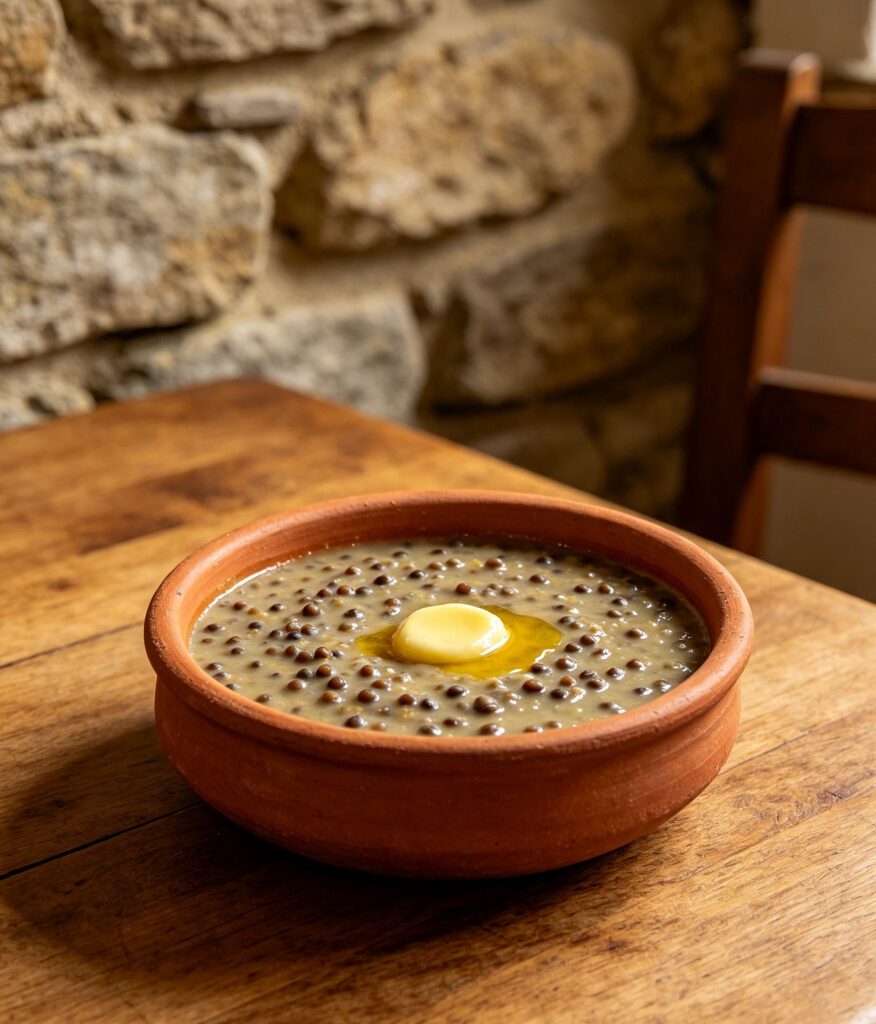
Masha Dal (Black Gram Lentils Simmered with Ghee)
The Quirky Foodster Team
Ingredients
Method
- Place the soaked, drained black gram in a large heavy pot with the water and turmeric.
- Bring to the boil, skimming any foam, then reduce to a low simmer, cover partially, and cook for 1.5 to
- 2 hours, stirring occasionally, until the lentils are completely tender and the mixture has thickened to a creamy consistency, adding hot water as needed if it becomes too thick before the lentils are fully cooked.
- Heat 1 tablespoon of the ghee in a small frying pan over medium heat, add the cumin seeds, and let sizzle for 20-30 seconds.
- Stir in the ground ginger, then pour this tempering into the lentils.
- Stir in the salt and simmer for a further 10 minutes.
- Just before serving, stir in the remaining 2 tablespoons of ghee for extra richness.
- Scatter with fresh cilantro and serve hot.
Introduction: Whole black gram lentils simmered low and slow until thick and creamy, finished with a generous spoonful of ghee, masha dal was a rich, nourishing side dish valued for its density and flavour.
Cultural Background: Masha, the Sanskrit term for black gram, is documented among the significant pulse crops of ancient India and is noted in early dietary literature for being considered particularly strengthening and substantial compared to lighter lentils such as mung. Its long, slow cooking time and the generous use of ghee associated with its preparation reflect a dish reserved somewhat more for occasions of plenty than the very simplest everyday meals.
Tips: (cid:127) Black gram takes considerably longer to soften than mung beans; soaking overnight is essential to achieve a properly creamy texture within a reasonable cooking time. (cid:127) Stir occasionally during the long simmer to prevent the thickening lentils from catching on the base of the pot.
Variations: (cid:127) A little grated fresh ginger and a pinch of asafoetida can be added to the tempering for extra depth. (cid:127) For an even richer dish, a small splash of milk or cream can be stirred in at the end, similar to enrichment methods recorded in the region’s later culinary evolution.
Storage: Store in an airtight container in the refrigerator for up to 4 days, or freeze for up to 2 months.
Reheating: Reheat in a saucepan over low heat, stirring occasionally and adding a splash of water, until warmed through.
Nutrition: Per serving (approx.): 260 kcal, 13 g protein, 32 g carbohydrate, 10 g fat, 8 g fibre, 380 mg sodium.
FAQs:
Q: Can I use split black gram instead of whole?
A: Yes, split black gram cooks considerably faster, in about 30-40 minutes, though the whole lentils give a heartier, more traditional texture over the longer cooking time. (cid:127) Q: Why does this dish use so much ghee compared to the simpler mudga dal? A: Black gram’s dense, rich character was traditionally paired with a generous hand with ghee, reflecting its status as a more substantial, occasion-worthy dish compared to lighter, everyday lentil preparations.
- Whole black gram (urad dal), soaked overnight and drained — 200 g (1 cup)
- Water — 900 ml (3.75 cups)
- Ground turmeric — 1/2 tsp
- Ghee, divided — 3 tbsp
- Cumin seeds — 1 tsp
- Ground ginger — 1/2 tsp
- Rock salt — 1 tsp
- Fresh cilantro, chopped — 2 tbsp
Please log in to leave a comment.