
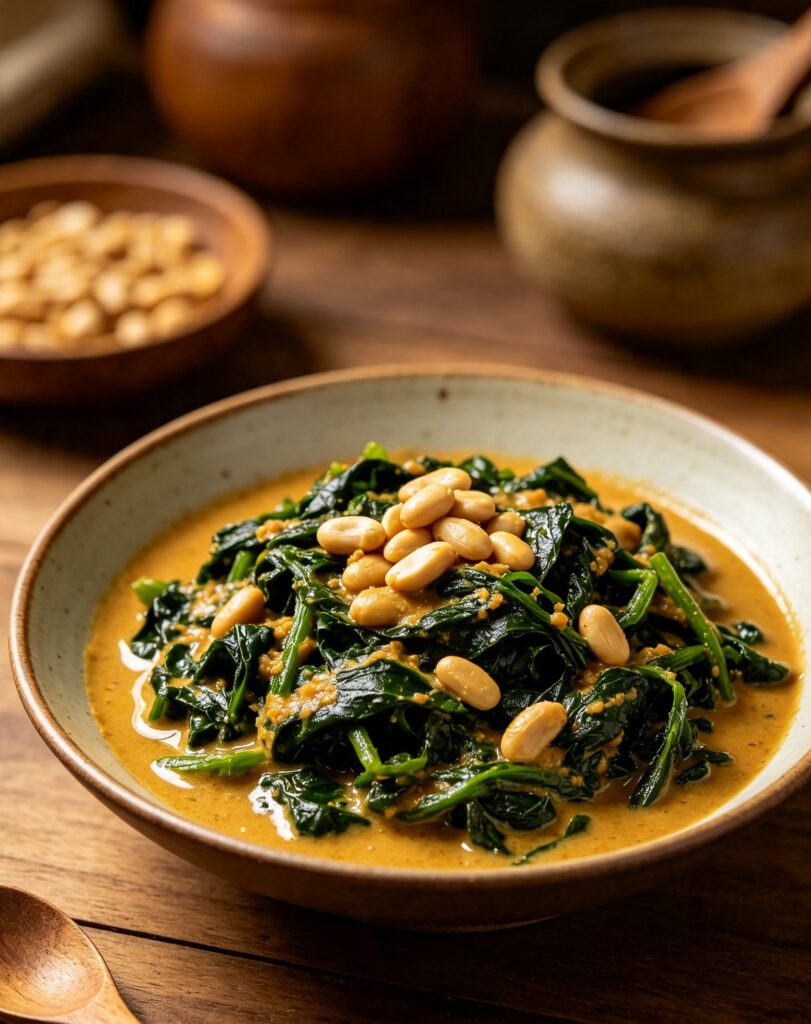
Malakwang (Traditional Festive Greens and Groundnut Stew)
The Quirky Foodster Team
Ingredients
- Malakwang leaves (or substitute with sour spinach or amaranth greens) — 500 g (1 lb 2 oz)
- Raw groundnuts (peanuts), ground — 250 g (1 3/4 cups)
- Onion, finely chopped — 1
- Tomatoes, chopped — 2
- Vegetable oil — 2 tbsp
- Water — 500 ml (2 cups)
- Fine salt — 1 1/2 tsp
- Baking soda (traditional tenderiser, optional) — 1/4 tsp
Method
- Wash the malakwang leaves thoroughly and chop roughly.
- Place the leaves in a saucepan with a splash of water and the baking soda, if using, and simmer for 15-20 minutes until tender, then drain, reserving a little of the cooking liquid.
- Meanwhile, sauté the onion in oil for 5 minutes, then add the tomatoes and cook for a further 5 minutes.
- Whisk the ground groundnuts with the water to form a smooth paste, then stir into the tomato mixture.
- Simmer gently for 10-15 minutes, stirring often, until thickened.
- Stir in the cooked greens and reserved cooking liquid, season with salt, and simmer for a final 10 minutes to let the flavours combine.
- Serve hot, traditionally alongside kalo.
Introduction: Malakwang is a beloved dish of Northern Uganda's Luo and Acholi communities, made from a slightly sour, dark green leafy vegetable simmered with a rich groundnut sauce.
Cultural Background: Malakwang is a beloved dish of Northern Uganda's Luo and Acholi communities, made from a slightly sour, dark green leafy vegetable simmered with a rich groundnut sauce. It holds an important place at traditional gatherings and festive meals, often served alongside kalo as a centrepiece of communal celebration.
Tips: A small pinch of baking soda is a traditional way to soften the greens' natural sourness and tenderise them faster. Stir the groundnut sauce frequently once combined with the greens, as it can catch on the base of the pan.
Variations: Add a little smoked or dried fish to the sauce for extra traditional depth. If malakwang leaves are unavailable, a mix of sour spinach or amaranth greens makes an authentic substitute. Naturally vegetarian as written. Naturally vegan as written; contains no animal products.
Storage: Refrigerate in an airtight container for up to 3 days.
Reheating: Reheat gently on the stovetop over low heat, stirring often, for 8 minutes, adding a splash of water if needed.
FAQs:
Q: What does malakwang taste like?
A: It has a distinctive tangy, slightly sour flavour from the leafy green, balanced by the rich, nutty groundnut sauce.
Q: Can malakwang leaves be found outside Uganda?
A: They can be difficult to find outside East Africa; sour spinach, amaranth greens, or even a mix of spinach with a squeeze of lemon can serve as a reasonable substitute.
- Malakwang leaves (or substitute with sour spinach or amaranth greens) — 500 g (1 lb 2 oz)
- Raw groundnuts (peanuts), ground — 250 g (1 3/4 cups)
- Onion, finely chopped — 1
- Tomatoes, chopped — 2
- Vegetable oil — 2 tbsp
- Water — 500 ml (2 cups)
- Fine salt — 1 1/2 tsp
- Baking soda (traditional tenderiser, optional) — 1/4 tsp
Please log in to leave a comment.