
Breads
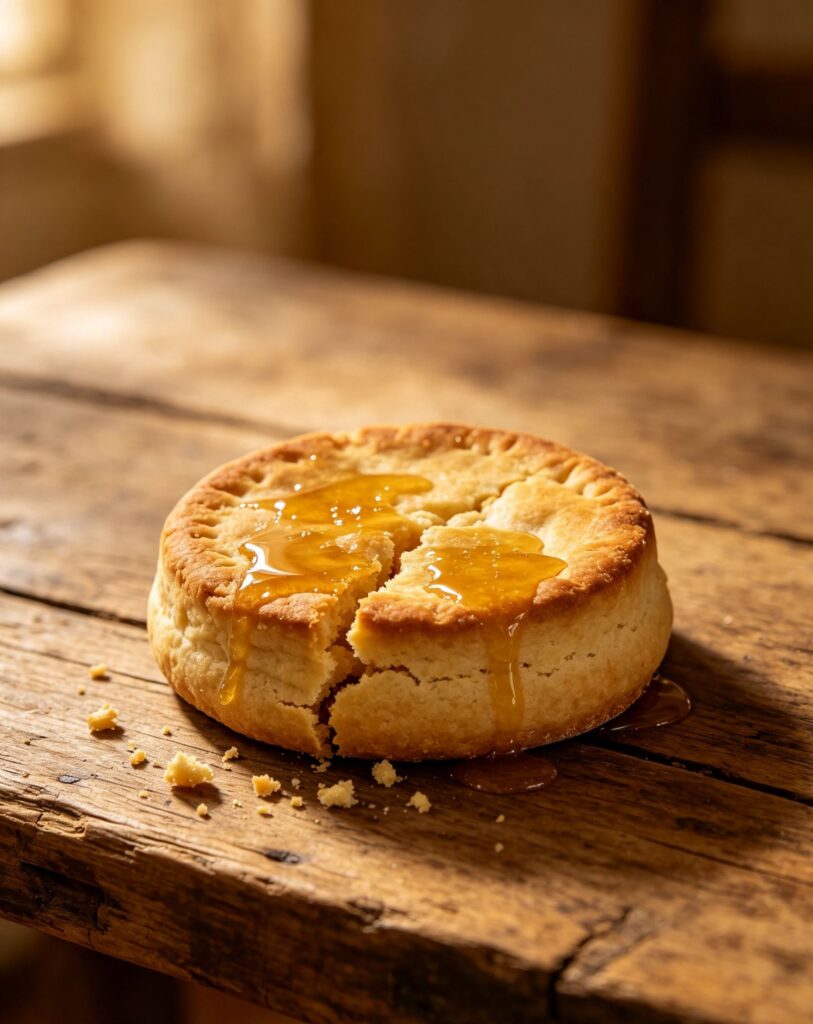
Libum (Sacred Honey Cheesecake Bread)
The Quirky Foodster Team
Ingredients
- 250g Fresh ricotta or soft sheep's cheese
- 200g Plain flour
- 1 egg
- Bay leaves, one per loaf, for baking
- 120ml Honey, warmed, for finishing
Method
- In a mixing bowl, mash the cheese until smooth, then work in the flour and egg to form a soft, slightly sticky dough.
- Rest the dough for 30 minutes at room temperature.
- Divide into 6 equal portions and shape into small, slightly domed rounds.
- Place a bay leaf underneath each round on a lined baking tray, then bake at 190C (375F) for 35-40 minutes, until risen and golden.
- While still warm, brush or drizzle generously with warmed honey and leave to soak in briefly before serving.
Native Name: Libum
Cultural Background: Recorded by Cato the Elder, libum was a cheese-and-flour bread baked as an offering to the household gods, the Lares, and also eaten as a treat on birthdays and other happy occasions – a direct ancestor, in both name and form, of the modern Italian ricotta cheesecake.
Tips: The bay leaf underneath is traditional and subtly perfumes the base of the loaf as it bakes – remove before eating.
Variations: A pinch of ground fennel seed in the dough is attested as a fragrant regional variation.
Vegetarian / Vegan Note: Vegetarian as written; a firm plant-based ricotta alternative can be used for a vegan version, though texture will differ.
Storage: Store covered at room temperature for up to 2 days, or refrigerate for up to 4 days.
Reheating: Warm briefly in a low oven (150C/300F) for a few minutes if a warm serving is preferred.
Nutrition: Approx. 280 kcal, 10 g protein, 38 g carbohydrate, 9 g fat per serving.
FAQs:
Q: What occasion was libum traditionally made for?
A: It was baked as a religious offering to the household Lares and also served on birthdays as a celebratory treat.
Q: Do I have to use a bay leaf?
A: It's traditional and adds a subtle aroma, but the bread bakes perfectly well directly on a lined tray without it.
Please log in to leave a comment.