
Sides
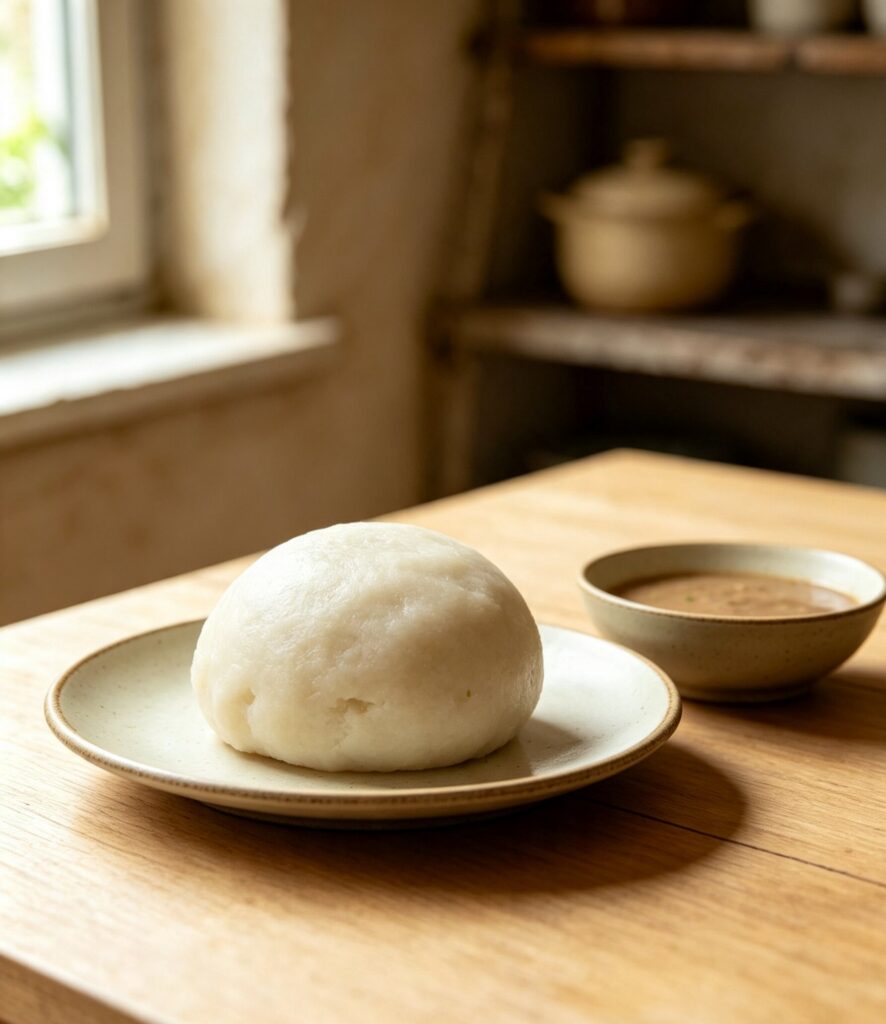
Liberian Fufu
Ingredients
- 1 kg (2.2 lb) fresh cassava root, peeled and cut into chunks
- Water, for soaking and boiling
- 1/4 tsp salt
Method
- Submerge the peeled cassava chunks fully in a large bowl or bucket of water and cover loosely.
- Leave to ferment at room temperature for 2-3 days, changing the water once daily, until the cassava softens and develops a mildly sour smell.
- Drain the fermented cassava, rinse briefly, and place in a large pot with fresh water and salt.
- Boil for 30-35 minutes until completely soft.
- Drain well, pressing out excess moisture with a clean cloth if needed.
- While hot, pound in a large mortar, folding continuously, until smooth, stretchy, and uniform, about 10-15 minutes.
- Shape into a ball with wet hands and cover with a damp cloth until serving.
Introduction: Unlike dumboy's fresh cassava, Liberian fufu starts with cassava that has been soaked and fermented for several days, giving it a distinctive tangy, slightly sour flavor prized in many Liberian homes.
Cultural Background: Unlike dumboy's fresh cassava, Liberian fufu starts with cassava that has been soaked and fermented for several days, giving it a distinctive tangy, slightly sour flavor prized in many Liberian homes. The fermented root is then boiled and pounded into a smooth, elastic dough, traditionally served alongside soups such as palm butter or groundnut soup.
Tips: Change the soaking water daily during fermentation to prevent off-flavors and keep the process hygienic. The cassava is ready to boil once it feels notably softer and gives off a faint sour aroma.
Variations: Blend in a food processor with a small amount of hot water for a quicker, smoother result if pounding by hand isn't practical. Combine fermented cassava with a portion of plantain for a subtly sweeter variation.
Storage: Wrap tightly and refrigerate for up to 2 days.
Reheating: Steam wrapped portions for 5-8 minutes or microwave covered with a damp towel for 1-2 minutes, kneading briefly afterward.
FAQs:
Q: Why does fufu taste sour?
A: The fermentation process develops natural acidity, giving fufu its characteristic tang, distinct from fresh dumboy.
Q: Can I skip the fermentation step?
A: Skipping it will produce dumboy rather than true fufu, as fermentation is what defines the dish.
Please log in to leave a comment.