
Lentil and Onion Pottage
The Quirky Foodster Team
Ingredients
- Dried lentils, rinsed — 250 g (1.25 cups)
- Water — 1 L (4 cups)
- Onion, chopped — 1
- Sesame oil — 1 tbsp
- Salt — 1 pinch
Method
- Place the lentils and water in the pot and bring to a simmer.
- Cook for 20-25 minutes, until the lentils are tender and beginning to break down.
- Meanwhile, soften the chopped onion in the sesame oil in a small pan over medium heat for 5-6 minutes.
- Stir the softened onion into the lentils and continue simmering for a further 5 minutes.
- Season with salt and serve hot.
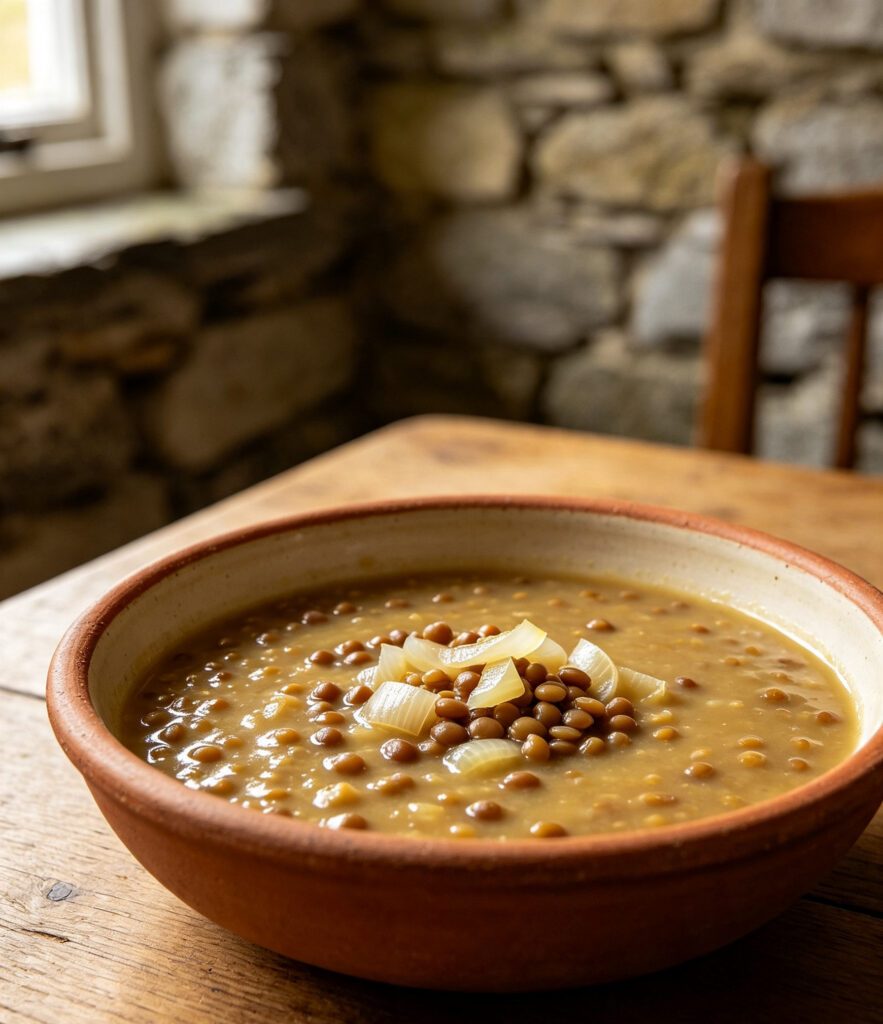
Introduction: A thick midday pottage of lentils simmered with onion, one of the most basic and enduring combinations of the ancient Mesopotamian diet.
Cultural Background: Lentils are among the best-attested legume crops of ancient Mesopotamia, documented in agricultural and ration texts from the earliest Sumerian periods onward, and onions, alongside garlic and leeks, form a well-documented seasoning trio that appears repeatedly across Mesopotamian culinary and administrative sources, including the ingredient list of the tablet recipe ‘Unwinding’.
Tips: – Lentils vary in cooking time depending on variety and age; check for tenderness from the 20-minute mark onward. – Sesame oil was a genuinely significant Mesopotamian cooking fat, well documented in ration and trade texts, and gives this dish a distinctive, historically apt flavour.
Variations: – Naturally vegan as written. – Garlic and leek can be added alongside the onion, following the well-attested Mesopotamian seasoning trio.
Storage: Refrigerate covered for up to 4 days.
Reheating: Reheat in a pot over low heat with a splash of water, stirring, for 6-8 minutes until hot throughout.
Nutrition: Per serving (approx.): 230 kcal, 15 g protein, 34 g carbohydrate, 5 g fat, 9 g fibre.
Q: Were lentils a major crop in ancient Mesopotamia?
A: Yes, lentils are documented in agricultural and ration records from the earliest Sumerian periods onward, making them one of the most consistently attested legume staples of the region.
Q: Why sesame oil rather than another fat?
A: Sesame oil is well documented in Mesopotamian trade and ration texts as a significant cooking fat of the period, distinguishing it from later Mediterranean cuisines that relied more heavily on olive oil.
- Dried lentils, rinsed — 250 g (1.25 cups)
- Water — 1 L (4 cups)
- Onion, chopped — 1
- Sesame oil — 1 tbsp
- Salt — 1 pinch
Please log in to leave a comment.