
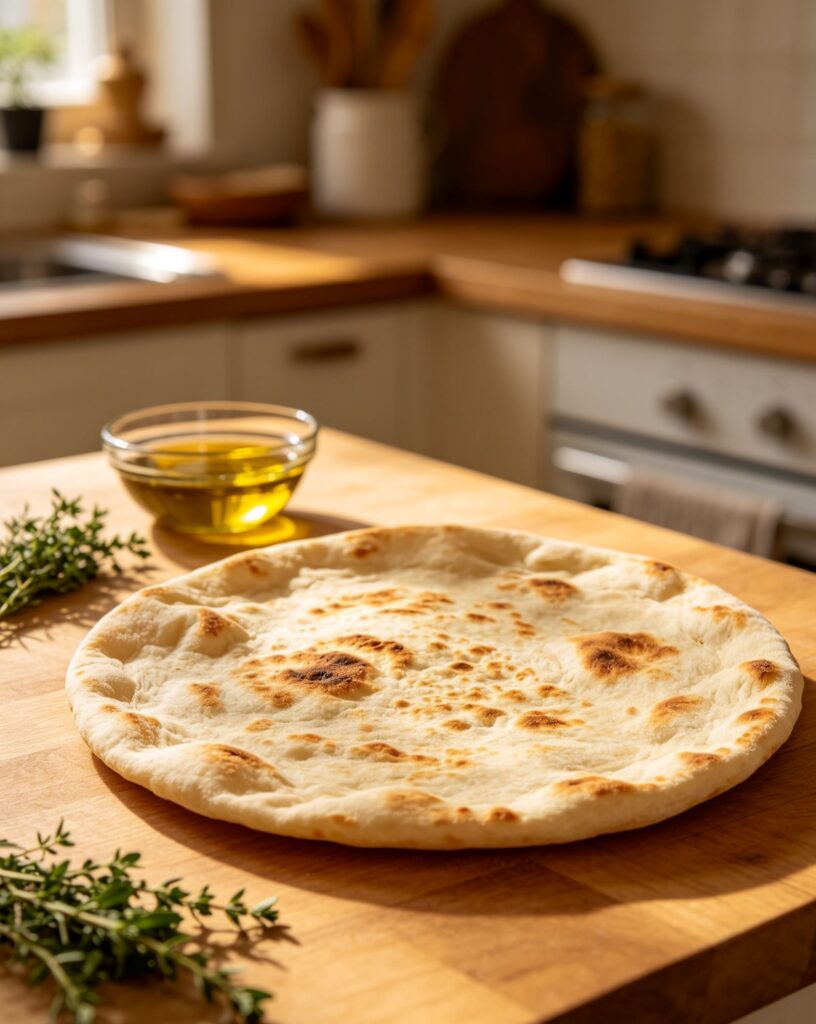
Lavash (Traditional Armenian Flatbread)
The Quirky Foodster Team
Ingredients
- Plain flour, plus extra for dusting — 500 g (4 cups)
- Salt — 1 tsp
- Sugar — 1 tsp
- Instant yeast — 7 g (2 1/4 tsp)
- Warm water — 300 ml (1 1/4 cups)
- Olive oil — 1 tbsp
Method
- Dissolve yeast and sugar in warm water; let stand 10 minutes until foamy.
- Mix flour and salt in a large bowl, then add the yeast mixture and olive oil, kneading into a soft, smooth dough for about 8 minutes.
- Cover and let rise in a warm place for 1 hour, until roughly doubled.
- Divide the dough into 8 equal portions and roll each into a very thin oval or round, almost translucent in thickness.
- Heat a heavy skillet or griddle until very hot.
- Cook each rolled portion for 30-45 seconds per side, until light brown bubbles appear and the bread is cooked through but still pliable.
- Stack the cooked lavash under a clean tea towel to keep soft and pliable as you finish the batch.
Introduction: Lavash is a thin, soft flatbread central to Armenian identity, recognised by UNESCO as an element of Armenia’s Intangible Cultural Heritage.
Cultural Background: Lavash is a thin, soft flatbread central to Armenian identity, recognised by UNESCO as an element of Armenia’s Intangible Cultural Heritage. Traditionally baked in a tonir — a deep clay pit oven — lavash is slapped onto the hot inner walls to cook in seconds, then dried and stacked for months of storage, later revived with a light misting of water. It accompanies nearly every Armenian meal.
Tips: Roll the dough as thin as possible — traditional lavash is almost paper-thin. If lavash dries out for storage, revive it by misting lightly with water and covering for a few minutes before use.
Variations: Add a sprinkle of nigella or sesame seeds before cooking for a different regional style. Whole wheat flour can replace up to half the plain flour for a heartier, more rustic lavash.
Storage: Fresh lavash keeps wrapped at room temperature for 2 days; dried lavash keeps in an airtight container for several months.
Reheating: Warm briefly in a dry pan or lightly mist with water and steam to soften; not suitable for long microwaving as it turns rubbery.
Nutrition: Per piece (of 8): approx. 180 kcal, 5g protein, 2g fat, 34g carbohydrates, 1g fibre.
FAQs:
Q: Do I need a tonir oven to make lavash at home?
A: No, a very hot skillet, griddle or pizza stone works well for home cooking and produces a very similar result.
Q: Why is lavash sometimes dried and hard?
A: Traditionally lavash is dried for long-term storage through winter, then revived with a light misting of water when needed.
- Plain flour, plus extra for dusting — 500 g (4 cups)
- Salt — 1 tsp
- Sugar — 1 tsp
- Instant yeast — 7 g (2 1/4 tsp)
- Warm water — 300 ml (1 1/4 cups)
- Olive oil — 1 tbsp
Please log in to leave a comment.