
La Paz Pork Fricasse
The Quirky Foodster Team
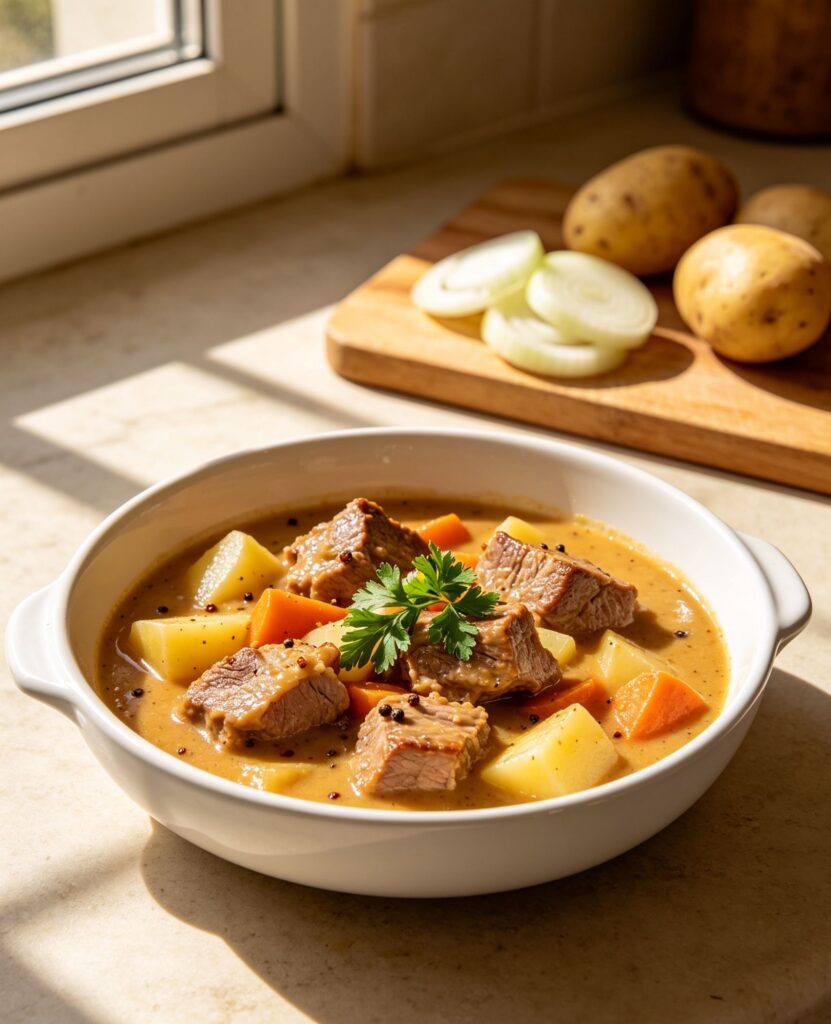
Ingredients
- Pork shoulder, cut into large chunks — 1.2 kg (2.5 lb)
- Aji amarillo (yellow chilli) paste — 3 tbsp
- Chicha or light beer — 500 ml (2 cups)
- Onion, finely chopped — 1
- Garlic cloves, minced — 4
- Cumin — 1 tbsp
- Bay leaves — 2
- Water or pork stock — 1.5 L (6 cups)
- Salt — to taste
- Cooked hominy corn and diced potato, to serve
Method
- Season the pork chunks with salt and sear in a hot pot until browned on all sides.
- Add the onion and garlic and cook until softened.
- Stir in the aji amarillo paste, cumin and bay leaves, cooking for 2 minutes to release aroma.
- Pour in the chicha or beer and the water or stock, bring to a simmer.
- Cover and simmer gently for 2 to 2.5 hours, until the pork is fork-tender and the broth has thickened slightly.
- Adjust salt, remove bay leaves, and serve hot in bowls with hominy corn and potato.
Introduction: Fricasé is a weekend and early-morning dish from La Paz, traditionally eaten after Saturday nights out or at Sunday family lunches, believed to help settle the stomach.
Cultural Background: Fricasé is a weekend and early-morning dish from La Paz, traditionally eaten after Saturday nights out or at Sunday family lunches, believed to help settle the stomach. Pork simmers for hours in a spicy chicha-based broth thickened with ground yellow chilli.
Tips: Simmer low and slow — a rushed fricasé will leave the pork tough.
If chicha is unavailable, a light lager gives a similar mild sourness.
Variations: Some households add a splash of milk near the end for a rounder, creamier broth. Vegetarian / Vegan Note Not traditionally made vegetarian; jackfruit can approximate the texture but the dish's identity is pork-based.
Storage: Refrigerate for up to 3 days; the flavour improves the next day.
Reheating: Reheat gently on the stovetop over low heat, adding a splash of water if the broth has thickened too much.
Nutrition: Per serving (approx.): 480 kcal, 32g protein, 30g fat, 14g carbohydrate.
FAQs:
Q: Is fricasé very spicy?
A: It carries a warm, moderate heat from aji amarillo rather than fiery chilli heat.
Q: What time of day is it eaten?
A: Traditionally as an early breakfast-lunch on weekends, though it is enjoyed any time.
- Pork shoulder, cut into large chunks — 1.2 kg (2.5 lb)
- Aji amarillo (yellow chilli) paste — 3 tbsp
- Chicha or light beer — 500 ml (2 cups)
- Onion, finely chopped — 1
- Garlic cloves, minced — 4
- Cumin — 1 tbsp
- Bay leaves — 2
- Water or pork stock — 1.5 L (6 cups)
- Salt — to taste
- Cooked hominy corn and diced potato, to serve
Please log in to leave a comment.