
Kung Pao Sauce
The Quirky Foodster Team
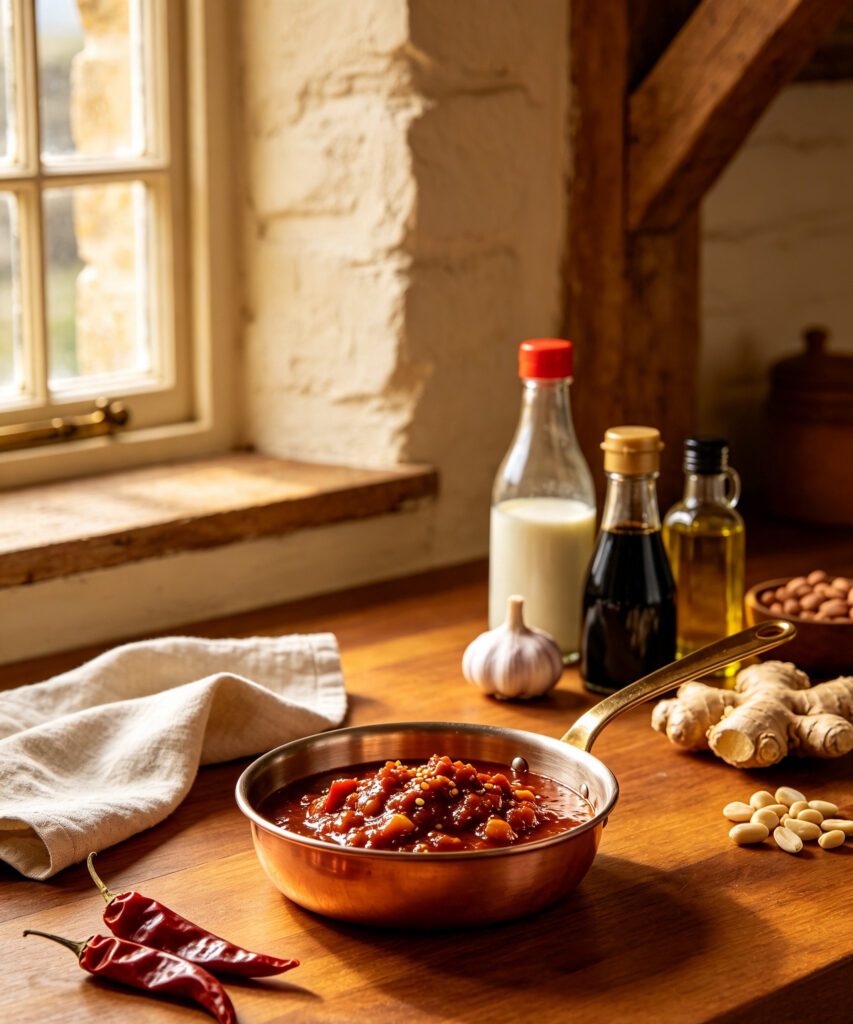
Ingredients
Method
- Combine soy sauce, dark soy sauce, vinegar, sugar and Shaoxing wine in a mixing bowl.
- Mix cornstarch with a little of the stock to form a slurry, then whisk into the sauce mixture.
- Add remaining stock and whisk to combine into a smooth, pourable sauce.
- This sauce is typically added to a hot wok with stir-fried chicken, dried chiles, Sichuan peppercorns and peanuts.
- Stir-fry briefly until the sauce thickens and coats everything glossily; finish with sesame oil.
Cultural Background: A savoury-sweet-spicy sauce named for Qing dynasty official Ding Baozhen (whose title was 'Gongbao'), kung pao sauce is the backbone of the iconic Sichuan stir-fry dish featuring chicken, peanuts and dried chiles.
Tips: • Prepare this sauce mixture (the classic Chinese 'sauce slurry' technique) before starting to stir-fry, as the cooking happens quickly. • Chinkiang black vinegar gives an authentic malty tang — regular rice vinegar is an acceptable substitute if unavailable.
Variations: • Adjust sugar and vinegar ratios for a more or less pronounced sweet-sour balance. • Add extra dried chiles and Sichuan peppercorns directly to the stir-fry for more authentic numbing heat.
Storage: Refrigerate the unused sauce mixture up to 1 week in an airtight container.
Reheating: Not applicable as a standalone sauce; it's cooked directly into the stir-fry. Nutrition (per serving) Approx. 25 kcal, 0.7 g protein, 1 g fat, 3.5 g carbohydrate per 30 ml serving.
FAQs: What is kung pao sauce traditionally used for? The defining sauce for kung pao chicken, a classic Sichuan stir-fry with peanuts and dried chiles. What is Chinkiang vinegar? A dark, malty Chinese black vinegar essential to many Sichuan and Shanghainese dishes; regular rice vinegar can substitute if unavailable.
- Soy sauce — 30 ml (2 tbsp)
- Dark soy sauce — 10 ml (2 tsp)
- Chinkiang (black) vinegar — 20 ml (4 tsp)
- Sugar — 20 g (4 tsp)
- Shaoxing wine — 15 ml (1 tbsp)
- Cornstarch — 5 g (1.5 tsp)
- Chicken or vegetable stock — 60 ml (1/4 cup)
- Sesame oil — 5 ml (1 tsp)
Please log in to leave a comment.