
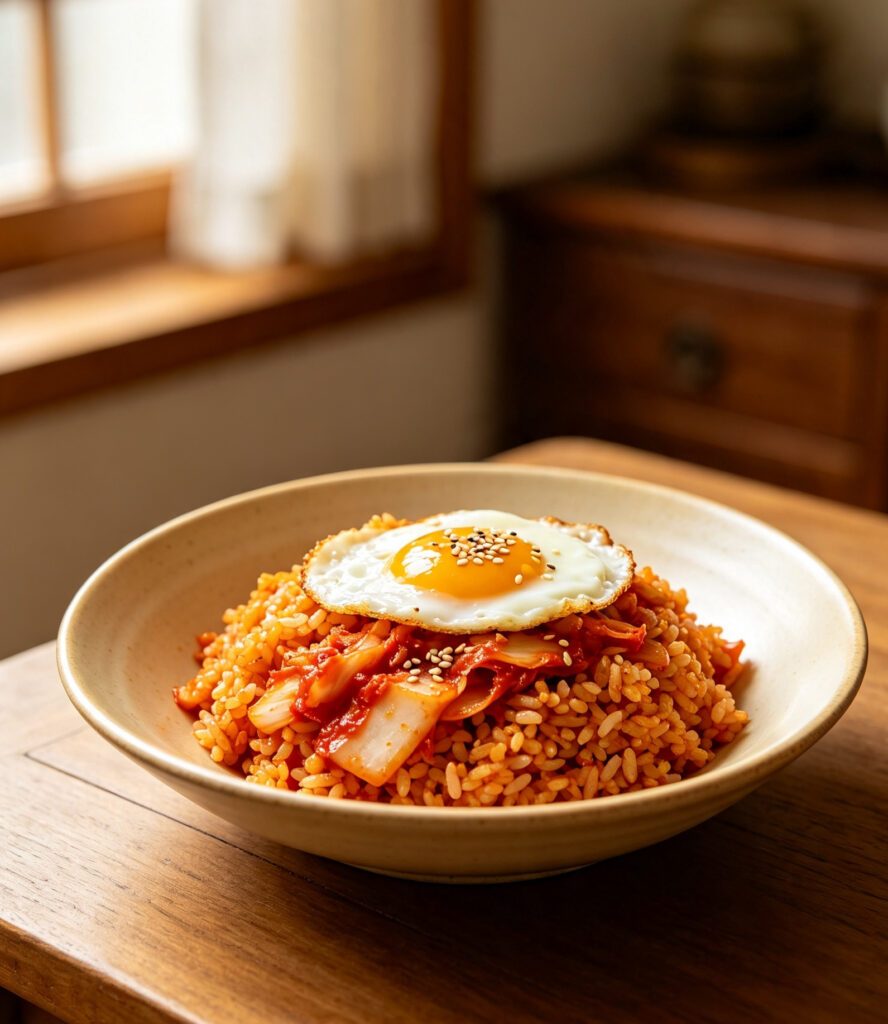
Kimchi Bokkeumbap (Kimchi Fried Rice)
The Quirky Foodster Team
Ingredients
- Cooked, day-old short-grain rice — 2 cups (400 g)
- Well-fermented cabbage kimchi, chopped, plus 2 tbsp (30 ml) of its brine — 1 cup (150 g)
- Diced pork belly or spam (optional) — 100 g (3.5 oz)
- Small onion, diced — 1/2
- Spring onions, sliced — 2
- Gochujang — 1 tbsp (15 ml)
- Soy sauce — 1 tsp (5 ml)
- Sugar — 1 tsp (5 g)
- Vegetable oil — 1 tbsp (15 ml)
- Sesame oil, to finish — 1 tsp (5 ml)
- Large eggs, fried sunny-side up, to serve — 2
- Gim (dried seaweed), shredded, for garnish — 1 sheet
Method
- Heat the vegetable oil in a large frying pan or wok over medium-high heat and cook the pork belly or spam until lightly browned.
- Add the onion and cook for 2 minutes until softened.
- Stir in the chopped kimchi and cook for 3–4 minutes until slightly caramelised at the edges.
- Add the gochujang, soy sauce, sugar and kimchi brine, and stir to coat everything evenly.
- Add the cold rice, breaking up any clumps, and stir-fry for 4–5 minutes until the rice is heated through and lightly crisped in places.
- Stir in most of the spring onion, drizzle with sesame oil, and remove from the heat. Divide between bowls, top each with a fried egg, and scatter with the remaining spring onion and shredded gim.
Introduction: Kimchi bokkeumbap is a beloved home-cooking staple built around Korea's most iconic ferment — a quick, satisfying way to use day-old rice and kimchi that has passed its freshest point and turned pleasantly sour.
Cultural Background: Kimchi bokkeumbap is a beloved home-cooking staple built around Korea's most iconic ferment — a quick, satisfying way to use day-old rice and kimchi that has passed its freshest point and turned pleasantly sour. Nearly every Korean household has its own version, often finished with a fried egg and a sheet of crisp seaweed on top.
Tips: Day-old, chilled rice fries far better than freshly cooked rice, which turns mushy — cook rice the night before if possible. Use kimchi that has fermented for at least a couple of weeks; well-soured kimchi gives the dish its characteristic tang.
Variations: Add a handful of grated cheese on top and grill briefly for a popular modern 'kimchi cheese bokkeumbap' variation. Stir in canned tuna instead of pork for a lighter, budget-friendly version. Omit the pork/spam, use a vegetarian kimchi (made without fish sauce) and swap the fried egg for extra sautéed mushrooms if a vegan result is wanted.
Storage: Refrigerate in an airtight container for up to 2 days.
Reheating: Reheat in a hot pan with a splash of oil to re-crisp, or microwave with a lid until piping hot.
Nutrition: Calories: 520 kcal | Protein: 18 g | Carbs: 58 g | Fat: 23 g | Fibre: 3 g | Sodium: 890 mg Per serving with pork; estimate only.
FAQs:
Q: Can I use fresh kimchi instead of aged kimchi?
A: You can, but the dish is traditionally made with older, well-fermented kimchi, which gives a deeper sour flavour that mellow, fresh kimchi lacks.
Q: Why does my fried rice turn out soggy?
A: This is usually from using freshly cooked, warm rice, which is too moist — cold, day-old rice fries up far drier and firmer.
Q: Is spam really traditional?
A: Spam became popular in Korean cooking after the Korean War due to US military rations, and it is now a genuinely common, well-loved addition to home-style kimchi fried rice.
- Cooked, day-old short-grain rice — 2 cups (400 g)
- Well-fermented cabbage kimchi, chopped, plus 2 tbsp (30 ml) of its brine — 1 cup (150 g)
- Diced pork belly or spam (optional) — 100 g (3.5 oz)
- Small onion, diced — 1/2
- Spring onions, sliced — 2
- Gochujang — 1 tbsp (15 ml)
- Soy sauce — 1 tsp (5 ml)
- Sugar — 1 tsp (5 g)
- Vegetable oil — 1 tbsp (15 ml)
- Sesame oil, to finish — 1 tsp (5 ml)
- Large eggs, fried sunny-side up, to serve — 2
- Gim (dried seaweed), shredded, for garnish — 1 sheet
Please log in to leave a comment.