
Breads
Khubz Tabun
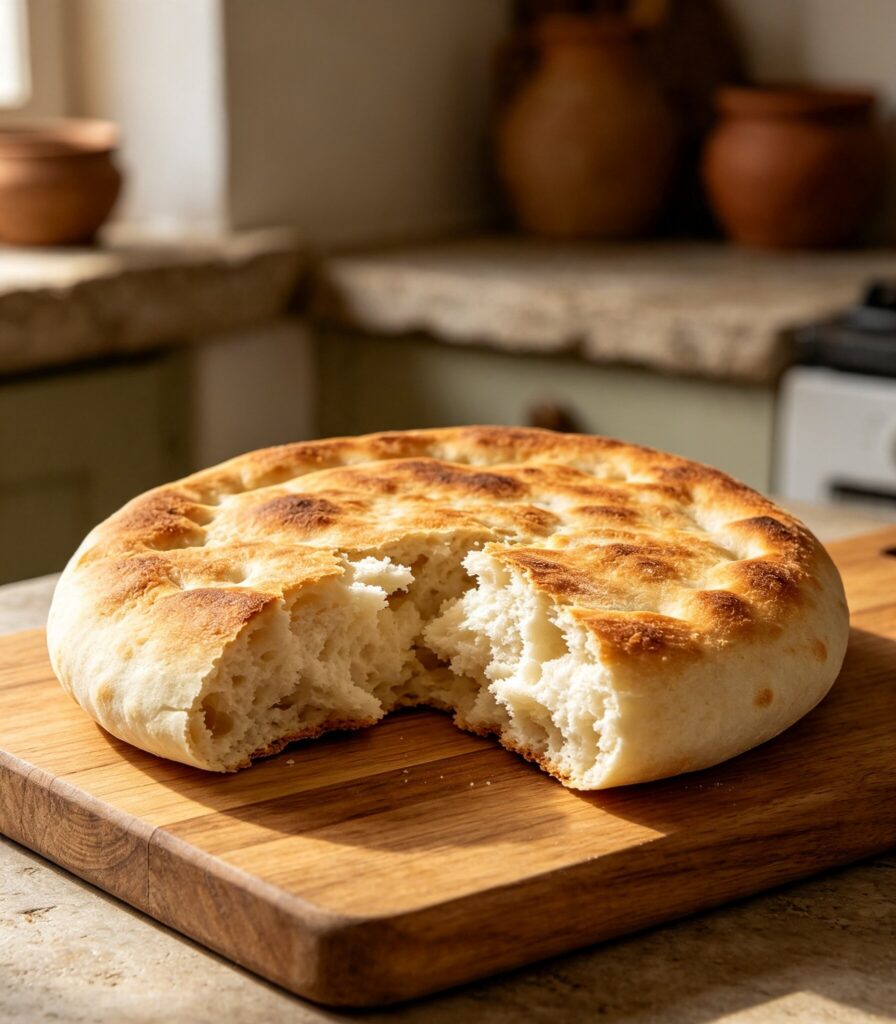
Ingredients
- 500 g (4 cups) plain flour, plus extra for dusting (17.5 oz)
- 1 tsp salt
- 2 tsp instant yeast
- 1 tsp sugar
- 320 ml (1.25 cups) warm water (11 fl oz)
- 2 tbsp olive oil
Method
- Dissolve the yeast and sugar in the warm water and let stand for 5 minutes until foamy.
- Combine the flour and salt in a large bowl, then add the yeast mixture and olive oil.
- Knead for 8-10 minutes until smooth and elastic.
- Cover and let rise in a warm place for about 1 hour until doubled in size.
- Preheat the oven with a baking stone or heavy tray inside to 250°C (480°F).
- Divide the dough into 6 portions and shape each into a flattened round about 1.5 cm thick, dimpling the surface with fingertips.
- Bake directly on the hot stone for 8-10 minutes until puffed and lightly charred in spots.
- Wrap in a clean cloth to keep soft until serving.
Introduction: Baked in a clay taboon oven lined with heated stones, this rustic, slightly domed bread is a village tradition in Jordan, historically prepared communally by women baking large batches in shared outdoor ovens for the week ahead.
Cultural Background: Baked in a clay taboon oven lined with heated stones, this rustic, slightly domed bread is a village tradition in Jordan, historically prepared communally by women baking large batches in shared outdoor ovens for the week ahead.
Tips: A very hot oven and preheated stone are essential to mimic the intense heat of a traditional taboon oven and get the characteristic charred spots.
Variations: A thinner version can be rolled out more widely for wrapping shawarma or falafel. Some bakers sprinkle nigella seeds on top before baking.
Storage: Store at room temperature in a sealed bag for up to 2 days, or freeze for up to 1 month.
Reheating: Warm in a dry frying pan for 1 minute per side, or wrap in foil and heat in a 180°C (350°F) oven for 5 minutes.
FAQs:
Q: Can I bake this without a baking stone?
A: Yes, a heavy inverted baking tray preheated in the oven works as a substitute.
Q: Why does the bread have dimples?
A: They help the bread bake evenly and create the traditional textured surface.
Please log in to leave a comment.