
Breads
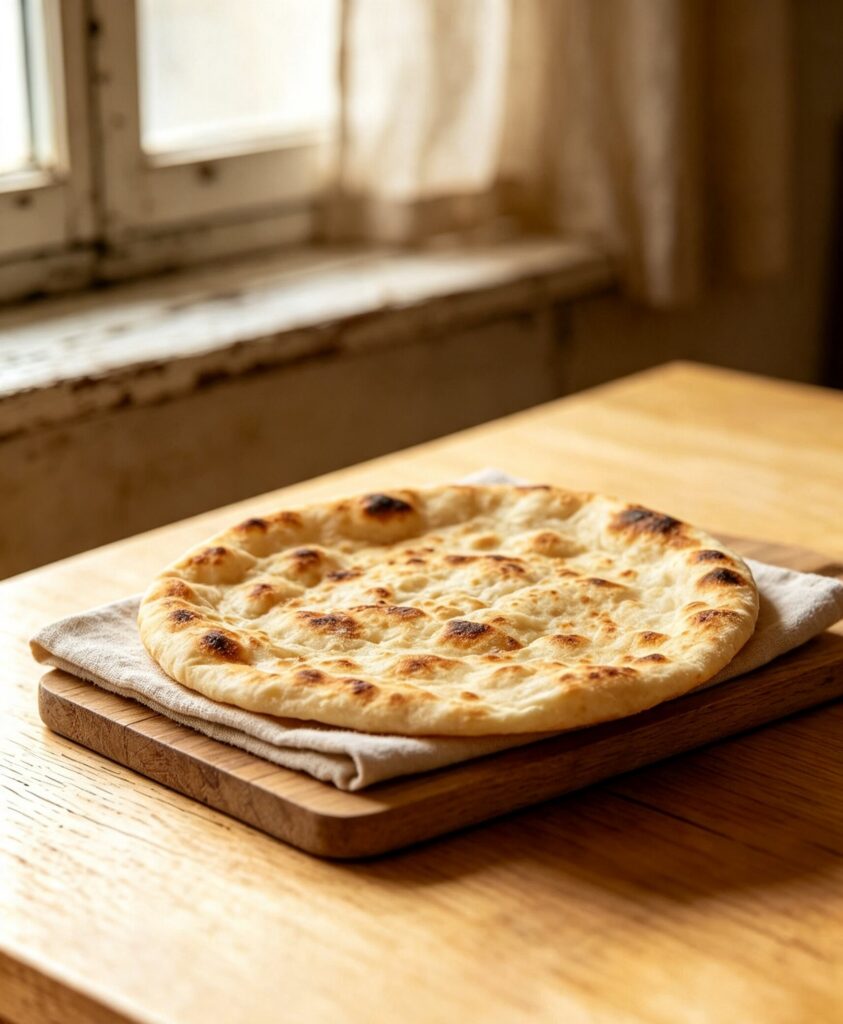
Khubz Libi (Libyan Flatbread)
Ingredients
- 500 g (4 cups) plain or bread flour
- 7 g (2.25 tsp) instant yeast
- 1 tsp sugar
- 1.5 tsp salt
- 2 tbsp olive oil
- 300 ml (1.25 cups) warm water
Method
- Combine flour, yeast, sugar and salt in a large bowl.
- Add olive oil and warm water, mixing to form a soft dough, then knead for 8-10 minutes until smooth and elastic.
- Cover and let rise in a warm place for 1 hour, or until doubled in size.
- Divide the dough into 6-8 equal balls and roll each out on a floured surface into a round about 20 cm (8 in) wide and 0.5 cm thick.
- Heat a griddle or heavy skillet over medium-high heat with no oil.
- Cook each flatbread for 1.5-2 minutes per side until puffed and lightly charred in spots.
- Stack the cooked breads under a clean kitchen towel to keep them soft and warm until serving.
Introduction: Khubz Libi is the everyday flatbread found on nearly every Libyan table, baked fresh to accompany stews, salads and dips.
Cultural Background: Khubz Libi is the everyday flatbread found on nearly every Libyan table, baked fresh to accompany stews, salads and dips. Traditionally cooked on a flat griddle called a tabuna or in a simple home oven, this soft, slightly chewy bread is essential for scooping up dishes like shorba and shakshuka.
Tips: A hot, dry griddle is key to getting the characteristic charred spots and puff of a good khubz. Keep finished breads covered with a towel as you cook the rest, which keeps them pliable rather than crisping up.
Variations: Some households add a spoonful of semolina to the dough for a slightly firmer, more rustic texture.
Storage: Store cooled bread in a sealed bag at room temperature for up to 2 days, or freeze for up to 1 month.
Reheating: Warm briefly on a dry skillet or wrap in foil and heat in a low oven for a few minutes.
FAQs:
Q: Can I bake these in an oven instead of a griddle?
A: Yes, bake on a preheated baking stone or tray at 230C (450F) for 4-5 minutes per side.
Q: Why is my bread tough?
A: Over-kneading or rolling the dough too thin can lead to a tougher bread – aim for a moderate 0.5 cm thickness.
Please log in to leave a comment.