
Holidays & Special Occasions
Khao Tom Mad
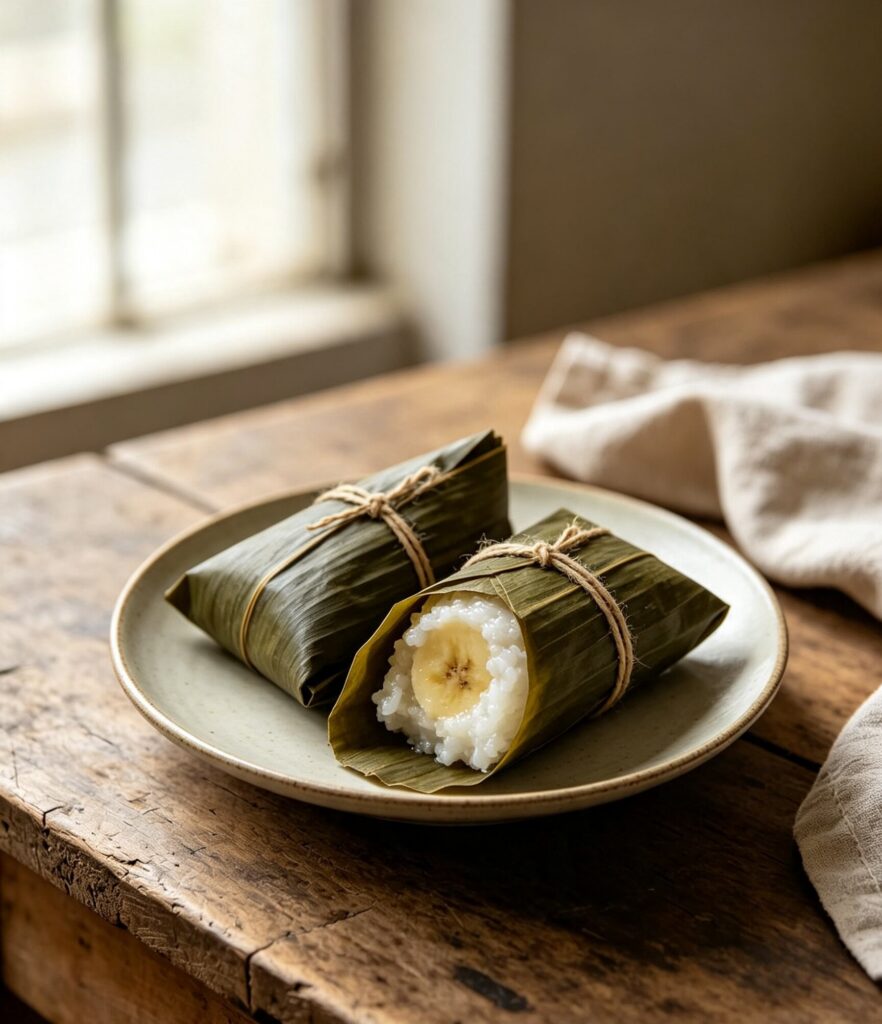
Ingredients
- 400 g (2 cups) glutinous rice, soaked
- 200 ml (3/4 cup plus 1 tbsp) coconut milk
- 80 g (1/3 cup plus 1 tbsp) sugar
- 1/2 tsp salt
- 4 ripe bananas, halved lengthwise
- banana leaves, softened
- kitchen string or thin bamboo strips, for tying
Method
- Drain the soaked rice and mix with coconut milk, sugar and salt.
- Lay a piece of softened banana leaf flat and spoon a portion of the rice mixture onto it.
- Place a piece of banana in the centre of the rice.
- Top with a little more rice to fully enclose the banana.
- Fold the banana leaf around the filling to form a neat log-shaped parcel, and tie securely with string.
- Repeat with remaining ingredients.
- Boil the parcels in a large pot of water for 1-1.5 hours, topping up water as needed, until the rice is fully tender.
- Cool slightly before unwrapping and serving.
Introduction: Khao Tom Mad are sticky rice and banana bundles wrapped in banana leaves and boiled, traditionally prepared for Buddhist merit-making ceremonies, Boun Pi Mai and almsgiving to monks.
Cultural Background: Khao Tom Mad are sticky rice and banana bundles wrapped in banana leaves and boiled, traditionally prepared for Buddhist merit-making ceremonies, Boun Pi Mai and almsgiving to monks. Their neat, hand-tied parcels symbolise care and offering, and they are often made in large batches by families working together.
Tips: Tie the parcels firmly so water doesn't seep in during boiling. Use very ripe bananas for the best natural sweetness.
Variations: Black sticky rice can be used for a naturally sweeter, nuttier variation. Some versions add sweetened black beans alongside the banana.
Storage: Store boiled parcels at room temperature for up to 2 days, or refrigerate for up to 5 days.
Reheating: Re-steam or re-boil briefly in their wrapping to restore softness.
FAQs:
Q: Why are these made for festivals?
A: They are traditionally offered to monks during merit-making ceremonies and shared at Boun Pi Mai and other celebrations.
Q: Can I steam instead of boil?
A: Yes, though boiling is the traditional method and gives a more evenly cooked result.
Please log in to leave a comment.