
Kavum (Sweet Oil Cakes)
The Quirky Foodster Team
Ingredients
- Rice flour (2 cups) — 250 g (8.8 oz)
- Kithul treacle or dark treacle (1 cup) — 240 ml (1 cup)
- Baking soda, or a small piece of ripe banana as a natural leavener (1/2 teaspoon) — 2 g
- Salt (1/4 teaspoon) — 1.5 g
- Water, as needed to loosen the batter
- Coconut oil, for deep-frying
Method
- In a bowl, mix the rice flour with the treacle, baking soda and salt, adding a little water as needed to form a thick, smooth, pourable batter, similar to a thick pancake batter.
- Cover and leave to ferment overnight (or at least 8 hours) at room temperature, until slightly bubbly.
- Heat coconut oil in a deep pan or small kavum moulds set into hot oil, to about 160C (325F) - a lower, gentler heat than most deep-frying, which allows the kavum to cook through without burning the outside.
- Pour or ladle a portion of batter into the hot oil (or mould), and fry gently, spooning hot oil over the top, for 6-8 minutes per batch, until deep golden-brown and a domed shape has formed, with a slightly raised centre.
- Remove with a slotted spoon and drain well on paper towels or a rack.
- Cool completely before serving or storing; kavum firms up as it cools.
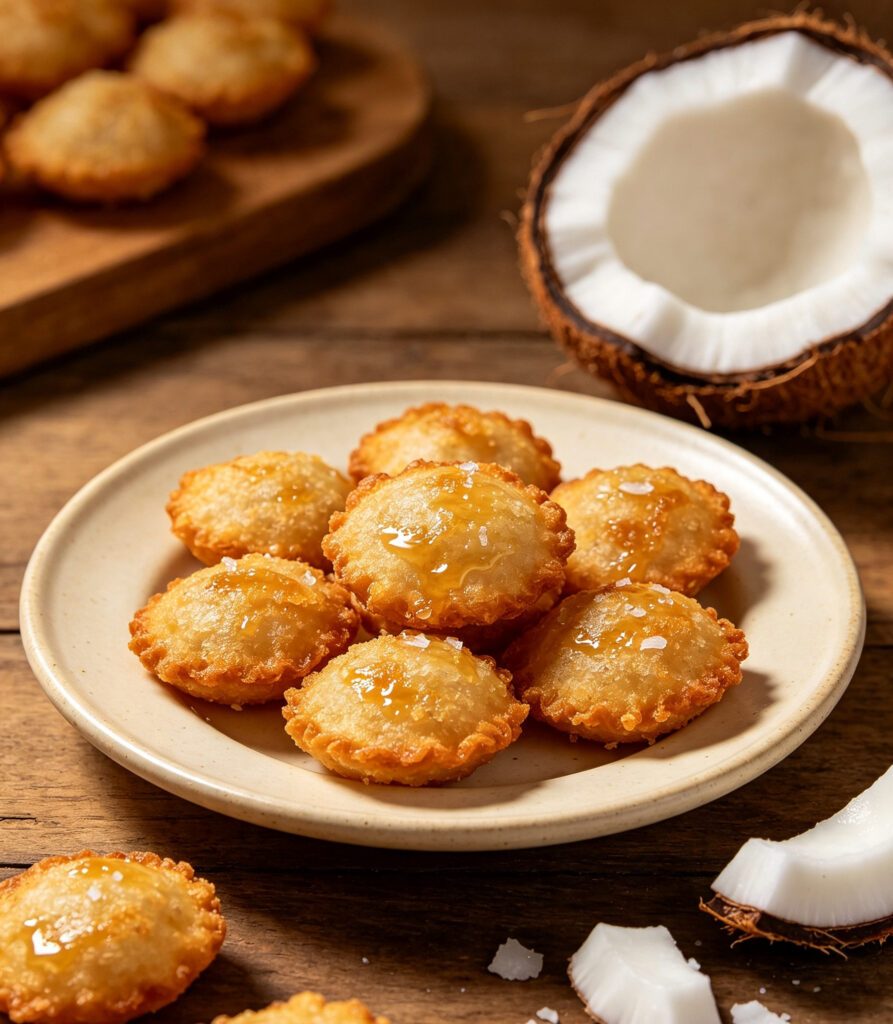
Introduction: Kavum are deep-fried rice flour and treacle cakes with a distinctive raised, dome-like shape and a glossy dark brown finish, and are the single most iconic sweet of the Sinhala and Tamil New Year (Avurudu) table.
Cultural Background: Kavum are deep-fried rice flour and treacle cakes with a distinctive raised, dome-like shape and a glossy dark brown finish, and are the single most iconic sweet of the Sinhala and Tamil New Year (Avurudu) table. Made from a fermented batter of rice flour sweetened with kithul treacle, then deep-fried in coconut oil in small, specially shaped moulds, kavum-making is one of the most anticipated household rituals leading up to New Year, with the first kavum traditionally offered before anyone else eats, as a mark of respect and good fortune for the year ahead.
Tips: Fry at a lower, gentler oil temperature than usual deep-frying – kavum needs time to cook through to the centre without the outside burning, given its thickness. The overnight fermentation is important for both flavour and the traditional slightly domed shape; don't skip it. Kithul treacle gives the most authentic flavour and dark colour; if unavailable, a good quality dark treacle or molasses mixed with a little brown sugar can substitute.
Variations: Aasmi is a related, lighter, more open-textured fried sweet often made alongside kavum for the New Year table. Some regions make a version with jaggery instead of treacle for a slightly different sweetness. Naturally vegan as written, using plant-based treacle and no eggs or dairy.
Storage: Store in an airtight container at room temperature for up to 2 weeks – like kokis, kavum is designed to keep well for the New Year season.
Reheating: Not necessary; eaten at room temperature.
Nutrition: Approx. 140 kcal, 1 g protein, 5 g fat, 24 g carbohydrates, 0.5 g fibre per kavum
FAQs:
Q: Why is kavum specifically eaten at New Year?
A: It is one of the traditional 'kevili' (festive sweetmeats) prepared for the Sinhala and Tamil New Year table, and in many households the first kavum made is offered ceremonially before the family eats, as a symbol of prosperity for the year ahead.
Q: What is kithul treacle?
A: A thick, dark syrup tapped from the flowering stalks of the kithul (fishtail) palm, valued in Sri Lankan cooking for its deep caramel flavour, distinct from cane sugar syrup.
Q: Why does kavum need to fry at a lower temperature?
A: Because the cakes are fairly thick, a gentler heat allows the inside to cook through fully before the outside becomes too dark or burnt.
- Rice flour (2 cups) — 250 g (8.8 oz)
- Kithul treacle or dark treacle (1 cup) — 240 ml (1 cup)
- Baking soda, or a small piece of ripe banana as a natural leavener (1/2 teaspoon) — 2 g
- Salt (1/4 teaspoon) — 1.5 g
- Water, as needed to loosen the batter
- Coconut oil, for deep-frying
Please log in to leave a comment.