
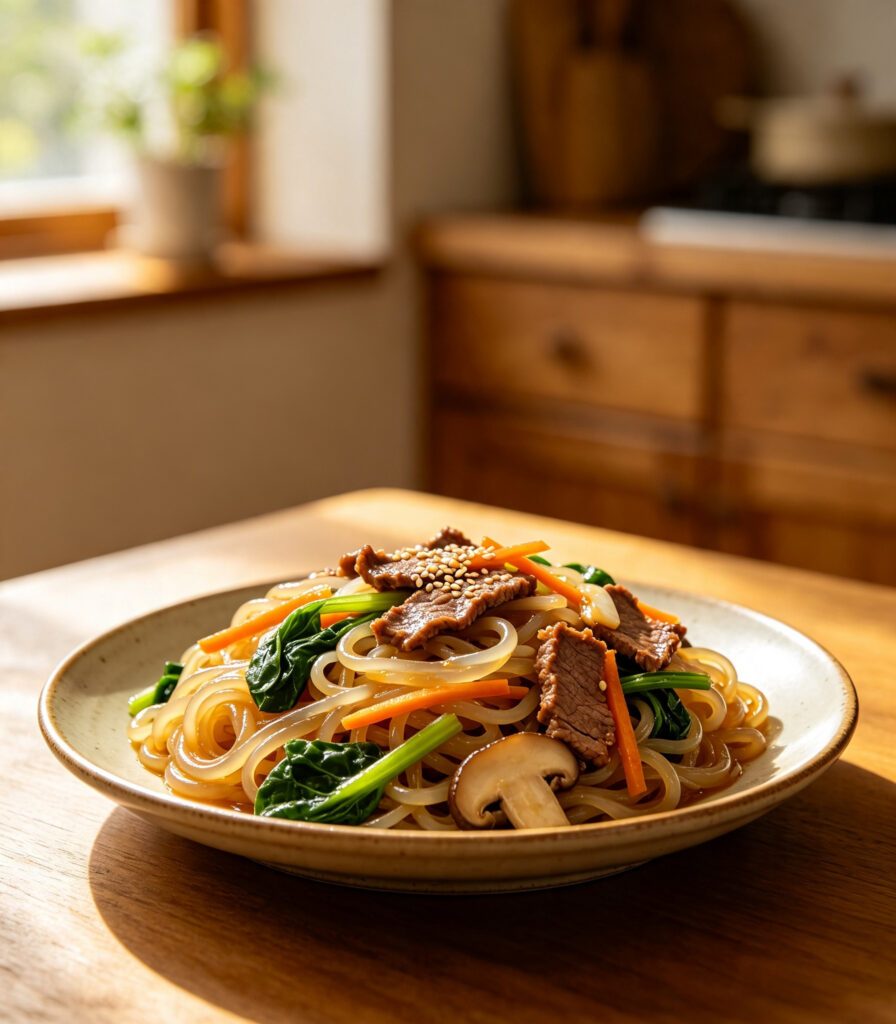
Japchae (Stir-Fried Glass Noodles)
The Quirky Foodster Team
Ingredients
- Sweet potato glass noodles (dangmyeon) — 200 g (7 oz)
- Beef sirloin, thinly sliced (optional) — 150 g (5 oz)
- Carrot, julienned — 1
- Onion, sliced — 1
- Spinach, blanched — 100 g (3.5 oz)
- Dried shiitake mushrooms, soaked and sliced — 4–5
- Red bell pepper, julienned — 1
- Soy sauce — 4 tbsp (60 ml)
- Sugar — 3 tbsp (45 g)
- Sesame oil, plus extra for the vegetables — 2 tbsp (30 ml)
- Garlic cloves, minced — 2
- Toasted sesame seeds — 1 tbsp
- Vegetable oil, for frying
Method
- Soak the glass noodles in warm water for 30 minutes until pliable, then boil in a large pot of water for 5–6 minutes until tender but still chewy. Drain, rinse briefly, and snip into shorter lengths with scissors. Toss with a little sesame oil and 1 tbsp of the soy sauce to prevent sticking.
- If using beef, marinate the sliced beef briefly in 1 tbsp soy sauce, a pinch of sugar and minced garlic, then stir-fry in a hot pan until just cooked; set aside.
- Sauté the carrot, onion, mushrooms and red pepper separately in a lightly oiled pan, each with a small pinch of salt, until just tender, keeping their colours distinct; set each aside.
- Season the blanched spinach with a little sesame oil, salt and garlic.
- In a large bowl, combine the noodles, beef, all the vegetables, the remaining soy sauce, sugar and sesame oil, and toss thoroughly until everything is evenly coated and glossy.
- Taste and adjust the seasoning, then transfer to a serving platter and scatter with toasted sesame seeds. Serve warm or at room temperature.
Introduction: Japchae, meaning 'mixed vegetables', dates back to the Joseon dynasty and was originally a dish without noodles at all — glass noodles were added later and eventually became its defining feature.
Cultural Background: Japchae, meaning 'mixed vegetables', dates back to the Joseon dynasty and was originally a dish without noodles at all — glass noodles were added later and eventually became its defining feature. Today it's a festive dish served at celebrations, holidays and gatherings, valued for its glossy chewy noodles and colourful array of individually seasoned vegetables.
Tips: Don't overcook the glass noodles — they should remain pleasantly chewy (al dente) rather than turning soft and mushy. Cooking each vegetable separately, as with bibimbap, keeps the colours vivid and prevents any one vegetable's liquid from making the dish soggy.
Variations: Add strips of Korean fish cake (eomuk) for a heartier, more savoury version. For a vegetarian version, omit the beef and add extra shiitake or king oyster mushrooms for a savoury depth. Omit the beef and increase the mushrooms; use a vegetarian-friendly soy sauce as written to keep the dish fully vegan.
Storage: Refrigerate in an airtight container for up to 3 days.
Reheating: Reheat briefly in a pan over medium heat or in the microwave; a small splash of sesame oil freshens the flavour after refrigeration.
Nutrition: Calories: 310 kcal | Protein: 9 g | Carbs: 48 g | Fat: 10 g | Fibre: 3 g | Sodium: 610 mg Per serving with beef; estimate only.
FAQs:
Q: What are glass noodles made from?
A: Traditional Korean dangmyeon are made from sweet potato starch, giving them a distinctively chewy, slightly translucent texture different from mung bean or rice noodles.
Q: Can japchae be served cold?
A: Yes, it's commonly served warm or at room temperature and holds up well for potlucks and packed lunches.
Q: Why cook the vegetables separately instead of all together?
A: Each vegetable has a different cooking time and moisture level; cooking them separately keeps textures and colours distinct rather than producing a single muddled result.
- Sweet potato glass noodles (dangmyeon) — 200 g (7 oz)
- Beef sirloin, thinly sliced (optional) — 150 g (5 oz)
- Carrot, julienned — 1
- Onion, sliced — 1
- Spinach, blanched — 100 g (3.5 oz)
- Dried shiitake mushrooms, soaked and sliced — 4–5
- Red bell pepper, julienned — 1
- Soy sauce — 4 tbsp (60 ml)
- Sugar — 3 tbsp (45 g)
- Sesame oil, plus extra for the vegetables — 2 tbsp (30 ml)
- Garlic cloves, minced — 2
- Toasted sesame seeds — 1 tbsp
- Vegetable oil, for frying
Please log in to leave a comment.