
Breads
Injera (Fermented Sourdough Flatbread)
The Quirky Foodster Team
Ingredients
- 500 g (4 cups) teff flour
- 750 ml (3 cups) water, plus more as needed
- 1/4 tsp active dry yeast (to help kick-start fermentation)
- 1/2 tsp salt
Method
- Whisk the teff flour, water and yeast together in a large bowl until a smooth, thin batter forms.
- Cover loosely with a cloth and leave at room temperature for 2-3 days, stirring once a day, until the batter is visibly bubbly and smells pleasantly sour.
- Once fermented, pour off any clear liquid that has risen to the top, and stir in the salt.
- Adjust consistency with a little extra water if needed; the batter should be thin, like a runny pancake batter.
- Heat a large non-stick pan over medium heat without oil. Pour a ladleful of batter in a continuous spiral from the outside in, covering the pan in one thin layer.
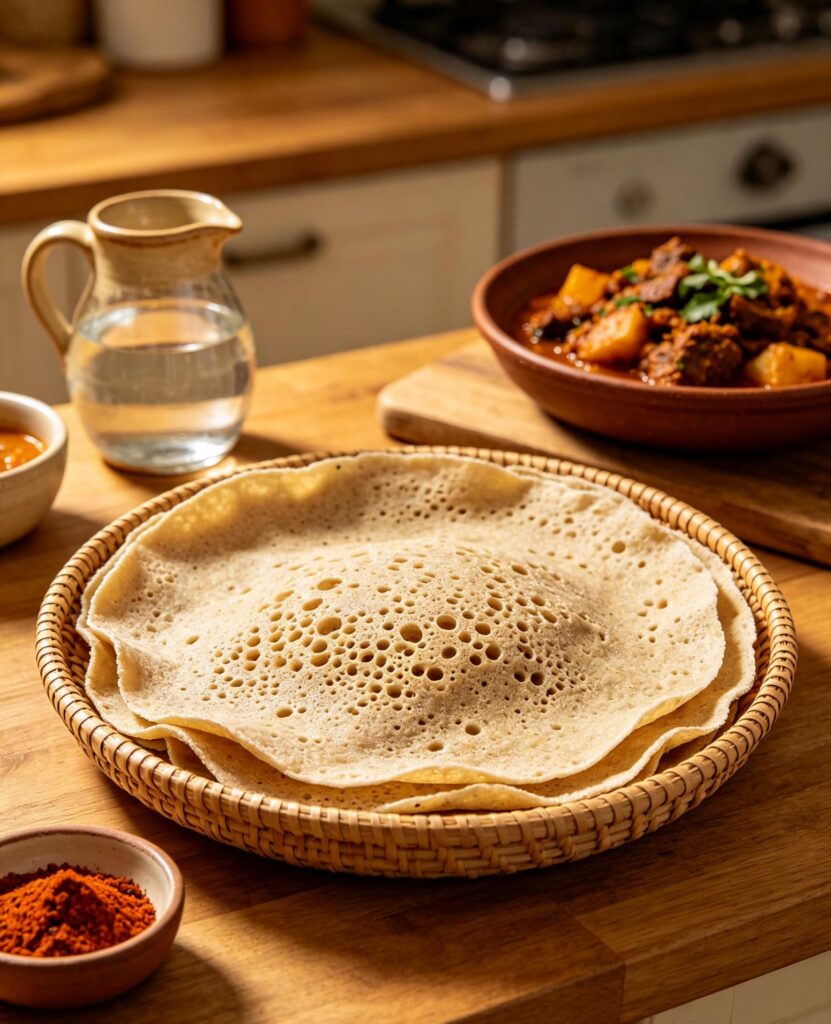
- Cover with a lid and cook for 2-3 minutes without flipping, until the surface is covered in small holes and the edges lift away from the pan.
- Remove and place on a clean cloth to cool. Repeat with remaining batter, stacking the cooked injera as you go.
Introduction: Injera is Ethiopia's iconic spongy, tangy flatbread made from fermented teff flour, serving as both plate and utensil at nearly every meal.
Cultural Background: Injera is Ethiopia's iconic spongy, tangy flatbread made from fermented teff flour, serving as both plate and utensil at nearly every meal. Its slightly sour flavour, developed over several days of natural fermentation, is fundamental to the entire Ethiopian dining experience.
Tips: Patience during fermentation is key; a warm kitchen speeds up the process, while a cooler one may take longer. Injera is never flipped during cooking; it is cooked through entirely on one side under a lid.
Variations: A quicker version blends teff flour with a small amount of plain flour or rice flour to shorten fermentation time. 100% teff injera has the most traditional, tangy flavour and a distinctive dark colour.
Storage: Store stacked and wrapped in a cloth or airtight container at room temperature for 2 days, or refrigerate for up to 5 days.
Reheating: Warm briefly, covered, in a low oven or steam lightly; injera is often used at room temperature straight from storage.
FAQs:
Q: Why does my Injera lack holes?
A: Holes come from the fermentation gases escaping as the batter cooks; insufficient fermentation time is the most common cause of a smooth, hole-free surface.
Q: Can Injera be made without teff flour?
A: Traditional Injera relies on teff for its distinct flavour and slightly spongy texture, though blended versions using other flours are common outside Ethiopia where teff can be harder to find.
Please log in to leave a comment.