
Imperial Feast Roasted Peacock (Taos sto Fourno)
The Quirky Foodster Team
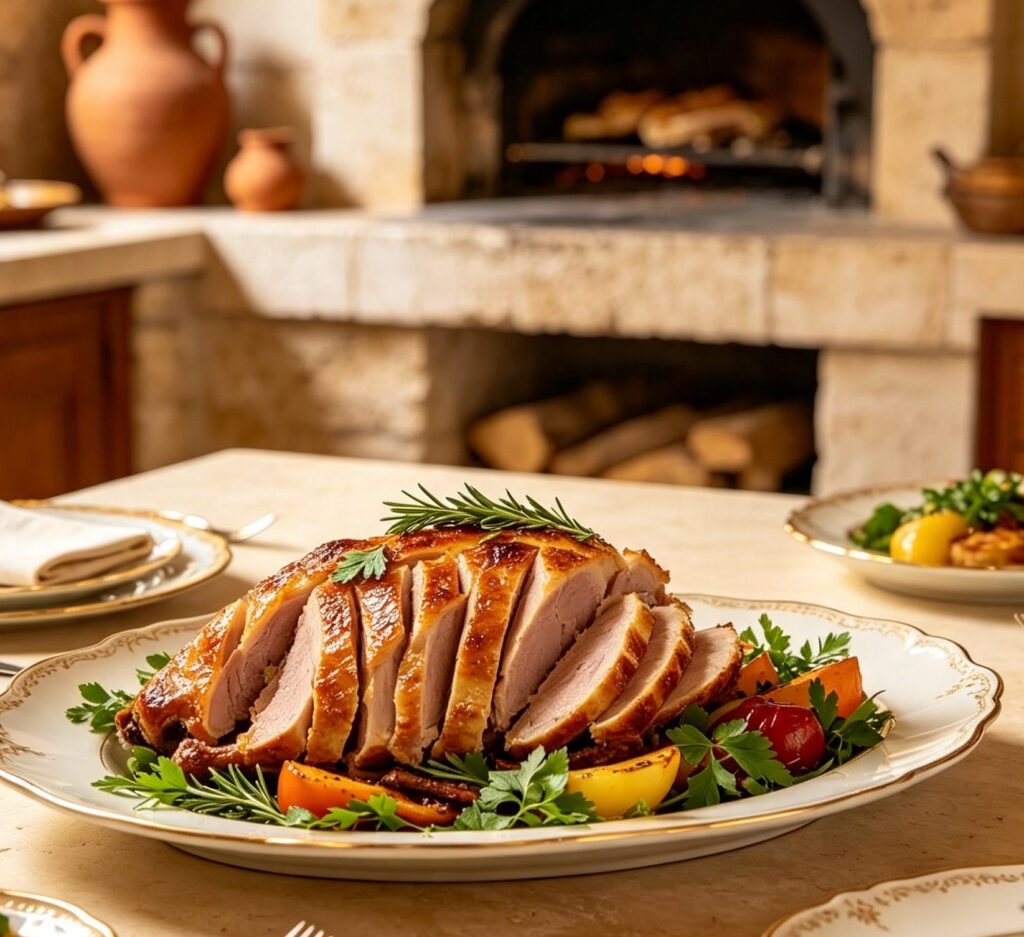
Ingredients
- Whole turkey or large capon, as a practical substitute (about 4 kg / 8.8 lb) — 1
- Olive oil — 60 ml (1/4 cup)
- Ground cinnamon — 2 tsp
- Ground cloves — 1 tsp
- Honey — 3 tbsp
- Garlic, crushed — 4 cloves
- Salt — to taste
Method
- Preheat the oven to 180°C (350°F).
- Rub the bird all over with olive oil, cinnamon, cloves, crushed garlic and salt.
- Place in a large roasting pan.
- Roast for 20 minutes, then brush with honey.
- Continue roasting, basting occasionally, for a further 2–2.5 hours until deeply golden and cooked through.
- Let rest for 15–20 minutes before carving and presenting to the gathered celebration.
Introduction: A whole roasted bird prepared in the elaborate style associated with the grandest Byzantine imperial banquets, historically featuring peacock as an ultimate display of luxury and status.
Cultural Background: Imperial Byzantine banquets were renowned for their extravagance, with peacock served, sometimes even redressed in its own feathers for dramatic presentation, as one of the most prestigious dishes reserved for the most significant court celebrations and honoured guests.
Tips: Basting periodically with the pan juices and honey helps develop a rich, glossy skin. This dish is intended as a showpiece — present it whole at the table before carving, as was the Byzantine tradition for grand feasts.
Variations: Historically, roasted peacock was sometimes elaborately redressed in its own plumage for a dramatic table presentation; a large bird here can be garnished decoratively instead. Serve alongside other rich dishes and wine for a full imperial-style spread.
Storage: Refrigerate leftover meat in an airtight container for up to 3 days.
Reheating: Reheat gently, covered, in an oven at 150°C (300°F) until warmed through.
Nutrition: Per serving (approx.): 460 kcal, 40 g protein, 26 g fat, 12 g carbohydrate.
FAQs:
Q: Was peacock really eaten at Byzantine feasts?
A: Yes, historical accounts describe peacock as a dish of great prestige at the most elaborate imperial banquets, valued more for its visual spectacle and rarity than everyday practicality.
Q: Why is turkey suggested as a substitute here?
A: Turkey offers a similarly large, impressive bird for a modern kitchen, since peacock is not commonly available; the spicing and presentation aim to capture the occasion’s grandeur.
- Whole turkey or large capon, as a practical substitute (about 4 kg / 8.8 lb) — 1
- Olive oil — 60 ml (1/4 cup)
- Ground cinnamon — 2 tsp
- Ground cloves — 1 tsp
- Honey — 3 tbsp
- Garlic, crushed — 4 cloves
- Salt — to taste
Please log in to leave a comment.