
Breakfast
Icyayi cy’Amata (Burundian Spiced Milk Tea)
The Quirky Foodster Team
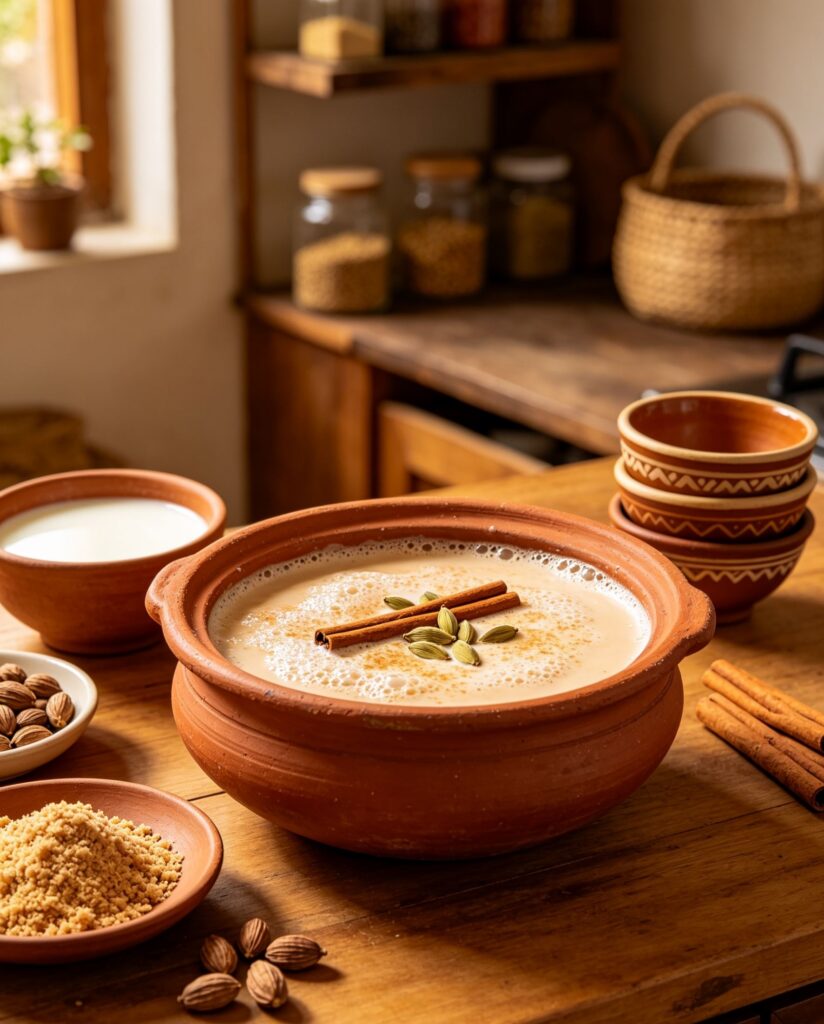
Ingredients
- 500 ml (2 cups) water
- 500 ml (2 cups) whole milk
- 3 tbsp loose black tea leaves
- 1 cinnamon stick
- 3 whole cloves
- 1 thumb fresh ginger, sliced
- 2-3 tbsp sugar, to taste
Method
- Combine the water, cinnamon stick, cloves and ginger in a saucepan and bring to a boil over medium heat.
- Simmer for 3 minutes to infuse the spices.
- Add the tea leaves and boil for 1 minute.
- Pour in the milk and sugar, then bring back to a gentle boil, watching closely so it doesn't overflow.
- Reduce heat and simmer for 2-3 minutes until deep amber in colour.
- Strain into cups and serve hot.
Introduction: Milky spiced tea accompanies breakfast across the Great Lakes region, reflecting the strong colonial-era tea plantations established in Burundi's highlands.
Cultural Background: Milky spiced tea accompanies breakfast across the Great Lakes region, reflecting the strong colonial-era tea plantations established in Burundi's highlands. It is brewed strong, boiled directly with milk and spices rather than steeped separately, giving it a rich, almost chai-like character that is shared with neighbours as a gesture of hospitality.
Tips: Watch the pot closely once the milk is added, as it can boil over quickly. For a stronger brew, simmer an extra minute before straining.
Variations: Add a pod of crushed cardamom for a more fragrant, chai-style cup. Vegan version: substitute oat or soy milk for dairy milk. Already vegetarian; use plant-based milk for a vegan version.
Storage: Best served fresh; can be refrigerated for up to 24 hours and reheated.
Reheating: Reheat gently on the stovetop over low heat, stirring occasionally.
Nutrition: Approx. 90 kcal, 3 g protein, 12 g carbohydrate, 3 g fat per serving (based on 4 servings).
FAQs:
Q: Can I use tea bags instead of loose leaf?
A: Yes, use 4-5 strong black tea bags in place of the loose leaves.
Q: Is this the same as Kenyan chai?
A: It is closely related in method, though Burundian milk tea typically uses a lighter hand with spices.
Please log in to leave a comment.