
Breads
Icelandic Flatbread
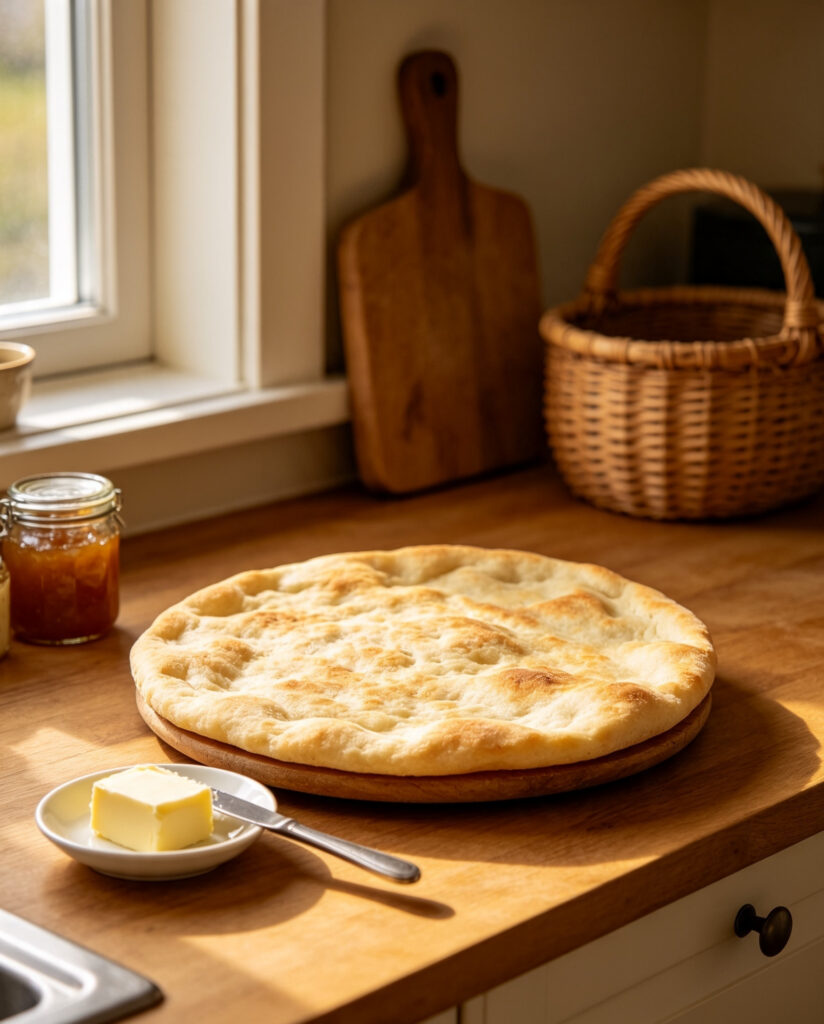
Ingredients
- 250 g (2 cups) rye flour
- 125 g (1 cup) all-purpose flour, plus extra for dusting
- 1 tsp salt
- 1 tsp baking powder
- 1 tbsp butter, softened
- 200 ml (3/4 cup plus 1 tbsp) hot water
Method
- In a bowl, mix the rye flour, all-purpose flour, salt and baking powder.
- Rub in the butter until evenly distributed.
- Gradually add the hot water, mixing until a firm, smooth dough forms. Knead briefly for 2-3 minutes.
- Divide the dough into 8 equal pieces and roll each into a thin round, about 18-20 cm (7-8 inches) in diameter.
- Heat a dry griddle or heavy frying pan over medium heat.
- Cook each flatbread for 1.5-2 minutes per side, until lightly browned in spots and cooked through.
- Stack the cooked flatbreads under a clean towel to keep them soft while you finish the batch.
Introduction: Flatkökur are soft, unleavened rye flatbreads cooked on a dry griddle, a practical bread that required no oven — an important consideration in a country where fuel for baking was historically scarce.
Cultural Background: Flatkökur are soft, unleavened rye flatbreads cooked on a dry griddle, a practical bread that required no oven — an important consideration in a country where fuel for baking was historically scarce. They remain a household favourite, often served with butter and hangikjöt.
Tips: Prick the dough lightly with a fork before cooking to prevent large air bubbles. Keep the heat at medium — too high scorches the outside before the inside cooks.
Variations: Serve warm with butter and a slice of hangikjöt folded inside, a classic quick lunch. Add a spoonful of golden syrup to the dough for a slightly sweeter version.
Storage: Store in an airtight bag at room temperature for up to 3 days, or freeze for up to 1 month.
Reheating: Warm briefly on a dry pan or in a low oven wrapped in foil.
FAQs:
Q: Can flatkökur be made without a griddle?
A: A heavy-based frying pan works just as well.
Q: Are these the same as tortillas?
A: They are similar in method but denser and earthier in flavour due to the rye flour.
Please log in to leave a comment.