
Hoisin Sauce
The Quirky Foodster Team
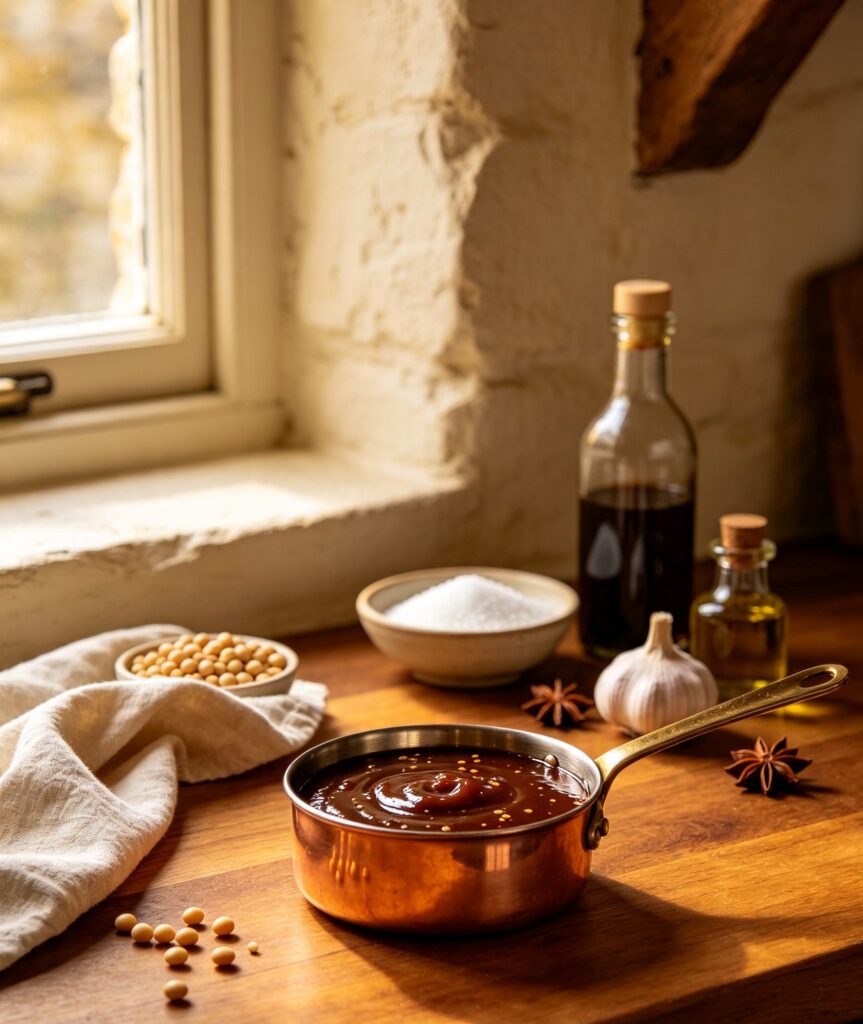
Ingredients
- Fermented soybean paste (or dark miso as substitute) — 60 g (1/4 cup)
- Soy sauce — 30 ml (2 tbsp)
- Rice vinegar — 15 ml (1 tbsp)
- Honey or brown sugar — 30 g (2 tbsp)
- Garlic, minced — 2 cloves
- Chinese five-spice powder — 2 g (1/2 tsp)
- Sesame oil — 5 ml (1 tsp)
- Sriracha or chili paste (optional) — 5 g (1 tsp)
Method
- Combine soybean paste, soy sauce and vinegar in a small saucepan.
- Whisk in honey, garlic and five-spice powder.
- Warm gently over low heat, stirring, for 3-4 minutes until well combined and slightly glossy.
- Stir in sesame oil and chili paste if using.
- Cool before using; store in a sealed jar.
Cultural Background: A sweet, salty fermented sauce built on soybean paste, hoisin sauce (its name meaning 'seafood', despite containing none) originates in Cantonese cuisine, now used across Chinese cooking as a glaze, dip and stir-fry seasoning.
Tips: • If using miso as a substitute, choose a darker variety for the closest flavour and colour match. • This sauce thickens as it cools, so don't over-reduce it on the stove.
Variations: • Add a splash of Chinese rice wine for extra depth. • Adjust sweetness and saltiness ratios to taste.
Storage: Refrigerate in a sealed jar up to 1 month.
Reheating: Not applicable; used cold or as a glaze applied during cooking. Nutrition (per serving) Approx. 30 kcal, 1 g protein, 1 g fat, 5 g carbohydrate per 15 g serving. FAQs What is hoisin sauce traditionally used for? A glaze for roasted meats like Peking duck, a dipping sauce for spring rolls, and a stir-fry seasoning. Does hoisin sauce contain seafood? No, despite its name meaning 'seafood' in Chinese — it's a soybean-based sauce with no seafood ingredients.
FAQs: What is hoisin sauce traditionally used for? A glaze for roasted meats like Peking duck, a dipping sauce for spring rolls, and a stir-fry seasoning. Does hoisin sauce contain seafood? No, despite its name meaning 'seafood' in Chinese — it's a soybean-based sauce with no seafood ingredients.
- Fermented soybean paste (or dark miso as substitute) — 60 g (1/4 cup)
- Soy sauce — 30 ml (2 tbsp)
- Rice vinegar — 15 ml (1 tbsp)
- Honey or brown sugar — 30 g (2 tbsp)
- Garlic, minced — 2 cloves
- Chinese five-spice powder — 2 g (1/2 tsp)
- Sesame oil — 5 ml (1 tsp)
- Sriracha or chili paste (optional) — 5 g (1 tsp)
Please log in to leave a comment.