
Breads
Himbasha (Sweet Celebration Bread)
The Quirky Foodster Team
Ingredients
- 500 g (4 cups) plain flour
- 80 g (1/3 cup) sugar
- 1 tsp active dry yeast
- 1/2 tsp ground cardamom
- 1/4 tsp ground cinnamon
- 1/2 tsp salt
- 250 ml (1 cup) warm milk
- 60 g (4 tbsp) melted butter, plus extra for brushing
- 1 large egg
- 2 tbsp raisins (optional)
Method
- In a large bowl, combine flour, sugar, yeast, cardamom, cinnamon and salt.
- Add warm milk, melted butter and egg, and mix until a soft dough forms.
- Knead for 8-10 minutes until smooth and elastic, working in raisins if using.
- Place in a greased bowl, cover, and leave to rise in a warm place for about 1 hour, until doubled in size.
- Punch down the dough and shape into a round loaf on a baking tray.
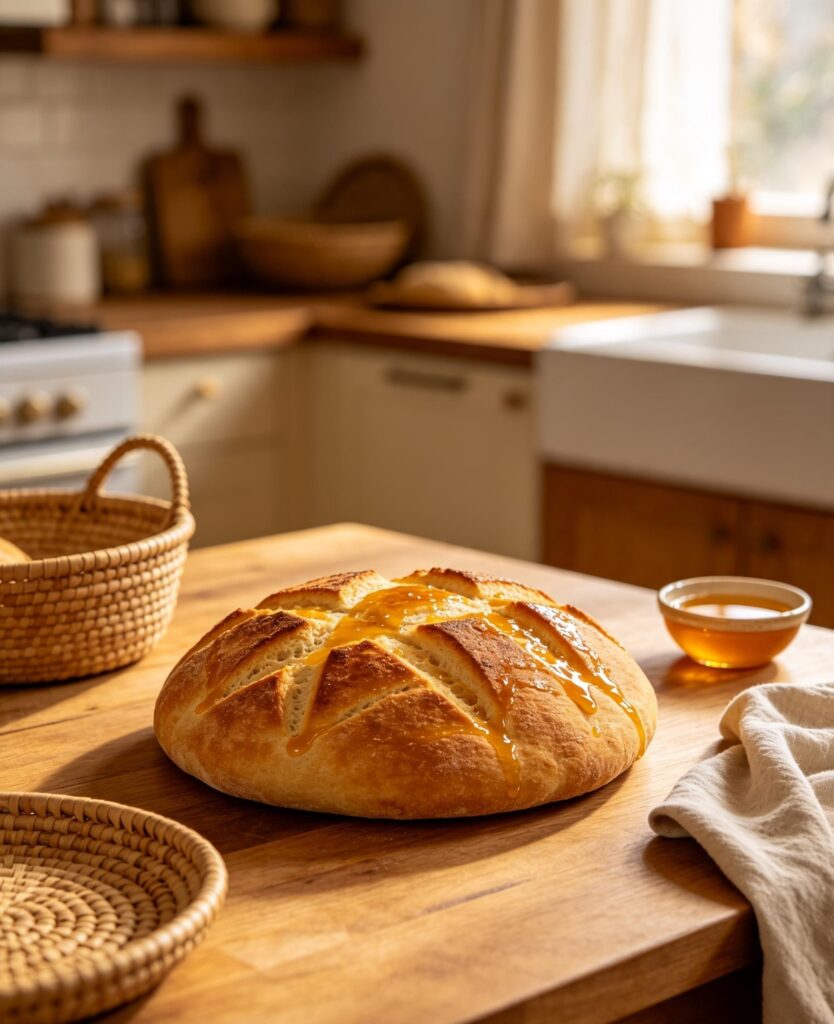
- Score a decorative crosshatch or spiral pattern into the top with a sharp knife, then leave to rest for 15 minutes.
- Bake at 180C (350F) for 28-30 minutes until golden brown and a skewer inserted comes out clean.
- Brush with melted butter while still warm, then cool slightly before slicing.
Introduction: Himbasha is a lightly sweetened, cardamom-scented bread baked for holidays and celebrations, often decorated with a decorative crosshatch pattern on top.
Cultural Background: Himbasha is a lightly sweetened, cardamom-scented bread baked for holidays and celebrations, often decorated with a decorative crosshatch pattern on top. Its soft, cake-like crumb marks a festive departure from Ethiopia's everyday fermented breads.
Tips: Score the pattern deeply enough that it remains visible after baking and rising. Brushing with butter straight from the oven gives the crust an attractive sheen.
Variations: Some versions add a handful of chopped nuts to the dough. A saffron-infused milk gives the bread a golden hue for special occasions.
Storage: Store wrapped at room temperature for up to 3 days, or freeze whole for up to 2 months.
Reheating: Warm slices briefly in a low oven or toaster before serving.
FAQs:
Q: What occasions is Himbasha served for?
A: It is traditionally baked for holidays such as Ethiopian Christmas (Genna), Easter (Fasika) and other family celebrations.
Q: Why does my Himbasha not rise properly?
A: Ensure the yeast is fresh and the milk is warm, not hot, as excessive heat can kill the yeast before it has a chance to activate.
Please log in to leave a comment.