
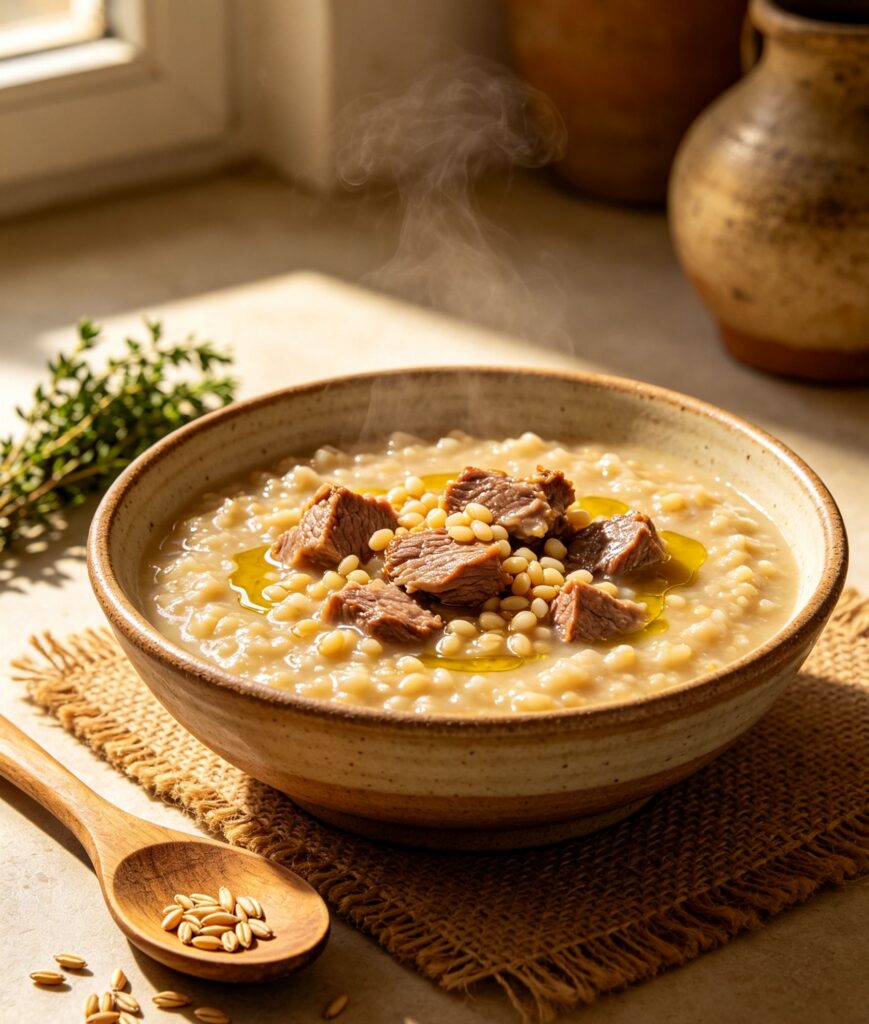
Harissa (Wheat and Meat Porridge)
The Quirky Foodster Team
Ingredients
- Whole wheat berries, soaked overnight — 500 g (2 1/2 cups)
- Chicken thighs or lamb shoulder, bone-in — 1 kg (2.2lb)
- Water — 2 L (8 cups)
- Onion, halved — 1
- Bay leaves — 2
- Salt, plus more to taste — 1 tsp
- Butter, melted, for serving — 4 tbsp
- Ground cumin or paprika, for serving
Method
- Drain the soaked wheat and place in a large pot with the meat, water, onion and bay leaves.
- Bring to a boil, then reduce heat and simmer gently, covered, for 3-4 hours, topping up water as needed, until the meat falls off the bone and the wheat is very soft.
- Remove the meat, discard bones and skin, and shred the meat finely; discard the onion halves and bay leaves.
- Return the shredded meat to the pot and season with salt.
- Using a wooden spoon or whisk, beat the mixture vigorously and continuously over low heat for 20-30 minutes, until it becomes a smooth, thick, porridge-like consistency with no distinct grains visible.
- Ladle into bowls, drizzle generously with melted butter, and dust with cumin or paprika before serving hot.
Introduction: Harissa is a slow-cooked, thick porridge of wheat and meat, traditionally simmered and beaten for hours until the wheat and chicken or lamb dissolve into a smooth, creamy mass.
Cultural Background: Harissa is a slow-cooked, thick porridge of wheat and meat, traditionally simmered and beaten for hours until the wheat and chicken or lamb dissolve into a smooth, creamy mass. It carries deep religious significance, historically prepared communally in large cauldrons for the feast of Saint Sarkis and other church holidays, commemorating shared meals during times of hardship and famine relief in Armenian history.
Tips: The long beating stage is what gives harissa its signature smooth, creamy texture — do not skip or rush this step. Traditionally, harissa was prepared by multiple people taking turns beating the pot for hours, reflecting its communal, festive origins.
Variations: Lamb gives a richer, more traditional flavour, while chicken produces a lighter version increasingly common today. A vegetarian version can be made using extra wheat and mushroom broth in place of meat, though this departs from the traditional dish.
Storage: Keeps refrigerated in an airtight container for up to 3 days.
Reheating: Reheat gently over low heat, stirring frequently and adding a splash of water or stock to loosen, as it thickens considerably when chilled.
Nutrition: Per serving (of 6): approx. 420 kcal, 28g protein, 14g fat, 45g carbohydrates, 6g fibre.
FAQs:
Q: Why does harissa take so long to make?
A: The extended simmering and beating breaks down the wheat and meat completely, creating the dish’s signature smooth, creamy texture that defines it.
Q: When is harissa traditionally eaten?
A: It is closely associated with the feast of Saint Sarkis and other Armenian Apostolic Church holidays, often prepared communally in large batches.
- Whole wheat berries, soaked overnight — 500 g (2 1/2 cups)
- Chicken thighs or lamb shoulder, bone-in — 1 kg (2.2lb)
- Water — 2 L (8 cups)
- Onion, halved — 1
- Bay leaves — 2
- Salt, plus more to taste — 1 tsp
- Butter, melted, for serving — 4 tbsp
- Ground cumin or paprika, for serving
Please log in to leave a comment.