
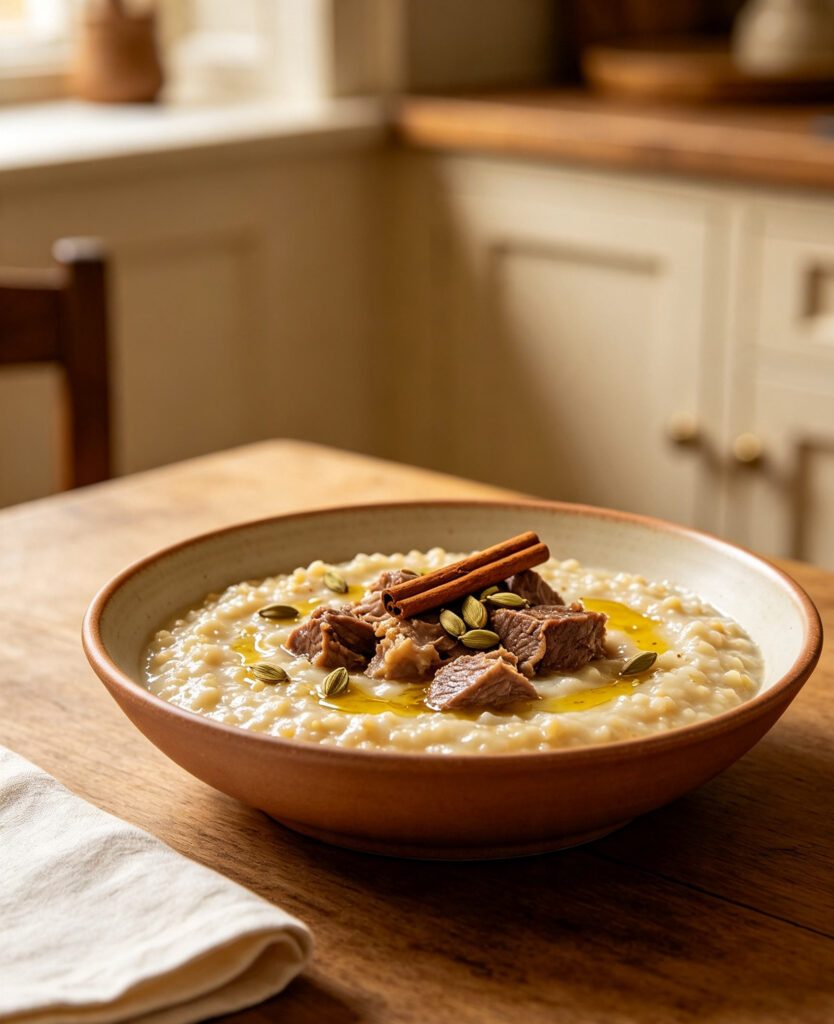
Harees
The Quirky Foodster Team
Ingredients
- Cracked wheat, soaked for 2 hours — 360 g (12.5 oz)
- Chicken or lamb, bone-in — 800 g (1.75 lb)
- Onion, chopped — 1
- Ground cinnamon — 1 tsp
- Ground cardamom — 1/2 tsp
- Ghee — 60 g (2 oz)
- Water — 1.9 L (64 fl oz)
- Salt — to taste
- Ground cinnamon and extra ghee, to garnish
Method
- Combine the soaked, drained wheat, meat, onion, cinnamon, cardamom and water in a large pot.
- Bring to a boil, then reduce to a very low simmer and cook, covered, for 3–4 hours, stirring occasionally, until the wheat and meat are completely soft.
- Remove any bones from the meat.
- Using a wooden spoon or hand mixer, mash and beat vigorously until the mixture becomes a smooth, thick, cohesive porridge, shredding the meat further as you go.
- Stir in the ghee and season with salt.
- Serve hot, garnished with a drizzle of ghee and a dusting of cinnamon.
Introduction: A smooth, savoury porridge of wheat and meat cooked and beaten until creamy, a treasured Qatari specialty especially popular during Ramadan.
Cultural Background: Harees is prepared with great care across Qatar, particularly during Ramadan, the long, slow cooking and vigorous beating of wheat and meat together producing a uniquely smooth, comforting dish deeply tied to hospitality traditions.
Tips: The long simmer and vigorous beating are both essential — harees should have a smooth, almost velvety consistency by the end. Stir frequently during the final stages to prevent the thick mixture from catching on the bottom of the pot.
Variations: Use lamb for a richer, more traditional version. Add a little sugar for a sweeter variation popular in some households.
Storage: Refrigerate in an airtight container for up to 4 days.
Reheating: Reheat gently on the stovetop over low heat with a splash of water, stirring frequently, until warmed through.
FAQs:
Q: Why is harees mashed so thoroughly?
A: Vigorous mashing breaks down the wheat and meat into a smooth, cohesive texture that defines proper harees.
Q: When is harees most commonly eaten?
A: Especially during Ramadan, though it's enjoyed year-round as a hearty, celebrated dish.
- Cracked wheat, soaked for 2 hours — 360 g (12.5 oz)
- Chicken or lamb, bone-in — 800 g (1.75 lb)
- Onion, chopped — 1
- Ground cinnamon — 1 tsp
- Ground cardamom — 1/2 tsp
- Ghee — 60 g (2 oz)
- Water — 1.9 L (64 fl oz)
- Salt — to taste
- Ground cinnamon and extra ghee, to garnish
Please log in to leave a comment.